The emergence and state of the HIV/AIDS epidemic
The identification of HIV/AIDS
Acquired immunodeficiency syndrome (AIDS) is caused by the human immunodeficiency virus (HIV), which crossed from primates into humans. Although isolated cases of infection in people may have appeared earlier, the first cases of the current epidemic probably occurred in the 1930s, and the disease spread rapidly in the 1970s.
AIDS was publicly reported on 5 June 1981, in the Morbidity and Mortality Weekly Report produced by the Centers for Disease Control (CDC) in Atlanta in the USA. Doctors recorded unexpected clusters of previously extremely rare diseases such as Pneumocystis carinii, a type of pneumonia, and Kaposi’s sarcoma, a normally slow-growing tumour. These conditions manifested in exceptionally serious forms, and in a narrowly defined risk group – young homosexual men. It soon became apparent that these illnesses were occurring in other definable groups: haemophiliacs, blood transfusion recipients, and intravenous drug users (IDUs). By 1982, cases were being seen among the partners and infants of those infected.
The name: acquired immunodeficiency syndrome, acronym AIDS, was agreed in Washington in July 1982. In the same year the CDC produced a working definition for AIDS based on clinical signs. AIDS describes the disease accurately: people acquire the condition; it results in a deficiency within the immune system; and it is a syndrome not a single disease. In French, Portuguese, and Spanish, it is known as SIDA, the full French name being syndrome d’immuno déficience acquise.
Beyond North America, there was news of cases from Europe, Australia, New Zealand, Latin America, especially Brazil and Mexico, and Africa. In Zambia, a significant rise in cases of Kaposi’s sarcoma was recorded. In Kinshasa in the Democratic Republic of the Congo, there was an upsurge in patients with cryptococcosis, an unusual fungal infection. The Ugandan Ministry of Health was receiving reports of increased and unexpected deaths in Lake Victoria fishing villages. Even when the syndrome had been identified and named, it was not clear what its cause was, how it spread, or which treatments were effective or could be developed. Scientists agreed the most likely origin was a, then unidentified, virus. The hunt for this was intense in laboratories across the world, with international collaboration, and sharing of specimens and tissue. In 1983 the virus was identified by the Institut Pasteur in France, which called it Lymphadenopathy-Associated Virus, or LAV. In April 1984 in the US, the National Cancer Institute (NCI) isolated the virus and named it HTLV-III. There was an unseemly spat when the US Secretary for Health and Human Services announced to the world that the NCI was responsible for the scientific breakthrough that identified HIV. The face-saving compromise was to say French and US laboratories had both identified the cause of AIDS. In 1987 the name ‘human immunodeficiency virus’ was confirmed by the International Committee on Taxonomy of Viruses.
Many diseases spread from animals to humans (and the other way). These are called zoonoses. Recent examples include severe acute respiratory syndrome (SARS), which was tracked to civet cats, and avian influenza (bird fl u). HIV is, so far, the most deadly pathogen to have made this leap: Ebola virus is more infectious but can be contained; SARS, fortunately was, not as infectious; avian fl u has not yet taken hold in humans, but is cause for concern.
Initially there was a degree of hysteria around AIDS, where it came from, and how it was transmitted. In San Francisco, when it was identified as a gay men’s disease, police and fire officers feared they would be infected through exposure to blood and body fluids from homosexuals. In 1983 officers were given face masks and gloves and educated on how to protect them from this alleged risk. Today, when AIDS hits the headlines in the West, which is not often, most stories fall into a few categories: what the West (and Western celebrities) are doing to assist the worst affected countries and communities, such as supporting orphanages and adopting orphans; the impoverishment and misery AIDS causes; the continued spread among certain groups – IDUs in the former Soviet countries or Chinese peasants; and, in rich countries, the deliberate spreading of the virus by individuals to implicitly ‘innocent victims’.
Having identified how HIV was spread, the challenge was to reduce transmission. Early responses were technical: improving blood safety, providing condoms, and encouraging safe injecting practices. Soon it became apparent that these were not enough, behaviours needed to change. At the same time, the race was on to find drugs that could cure or, at least, treat infected people. It took 15 years to develop effective antiretroviral therapies (ART), and this advance was announced at the 1996 International AIDS Conference in Vancouver.
There is still little understanding of the long-term impact of the epidemic. While the worst predictions: of national collapse, rising levels of crime, economic stagnation, and general malaise won’t come about, vulnerabilities, like the epidemic, will be differentiated. The poorest bear the burden.
The long-wave epidemic
AIDS is new: in 2006, the 25th anniversary of its identification, there were close to 40 million people around the world living with HIV and over 20 million had died. Globally the number of infections had increased rapidly. This growth has slowed but continues steadily, however it is confined to specific locations; the feared uncontrollable worldwide pandemic has not occurred.
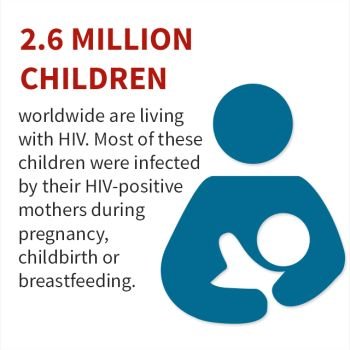
The virus itself is unusual. The most common mode of transmission is sexual intercourse, followed by mother-to-child infection, sharing drug-injecting equipment, and contaminated blood or instruments in health care settings. Because transmission is mainly through sex or drug use and there is no cure, there is much prejudice and fear. HIV/AIDS was and remains stigmatizing at an individual and national level.
HIV/AIDS is a complex long-wave event: there are waves of spread and waves of impact. This concept is illustrated by the three curves shown in Figure 1. The fi rst shows the prevalence rising steadily and leveling off, a silent spread. The second curve, six to ten years later, is the cumulative number of AIDS cases.
These are visible but diffused across a nation, and each year the numbers are small. Those studying HIV know infections will develop into illnesses and, untreated, lead to death. At T1 the number of cases at T2 can be predicted and should be planned for.
The third curve, even further in the future, is the impact, which is harder to predict and plan for.
Some idea of the timescale comes from Uganda. Here HIV prevalence peaked in about 1989, and the number of AIDS orphans peaked 14 years later in 2003. In countries such as South Africa, where HIV prevalence may not have peaked, the number of orphans could still be rising in 2020. Orphaned children carry the effects of being orphaned for the rest of their lives. Impacts last for generations. The diagram shows three of the waves; there will be others and the impact will be long term.
The future of HIV/AIDS is, epidemiologically speaking, reasonably predictable. Unless the virus mutates and becomes more easily transmitted, it will be contained. Science is advancing and new treatments are becoming available. Technological prevention methods, such as microbicides and vaccines, are being developed, although these are still some years away.
The impacts are less certain, but will be confined to the worst affected regions, notably parts of Africa; and most marginal groups. Due to the specific demographics of declining and ageing populations, some Eastern European countries may be particularly adversely impacted.
The global and regional epidemics
These paper reviews the worldwide epidemic mainly using data from the 2006 biannual UNAIDS Report on the Global AIDS Epidemic. HIV has not spread uniformly. Although most early reported cases were among gay men in the USA and Europe, the greatest numbers have consistently been African. In 1980 there were about 18,000 HIV infections in North America, 1,000 each in Europe and Latin America, and 41,000 in sub-Saharan Africa. There are different sub-epidemics around the world. Southern Africa has an epidemic transmitted primarily through heterosexual intercourse, with more women than men infected. In Asia total numbers are alarming but small as a proportion of the populations. The East European and central Asian epidemics have been principally fuelled by IDUs and are growing. In rich countries the epidemic is contained, and mainly seen among marginal groups, although numbers are slowly rising.
Sub-Saharan Africa has the largest number of people living with HIV: two-thirds (64%) of infected people and three-quarters of all infected women live here. There are differences in the sizes and trajectories of African epidemics. Southern Africa has the worst epidemic, with the numbers infected still rising in some countries. South Africa’s antenatal clinic survey recorded an increased prevalence from 29.5% in 2004 to 30.2% in 2005, but this fell to 29.1% in 2006, and there are other hopeful signs: data from Zimbabwe and Zambia also suggest a fall in prevalence. In Zimbabwe, HIV prevalence in pregnant women fell from 26% in 2002 to 21% in 2004, and in younger women (15–24) the drop was from 29% to 20% between 2000 and 2004.
In most of West Africa, HIV seems not to have spread. Senegal is held as a model for successful prevention: HIV prevalence was below 1% throughout the 1980s and 1990s, increasing slightly to 1.1% in 2002 and falling back to 0.9% in 2005, although increases in prevalence are being reported from some specific groups such as migrant men.
In East Africa, prevalence peaked and is declining. Behavioural data show this is due to increased condom use in casual relationships; reduction in numbers of partners; and delayed sexual debut. The greatest reduction is in Uganda, which, in the 1980s, was the global epicentre of the epidemic: at the peak in 1990, HIV prevalence may have been 31% among pregnant women; it was believed to be just 4.7% in this group in 2002.
In North Africa and the Middle East, although there is little evidence of HIV, there is concern about high risk factors. Sexual intercourse is the dominant form of transmission but there are signs of spread among drug users. Stigma and discrimination are particularly marked here and mean the epidemic remains hidden. In the Caribbean and Latin America, numbers are rising slowly overall. In the Caribbean, spread is predominantly heterosexual and concentrated in identifiable groups such as sex workers, although there is evidence of slow movement to the broader population. Women comprise 51% of adults living with HIV here. The worst epidemic was in Haiti, but prevalence fell from 6.2% in 1993 to 3.8% in 2006. Cuba has consistently kept its prevalence very low, less than 0.1%. Its prevention methods flew in the face of human rights.
Latin America’s epidemic is concentrated among populations at particular risk, and the majority of infections are the result of contaminated drug-injecting equipment or sex between men, whereas in Central America, the virus is spread predominantly through heterosexual sex.
In Eastern Europe, the number of HIV infections, being driven primarily by IDUs, has risen dramatically, reaching 1.5 million at the end of 2005. Prior to 1990, there were few infections, and most of those affected were foreigners. The most serious epidemic proportionately is in Ukraine. Here, between 1987 and 1994, some 39 million tests were done and only 398 cases of HIV were detected, of which 54% were foreign. The epidemic took off in 1995, when 1,489 infections were identified, of which 99.4% were Ukrainian and 68.6% were IDUs. By the end of 2005, an estimated 410,000 people were infected, an adult prevalence rate of 1.4%. Ukraine’s epidemic continues to expand, and newly registered HIV infections increased by 25% in 2002. The Russian Federation has the highest number of infections: an estimated 940,000 people. Between 1.5 and 3 million Russians are believed to inject drugs (1% to 2% of the entire population). In the Baltic states of Belarus and Moldova, transmission is increasing, although overall the numbers remain low. Intravenous drug use accounts for the largest proportion of newly reported infections but sexual transmission is slowly gaining ground. HIV prevalence is low (less than 0.3%) in most of Central Asia and the Caucasus, though numbers are rising. The epidemic is recent: in Uzbekistan, reported infections rose from 28 in 1999 to 2,016 in 2004. Given that the epidemic is located in core transmitter groups – IDUs and sex workers – it might be halted with prevention strategies concentrating on those most at risk.
However, coverage is low: 10% of sex workers, fewer than 8% of IDUs, and 4% of men who have sex with men are reached by prevention messages. In Asia, HIV infection levels are low, but large populations translate this to huge numbers of HIV-positive people. Some 8.3 million people are infected here, the largest number in India.
The pace and severity of Asia’s epidemics vary. Some countries responded quickly and effectively, while others are experiencing expanding epidemics and need to mount responses. Indonesia, Nepal, Vietnam, and several provinces in China, Bangladesh, Laos, Pakistan, and the Philippines have extremely low levels of HIV. HIV spread in China is attributable to IDUs, paid sex, and pooling of blood among donors for transfusion. In India, Indonesia, Myanmar, and Vietnam, drug use is an important driver.
Thailand seemed set to experience a large epidemic, between late 1987 and mid-1988 prevalence rose from 0 to more than 30% among IDUs in Bangkok. Prevalence among sex workers was between 1% and 5% in various locations in 1989, but in the city of Chiang Mai it was 44%. The government reaction was immediate and forceful: efforts were mounted to promote condom use, reduce risky behaviour, treat STIs, and provide care.
A cornerstone of the response was the ‘100% condom programme’, which required consistent condom use in brothels. Early indicators of success were increased condom use from 14% to over 90% by 1992 in brothels, and a decrease in episodes of male STIs at government clinics from 200,000 in 1989 to 20,000 in 1995. HIV prevalence among pregnant women peaked at 2.35% in 1995, and declined to 1.18% in 2003. Prevalence among military conscripts decreased from 4% in 1993 to 0.5% in 2003. However, the HIV prevalence among IDUs remained high at 33% in 2003.
The epidemic is largely under control in the developed world. In 2005, there were 65,000 new infections in this region, raising the number of people with HIV to 2 million. Widespread access to life-prolonging ART meant that the number of AIDS deaths was just 30,000 in 2005. Sex between men and, to a lesser extent, intravenous drug use is the predominant routes of transmission, but patterns are changing and new populations are being affected through unprotected heterosexual intercourse. In the United States, the epidemic is increasingly located among African Americans (over 50% of new HIV diagnoses in recent years have been made in this group) and is affecting greater numbers of women (African American women account for 72% of new HIV diagnoses). In Canada, indigenous populations are disproportionately infected. In 12 Western European countries with data for new infections, HIV diagnoses in people infected through heterosexual contact increased by 122% between 1997 and 2002, and most originated from countries with generalized epidemics in sub-Saharan Africa or the Caribbean.