VIDEO

How is BPH diagnosed?
Both a physical exam and history are used to diagnose BPH. When necessary, the urologist may use other diagnostic tests to obtain additional information to help make the diagnosis.
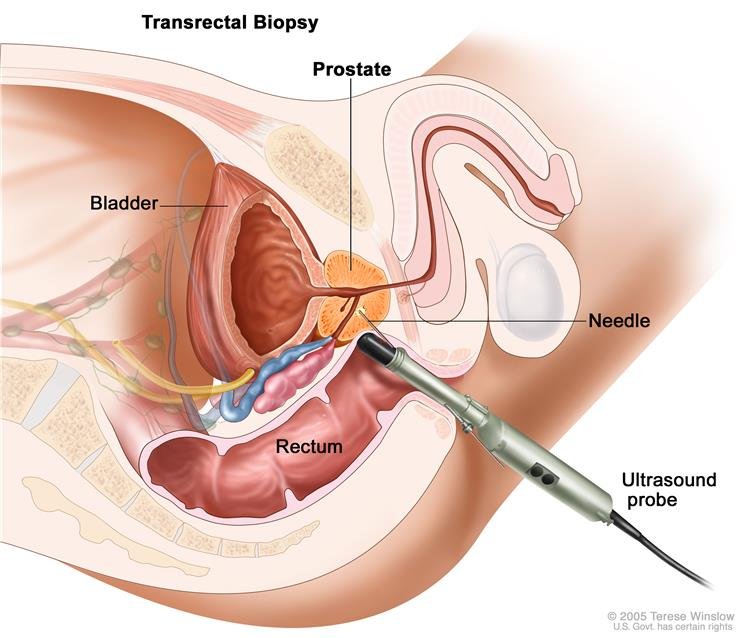
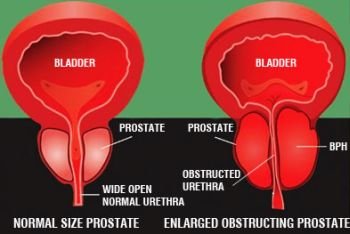
If a patient gives a history that includes one or more of the symptoms mentioned, the physician will be alerted to consider BPH as part of his differential diagnosis. Also, when the physician performs a digital rectal exam (palpates or feels the prostate with a finger in the rectum), he or she can feel whether the prostate is enlarged.
Finally, if the physician needs additional information before making a diagnosis of BPH, he or she can do additional tests, which include a uroflow, a bladder ultrasound, a cystoscopy, and a urodynamics test.
What is a uroflow measurement?
An uroflow measurement is a totally noninvasive test. The patient, with a full bladder, voids into a special urinal that has a flow meter, which measures both the urine flow in milliliters per second as well as the total volume voided. This is plotted onto a piece of paper, and there are nomograms available that allow the doctor to compare the patient’s urine flow with accepted standards. The uroflow is typically done in the physician’s office at the time of the patient’s visit.
What is a bladder ultrasound?
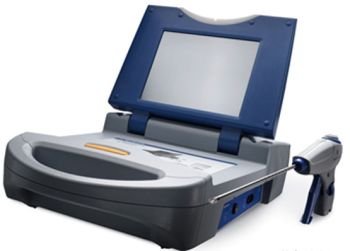
A bladder ultrasound is performed by placing an ultrasound probe, which is like a plastic microphone, on the patient’s lower abdomen over the bladder. This is done after the patient has been asked to void, and the probe calculates how much urine is left in the bladder. This procedure is totally painless, and a medical assistant, a nurse, or a physician performs this in a physician’s office.
What is a cystoscopy?
Cystoscopy means literally to look into the bladder. A cystoscope is either a rigid or flexible instrument that has a lens at one end and is connected to a light source. The instrument permits the urologist to look up through the penis and through the prostate and into the bladder. A cystoscopy can be done with either a rigid or flexible cystoscope. If a rigid cystoscope is used, the patient is placed on his back with his feet in stirrups. If a flexible cystoscope is used, the patient is positioned flat on his back with his feet out straight or the supine position. A cystoscopy can beperformed with either the patient under general spinal or local anesthesia and can be done in either the physician’s office or the operating room in the hospital.
What is a urodynamics test?
An urodynamics test is a way to assess the function of the bladder. It can also measure the degree of blockage or obstruction that the prostate is causing. In a sense, an urodynamics test does for the bladder what an ECG or electrocardiogram does for the heart. It tells you how well the bladder muscle is working.
An urodynamics test is always done with the patient awake because it is interactive. The patient has to tell the doctor or nurse performing the test what he is feeling (e.g., does his bladder feel full, and does he feel the urge to void?).
The urodynamics test is pretty straightforward. The patient lies on his back, and his genitals are washed with a sterile solution; then sterile drapes are placed around the genitals. A rubber catheter is placed through the penis into the bladder, and the catheter is connected to a machine that records pressure measurements.
Fluid is run through the catheter into the bladder to mimic the bladder being filled with urine. During the urodynamics test, x-rays of the bladder can also be taken. A typical urodynamics test usually takes 45 minutes to 1 hour to perform.
Terms:
Urologist – a person trained to treat the genitourinary system.
Digital rectal exam – part of the physical exam where the urologist palpates the prostate by inserting a finger into the rectum.
Uroflow – a measurement of the force and volume of the urine stream.
Bladder – ultrasound a test done through the skin to measure how much urine is left in the bladder after voiding.
Cystoscope – the instrument that is used to look into the bladder during a cystoscopy
Urodynamics test – a test that assesses how well the bladder functions
Catheter – a soft plastic or rubber tube that is inserted in the urethra, through the prostate, and into the bladder in order to drain urine.