VIDEO
High Blood Pressure Lose Weight to Reduce Hypertension

Non-pharmacological treatment
Weight loss
I am rather overweight and keep meaning to do something about it. Will losing weight help to reduce my BP?
There is considerable evidence that losing weight is associated with important reductions in BP in obese people. Reductions of 10% of bodyweight can be achieved by motivated people by reducing calorie intakes to 450–1500 kilocalories per day. The size of benefit is 3 mmHg systolic and 3 mmHg diastolic BP reductions.
A more important benefit is that, in people already taking BP lowering drugs, weight reduction is associated with a lower dose and fewer BP-lowering drugs being needed to control their BP to target levels. More important still is the effect of weight reduction in reducing your risk of diabetes to which people with raised BP are especially prone.
Would it help if I joined a weight-losing group?
We routinely recommend weight loss to overweight and obese people. Such a strategy has a clear benefit in controlling BP. However, many people find weight loss a difficult target to achieve. We advise people to join Weight Watchers or other such organizations, as there is good evidence that losing weight with a group is more effective than trying to do it by you.
Commercial weight-losing groups like Weight Watchers are well known and available in almost all towns. If you join one of these, you are more likely to lose weight and maintain your loss. The standard of dietary advice is probably better than you will get from the average family doctor; however, they are expensive enough to be out of reach for many people’s pockets.
Equally good results have been achieved by non-commercial voluntary groups, often based on NHS health centers or group practices. Most have been started by local enthusiasts, people as well as Practice Nurses, Health Visitors or Community Dietitians. If the sort of group you think you need does not exist locally, and you fancy the task of starting one, you should get in touch with others who have real past experience of doing this. Dietitians at your local hospital, or your Community Dietitians if there are any near you, will probably be able to help you.
How exactly does weight or weight loss affect BP?
Body growth mainly depends on ultimate stature, i.e. adult body size and shape. In people who have been well nourished in childhood, this depends almost entirely on inheritance but, if childhood nutrition is poor, full potential inherited stature may not be reached. Even in a comparatively rich country like Britain, there are still big differences in average height between income groups, and these differences are actually greater now than they were in the 1930s. Growth hormone is an important determinant of BP in adolescence, and is also one of several determinants of Type 2 (non-insulin-dependent) diabetes in middle age, the others being inheritance and overweight. Although the connections between causes of high BP and causes of diabetes are not yet fully understood, they are certainly important for a large proportion of both groups.
People with high BP are more likely to get diabetes later on, people with diabetes are more likely to get high BP, and both are powerful causes of stroke and coronary heart disease. For these reasons throughout this book, although it is supposed to be about high BP, diabetes keeps cropping up. Nature has little respect for labels. There is evidence that under nutrition during fetal development or infancy, followed by over nutrition in adolescence or adult life, may be a common and important cause of high BP and diabetes.
The weight clinic that I attend is always talking about Body Mass Index or BMI. What exactly is this?
We can rank people for weight despite varying height by using the Body Mass Index (BMI) formula:
BMI = weight in kilograms/height in metres2 or kg/m2
Your BMI is in the normal range if it is between 20 and 25. For example, if you weigh 80 kg and are 2 meters high, your BMI would be 20. People below BMI 20 are underweight, and above BMI 25 are overweight. Over 30 is classed as obesity. The rise in death rates for obesity rises rapidly from a BMI of 30, so this is when dietary control of weight is particularly important.
My weight is spread around my middle. Does this matter?
BMI is a useful rough guide to desirable weight for height, but it takes no account of good evidence that body shape is more important than weight-for-height alone. Overweight people whose body fat is concentrated around the middle are more likely to have high BP, and are at higher risk of coronary disease, than overweight people whose body fat is mainly in their arms, legs, breasts and buttocks. The best way to measure this is to divide belly girth by hip girth, both at their widest point: a healthy result is less than 1.00. Coronary risk rises in people whose belly girth is greater than their hip girth – the beer-drinker’s belly.
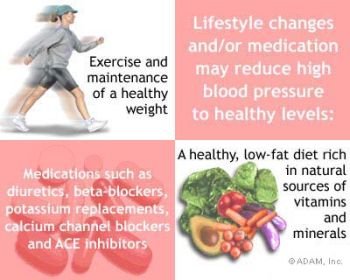
My doctor has advised that addressing all non-drug treatments simultaneously – weight loss, salt reduction, more exercise and less alcohol – is the most effective way of reducing my BP. This seems like hard work. Is it worth it?
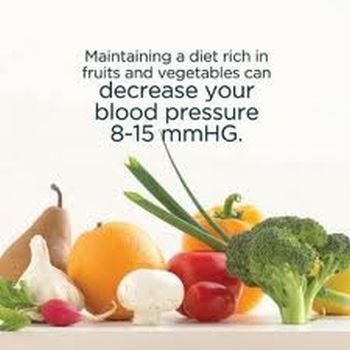
Yes it is, though you’re quite correct that it will require quite a lot of effort. A recent randomized trial in the USA of obese (BMI greater than 30), middle-aged patients (average age 50) with moderately raised BP showed that sustained changes in lifestyle including increasing exercise, losing weight (loss of about 5 kg on average), moderating alcohol consumption and changing diet (reducing salt intake and increasing fruit and vegetable intake) resulted in a reduction of about 4 mmHg systolic blood pressure on average. Though non-drug treatment does not produce falls in BP as substantial as drug treatment, it does have the advantage that other risk factors are simultaneously altered, resulting in an overall reduction of cardiovascular risk. Non-drug treatment is highly beneficial whatever age you are.