Babies Eating Lemons for First Time Compilation 2013

New tastes and textures
With so many delicious, nutritious foods available, you can be forgiven for becoming confused about what your baby should and shouldn’t be eating. It’s a good idea to start slowly, and take your time in introducing new foods. Once your baby gets used to the idea that food can be fun and delicious, she’ll be an instant convert.
Should I put off introducing wheat until later?
Wheat can be introduced to your baby from six months onward. If there is a history of allergies in your family, you may wish to introduce new foods one at time and over two or three consecutive days, so that if there is a reaction, you’ll know what has caused it.
When can I introduce dairy products?
By six months, it is perfectly safe to add some cow’s milk and dairy products (such as yogurt, cheese, and butter) to food. You can give cow’s milk with your baby’s cereal, or use it when making a cheese sauce, for example. Again, if there is a history of allergies in your family, follow the advice given above when introducing a new food. Cow’s milk, and other milks, such as soy, rice, and oat milk, can be used in the preparation of your
baby’s food, but should not be offered in place of his normal milk feeds, which need to be continued until he is at least 12 months old. When cooking, always use whole, rather than low-fat milk, until your baby is at least two years old, as he’ll need the calories to fuel his rapid growth.
Is it OK to give my six-month-old baby yogurt?
It’s fine to introduce yogurt to your baby at six months. Be careful when choosing yogurts, however, as many contain artificial sweeteners and flavorings that aren’t appropriate for babies. Ideally, you’ll want to find one without any added sugar, and blended with fresh fruit purée. Many babies prefer fromage frais, because of its creamier consistency; choose one that is free from artificial additives and sweeteners. Otherwise, you are better off adding a little of your own purée to some plain yogurt, and introducing dairy products this way. Live yogurt is fine for little ones, and will encourage healthy digestion, but all milk products offered to babies should be pasteurized. Make sure you choose whole-milk yogurts, never low-fat, as your baby will need these extra calories.
Can I give my baby pasta?
Once your baby is able to chew, stirring tiny cooked pasta shapes into her purées is a great way of introducing texture. As your baby gets used to the concept of chewing, the size of the pasta shapes can increase. This is a good way to gradually move from smooth purées to more challenging textures. Larger pasta shapes, such as penne, farfalle, or fusilli, make good “finger food.” Make sure the shapes are big enough for your baby to hold.
What other grains are healthy and suitable for babies?
It is a very good idea to offer different grains, not only because they provide your baby with a variety of nutrients, but they also introduce him to different textures and tastes. Oats are a good starter food-try your baby with oatmeal or the. Rice, couscous, and quinoa are good, too, as they are quite soft to chew. A little later on, you can introduce grains like millet and buckwheat, but at first, choose grains that are easily digestible and won’t fill up your baby’s tummy before he’s tasted the other foods available on his plate.
When should I introduce eggs?
Eggs can be safely introduced at about six months of age. Make sure they are fully cooked, however, and not served runny or soft-boiled. Egg allergy is less common than people think, but children with a family history of allergy or those who suffer from eczema are more likely to have an allergy to eggs. If your baby is in this “high-risk” group, you may wish to introduce eggs over two or three consecutive days, so that if there is a reaction, you’ll know what has caused it.
At what age should I introduce fish?
Fish can be introduced at six months. It’s sometimes hard to find jars of purée containing fish, which is why making fish dishes for your baby is especially important. White fish, such as cod, haddock, sole, or plaice, are good first bets due to their mild flavor and digestibility. Sole, sweet potato, and broccoli purée is a great recipe for introducing little ones to their first taste of fish. Oily fish, such as tuna and salmon, can be introduced at six months too, and these are rich in essential fatty acids, which are important for your baby’s brain development. Mixed with root vegetables, such as carrots or sweet potatoes, these can make tasty purées for your baby. It’s important not to discourage little ones from eating fish, because it’s such a great food. If overcooked, it can be dry and tasteless-it needs just a few minutes in a pan or microwave. Also, be vigilant in removing all of the bones. As with all new foods, if there is a history of allergies in your family, you may wish to introduce fish over a few consecutive days, so you can watch for a reaction.
Can I give my baby chicken?
Yes, do introduce chicken and other meats, once she is comfortable with simple purées.
Chicken, in particular, is a great first meat, since it has a mild flavor and is tender. The dark meat actually contains twice as much iron and zinc as the white meat, so try to give her the dark meat as well as the breast. You can also make this with the chicken thigh meat-just cook the chicken a little longer. Some babies object to the texture of meat, and chicken can be a little stringy if it is overcooked without liquids. Slow poaching will usually produce light, tasty, and easily chewed chicken.
Are there any finger foods appropriate for this age group?
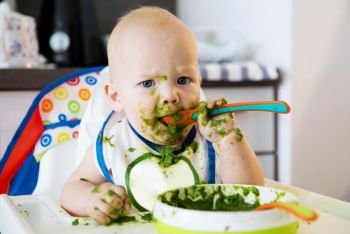
Finger foods are to be encouraged, because they help your baby to develop the skills necessary to feed herself, and to persuade her to chew and explore new tastes and textures at her own speed. First finger foods should be able to be “gummed” to a suitable consistency for swallowing. Always supervise your baby due to the risk of choking.
* Finger foods
1. Melt in the mouth:
• Steamed soft carrot sticks, broccoli, and cauliflower florets
• Pear, banana, apple, blueberries, mango, peach, strawberries
• Avocado
2. Bite and dissolve:
• Steamed new potatoes
• Toast fingers
• Miniature rice cakes
• Well-cooked pasta shapes
• Mini sandwiches with soft fillings
3. Bite and chew:
• Oven-baked potato or sweet potato wedges
• Cucumber sticks
• Cheese, cut into sticks
• Small chunks of fish or chicken
• Dried apricots and apple rings
At what age can my baby tolerate “lumps”?
Different babies tolerate lumps at different stages, but most babies will give foods with lumpier textures a go at around eight months, once you’ve established a good repertoire of purées and finger foods, although you may have to wait a little longer if your baby finds them difficult to manage.
To begin with, try mashing food, then add in lumpy foods with a soft texture, such as rice, couscous, or tiny pasta shapes, to your baby’s favorite purée. Babies prefer overall lumpiness to a smooth purée with an occasional lump. At first your baby may refuse anything other than smooth purées, but over time, he’ll learn to control food in his mouth, and then chew, “gum,” and then swallow them.
If he gags or seems distressed, don’t worry; simply go back to his regular purées for a week or so, and then try him again with smaller pieces of mashed food
My baby has six teeth; is she able to bite and chew now?
The ability to chew is not just about having the teeth to do so! Some babies manage to eat a wide variety of foods with no teeth at all, mastering the art of “gumming” to make them smooth enough for swallowing. Biting is obviously more difficult without teeth, but it’s amazing what babies can achieve when they set their minds to it! It’s absolutely worth introducing some finger foods that will require your baby to bite off pieces and chew or gnaw. Start to introduce lumpier textures as soon as she seems ready, then mash, rather than purée her meals, until she has enough teeth to chew whole, well-cut foods properly.
At what age can I chop foods finely instead of puréeing them?
The same advice goes here, really. Keep an eye on your baby, and assess what he’s able to manage. If he is comfortable with a variety of finger foods and lumpy purées, then move on to chopping and mashing, and leave your food processor for more difficult foods, such as dried fruits, seeds and nuts, and tougher cuts of meat.
Did you know…?
That many babies who refuse lumpy foods will happily chew on finger foods? Introducing lumpier textures can be a stressful time for parents, but don’t despair, because if your baby is chewing on finger foods, this means he can easily cope with lumpier textures. The muscles a baby uses to chew are the same ones used for speech, so encouraging your baby to chew will help his speech development too.