“In a flood of words, surely some mistakes”.
Chinese Proverb
VIDEO
Bipolar Disorder. Sex, Hyper sexuality, High Libido.

I feel happy and productive. How can I have a mental disorder?
There are several possible answers. First, you have no mental disorder and someone is over-pathologizing your upbeat, get-up-and-go attitude.
The line dividing normal variation in mood and pathological variation is often in the eye of the beholder. Although clinicians can generally agree on severe diagnoses like schizophrenia, bipolar I disorder, and major depressive disorder, milder variations on these disorders cast very wide nets that overlap with normal variations in personality.
This is especially true for other mood disorders such as bipolar II disorder, cyclothymia, bipolar disorder NOS, depressive disorder NOS, and dysthymia. The DSMIV-TR offers specific criteria for each of these conditions. Deciding whether a patient’s particular behavior, feeling, thought, or attitude represents any one of those specific criteria, however, is more subjective impression than objective application. There are also many conditions described in the scientific literature known as bipolar variants or bipolar spectrum disorders that include ultra-rapid cycling or ultradian bipolar disorder that have not yet been established by the DSM committee.
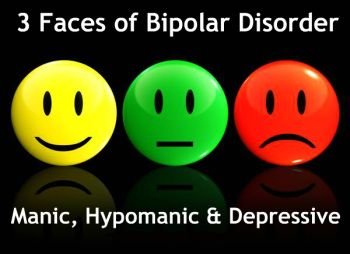
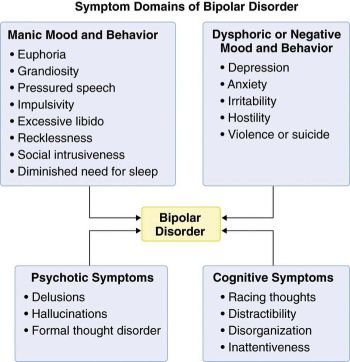
Second, what you perceive to be happy and productive may not necessarily be anything of the kind. Ask yourself whether people around you are repeatedly getting in the way of your happiness or productivity or placing obstacles in your path toward your goals. If you find that many times your claim to happiness and productivity is really just a feeling and that everyone else sees something very different, then you need to take stock of why there is such a disparity of opinion. Typically when patients are suffering from mania, they are happy but everyone around them is miserable. This is partly because when someone intrudes on a manic person’s goals and happiness he or she can become extremely angry and aggressive. Irritability at this point intrudes and generally becomes the dominant mood. Manic individuals impulsively engage in reckless and hedonistic activities and do not think of the ultimate consequences of their behavior, such as bankruptcy, divorce, or worse.
Finally, the reason for your good mood may be because you are taking medication and it is working. Keep in mind that bipolar disorder is a chronic, recurrent condition and medication merely controls the symptoms and prevents relapse. Too often, after responding to medication, a person believes the problem is over and medication is no longer necessary. This is especially true early in treatment when one believes it was a onetime, stress-related incident that precipitated the mood episode. Although psychiatrists cannot predict the future, the issue of future episodes is a matter of evaluating the risk of relapse while off medication versus the risk of side effects while on the medication. Generally speaking, the risk of developing a clinically significant depressive episode far exceeds a relapse into mania, and it is usually the depressive episodes of bipolar disorder that are most debilitating.
How does bipolar depression differ from major depression?
The symptoms of depression in bipolar disorder are the same as in major depression. In fact the depressive episode of bipolar disorder meets the same criteria outlined for a major depressive episode in the DSMIV- TR. The differences between the illnesses have more to do with their genetics, clinical course, prognosis, and treatment.
Bipolar disorder is so often missed because the depressive episodes look the same; it takes an average of eight years for the correct diagnosis of bipolar disorder to be made in a person who presents for treatment of depression. Frequently patients fail to report a history of hypomanic or manic symptoms, but clinicians may fail to recognize past manic symptoms as well. Bipolar II disorder is more likely to be missed than bipolar I due to the reduced severity of hypomanic symptoms. It is the history that is important in making an accurate diagnosis of bipolar disorder in a depressed individual.
Some clinical features, however, are thought more indicative of bipolar disorder than major depression. These include a younger age of onset (< 25 years old), presence of atypical symptoms, psychotic symptoms, and co morbid substance abuse. A family history of bipolar illness is also suggestive. Other associations include multiple depressive episodes, brief duration of depressive illness, and antidepressant-induced mania or hypomania. Although none of these associations are diagnostic of bipolar depression, they can alert a clinician to watch for future manic episodes.
Although primary care physicians often diagnose cases of depression, including a bipolar depressive episode, because of the unique difficulties in treating bipolar depression, it is critical that a psychiatrist closely follow the treatment course. Treatment of bipolar depression can be difficult because the use of antidepressant therapy poses risks for a manic switch. Lithium has historically been the mainstay for bipolar depression and has been shown to reduce risk of suicide in bipolar patients, but it has numerous side effects. Recent approval was obtained for the combination of olanzapine and fluoxetine (Symbyax) specifically for bipolar depression.
Anticonvulsant medications have been preferentially utilized for treatment of manic episodes. Lamotrigine has been approved for prevention ofdepressive recurrences in bipolar disorder. If a psychiatrist determines that an antidepressant is necessary, current practice is to have a mood stabilizer on board prior to initiating the antidepressant, as this may be protective of a manic switch from the antidepressant.
Terms:
Relapse – the return of symptoms of a mental illness for which one is currently receiving active treatment.
Relapse occurs during response to treatment or during remission of symptoms. If symptoms return after six months of successful treatment during what is termed the recovery phase, the term used is recurrence
Recurrence – the return of symptoms of a mental illness following complete recovery, considered to have occurred following a period of six months symptom free.