3D Medical Animation – What is Cancer?

Why does cancer cause symptoms?
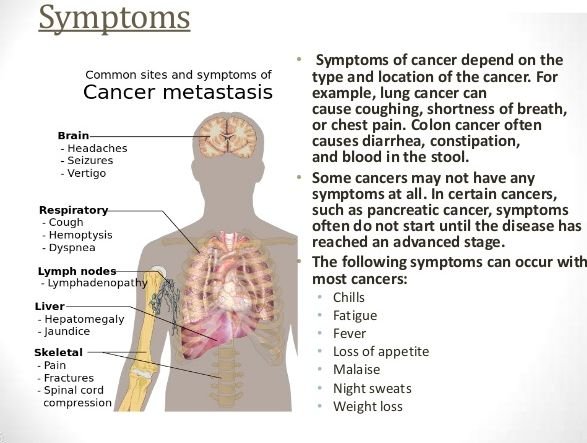
The symptoms of a cancer depend on where it begins and how it grows. If the tumor is close to the surface of the body, you might see a lump or swelling, a change in color of the skin or mucous membranes, a sore that doesn’t heal, or bleeding. If the tumor is deep within the body, you might not have symptoms until the tumor grows large enough to press on other structures, perhaps blocking a passageway and causing an obstruction. For example, a blockage of an airway in the lung can cause a cough, blockage of the intestine can cause constipation or vomiting, and blockage of the bile duct can cause jaundice.
As a tumor grows, it can cause pain by putting pressure on different parts of the body. A tumor may also cause fluid to accumulate in the body. The abnormal buildup of fluid in the abdominal cavity is called ascites, which can cause swelling and pain in the belly. The abnormal buildup of fluid in the chest cavity is called pleural effusion, which can cause a cough and shortness of breath.
Symptoms from a cancer may not develop until the tumor has metastasized. For example, a spreading to the liver can cause abnormal blood tests, pain, and jaundice; a spreading to the bone can cause pain; and a spreading to the brain can cause confusion. Having a cancer may also change the body’s metabolism, causing symptoms such as weight loss, fever, sweats, and fatigue.
Terms:
Ascites – The abnormal buildup of fluid in the abdominal cavity.
Pleural effusion – The abnormal buildup of fluid in the chest cavity.
What are the treatments for cancer?
We can treat cancer in a number of ways:
• By surgery, to remove the tumor, sometimes with surrounding tissue and local lymph nodes. Surgery can also be done to remove part of a tumor or to relieve symptoms caused by the tumor.
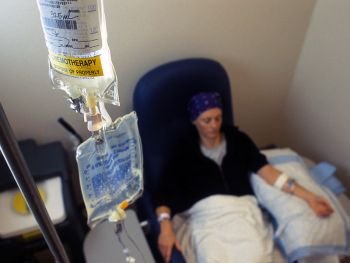
• By chemotherapy, treatments with drugs that destroy cancer cells or stop them from growing.
• By biologic therapy, treatments with immune substances that destroy cancer cells or strengthen the ability of the immune system to destroy cancer cells.
• By hormonal therapy, treatment that alters specific hormone levels in the body by stopping the production of the hormone, blocking the hormone, or adding hormone, thereby slowing or stopping the growth of cancer cells.
• By radiation therapy, the use of high-energy radiation to destroy cancer cells.
Surgery and radiation therapy are local treatments, directed to a particular part of the body. Chemotherapy, biologic therapy, and hormonal therapy are systemic treatments, which travel through the bloodstream to all parts of the body.
Cancer treatments are constantly evolving as doctors better understand the biology of how cancers start and grow and as they develop new ways to perform less invasive surgery and to more precisely deliver radiation therapy. For many cancers, doctors use combined modality therapy, that is, a combination of treatments. Oncologists, doctors who specialize in the treatment of cancer, can recommend the type of treatment that is best for you. The treatment depends on the type of cancer, the stage of disease, and your general state of health. Depending on your situation, the goal of the treatment may be to cure the disease, to control the growth of the cancer, or to relieve symptoms and improve quality of life (i.e., palliation).
Terms:
Chemotherapy – Treatment with drugs that destroy cancer cells or stop them from growing.
Biologic therapy – Treatment with immune substances that destroy cancer cells or strengthen the ability of the immune system to destroy the cancer cells.
Hormonal therapy – Treatment that alters specific hormone levels in the body by stopping the production of the hormone, blocking the hormone, or adding hormone, thereby slowing or stopping the growth of the cancer cells.
Radiation therapy – The use of high-energy radiation to destroy cancer cells; also called radiotherapy.
For many cancers, doctors use combined modality therapy, that is, a combination of treatments.
Palliation – Treatment to relieve symptoms and to improve quality of life.
When is surgery used to treat cancer?
For many cancers, surgery is performed to remove the primary tumor. The local lymph nodes are often also removed for testing to determine whether the cancer has spread to the lymph nodes. If the tumor has invaded surrounding structures, they may be removed at the same time. For some patients with locally advanced disease, radiation therapy and/or chemotherapy are given before the surgery to shrink the tumor. This increases the chance that the entire tumor can be resected or removed. In some cases, it also allows for resection of the tumor without the need to remove surrounding structures. For example, this approach may be used with a cancer in the rectum, to avoid having to also remove the anus and create a permanent colostomy or opening in the skin for defecation.
Surgery can also be done to resect part of a tumor or to relieve symptoms that a tumor causes. Examples are surgery to remove a metastatic tumor in the brain, to bypass a blockage of the intestine, or to repair a bone broken from the spread of the cancer.
What is radiation therapy, and how is it given?
Radiation therapy treats disease with high-energy waves or particles. Radiation therapy is most commonly administered as external beam treatment. Beams of radiation are directed from a machine outside the body, markings, usually in the form of permanent tattoos the size of a pinhead. These devices and skin markings are used to position you correctly each day of treatment. While you are in the treatment position, radiologic images are taken to localize the area to be treated. Depending on the treatment planned, the images may be taken via X-rays, CTs, MRIs, and/or PETs.
After the simulation, the radiation oncologist (the doctor who prescribes radiation therapy), working with a physicist and dosimetrist (someone who calculates amounts of radiation), develops a treatment plan. This includes the dose of radiation to give, the number of radiation beams needed, at what angles they should be directed, and how they should be shaped.
Once the planning is completed, treatment begins. Treatment does not usually require hospitalization. It is given every day, Monday through Friday, until the total dose has been delivered-generally anywhere from 2 to 9 weeks. You are usually in the treatment room for 15 to 30 minutes each day. Radiation therapists set you up in the correct position and then leave the room. Using controls outside the room, they turn on the radiation beam, which stays on for about 5 to 15 minutes. When the beam is on, you feel nothing; there is no pain, burning, or discomfort. You may see the treatment machine move around you to the different positions needed to deliver each beam, and you hear the machine as it turns on and off. During treatment with external beam radiation therapy, your radiation oncologist and radiation oncology nurse see you weekly. They will evaluate how you are tolerating the treatment and help you manage any side effects you develop. We have made many advances in radiation therapy in recent years.
Technological advances in planning and delivering treatment are designed to direct the radiation beams more precisely, thereby reducing the doses received by the surrounding normal tissues. You might hear your doctor mention “three-dimensional conformal adiation therapy,” “intensity-modulated radiation therapy,” “image-guided radiation therapy,” or “stereotactic brain or body radiosurgery/radiotherapy.” New machines have also been developed to deliver treatment, for example, the TomoTherapy and CyberKnife systems and machines that deliver proton therapy.
Also, treatment schedules may vary. For instance, you may receive decreased doses given more than once a day or increased doses given in only one to five treatments. In addition, chemotherapy may be given with your radiation to enhance your response to treatment. Radiation therapy can also be administered by placing a radioactive source inside the body-an approach called internal radiation. One form of internal radiation is brachytherapy, radiation treatment that involves placing sealed radioactive sources (for example, seeds, wires, ribbons, or tubes) into the body.
These emit radiation into the immediately surrounding area as they decay (or break down). Depending on the type of source used, it may be kept in place for 15–20 minutes or for several days. Some sources are left in place permanently and are referred to as permanent seed implants; these implants decay and lose their energy over time, usually a number of months. Another form of internal radiation can be taken by mouth or injected into a vein (radiopharmaceutical therapy). This radioactive material travels through thebody and collects where tumor cells are located, emitting radiation until the body eliminates it.
Internal radiation may require hospitalization, and you might have to be isolated for a period of time because of the radiation your body is emitting. Your radiation oncologist and a physicist from the radiation safety service will advise you on the precautions you need to take. Here are some sources of information on radiation therapy:
• Radiation Therapy and You: A Guide to Self-Help During Cancer Treatment, published by the National Cancer Institute: www.cancer.gov
• American Society for Therapeutic Radiology and Oncology: www.rtanswers.org
• American College of Radiology: www.radiologyinfo.org
Terms:
Brachytherapy – Radiation treatment that involves the placement of sealed radioactive sources (for example, seeds, wires, ribbons, or tubes) into the body that emit radiation into the immediately surrounding area as they decay (or break down); also called implant or internal radiation.
Radiation – therapy is carefully planned to ensure that an accurate dose is delivered to the tumor site while minimizing the dose received by the surrounding normal tissues.