A Quick History of Photography
THE JEAN PAUL GETTY MUSEUM – Elizabeth Rigby (Lady Eastlake)
Documents and pictures
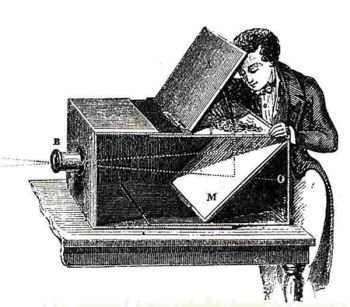
All of these terms are problematic, but the distinction is real and has generated much of the photography we routinely encounter. The photographic document, like other kinds of document, is typically perceived to be a neutral, style less, and objective record of information. The document is usually thought to be devoid of subjective intention, even of human will – it is frequently claimed that the camera produces images automatically, as if unaided by an operator. For instance, a French caricature from 1840 makes fun of a photographer dozing while his apparatus does all the work.
Photographic art, in contrast, lays claim to intention, subjective expression, spiritual uplift, and aesthetic effect. Rather than snooze, photographic artists must be alert.
Some commentators have argued that a serious study of photography should abjure any consideration of art and focus on the instrumental forms and mass practices that are the mainstay of the medium. Photographic art, it is suggested, is an invented tradition, or ideology, and we would do better to look at the tasks photography performs in modern society. This is a strong argument; not least because the standard histories of photography have, all too often, focused on art at the expense of mass image forms: advertising, legal documents, pornography, anthropological images, topographic views, and so forth. However, there are two good reasons for continuing to study art-photography. Firstly, the early pioneers of photography drew many of their key terms from established conceptions of art: ‘photogenic drawing’, ‘picturesque views’, ‘prints’, and so on.
The language of art was available to photography’s first viewers; it shaped what could be imagined and what could be done. The effects of these initial musings have had long-term consequences for our understanding of photographs. Secondly – and this follows on from the previous point – the document and the art-photograph are locked together: these are mutually determining categories that draw a great deal of their meanings from their antithetical relation.
In the history of images, one category of representation has typically been set against the high-flown practices of art and cast in the role of lowly carrier of information. To take just a couple of random examples: during the 16th century, the art of northern Europe was seen as descriptive and realistic, in contrast to the learned painting practised in Italy; in the 18th century, the topographic view (supposedly a literal description of place) was cast against the sublime or picturesque landscape. In recent times, photography (truth or record) has been opposed to painting (emotion or expression). This distinction is reiterated within photography itself: documents are set against pictures. In all of these oppositions, the representational underling is viewed as descriptive and ‘matter-of-fact’.
Most of these oppositions have their roots in the distinction between the ‘liberal’ and the ‘mechanical arts’, which was enshrined during the Renaissance of the 15th century. Renaissance artists engaged in a protracted struggle to raise the status of their work and their social standing. That is to say, painters sought to distinguish themselves from wheelwrights, barrel-makers, and others with whom they were frequently classed. To do this they insisted that their work was a liberal art and not a lowly artisanal (or mechanical) trade. Artisanal labour was viewed by the elite as demeaning. Those who worked with their hands – displaying ‘mere’ skill, facility, or imitation – were said to be ‘servile’, because they followed a plan established by others rather than demonstrating their own ingenuity. In contrast to the artisan, the liberal gentleman, who wrote poetry or engaged in geometry, was thought to display learning and intellect and, as such, was said to be untouched by the stain of work. Artists responded to this argument by attempting to infuse their work with the explicit signs of mental effort: this involved appeals to classical learning, the creation of idealized figures that were not copies of imperfect nature, and characterizing line and drawing as more foundational than mere colouristic effects.
A decisive turning point in artists’ protracted struggle over status occurred with the establishment of the Académie Royale de Peinture et de Sculpture in Paris in 1648, and then the Royal Academy in London in 1768. The painter-theorists who directed these institutions – Gerard Lebrun and Sir Joshua Reynolds, respectively – established Academic rules and precedents designed to assert the intellectual content of their work and raise the standing of art. Here is Reynolds: The value and rank of every art is in proportion to the mental labour employed in it, or the mental pleasure produced by it. As this principle is observed or neglected, our profession becomes either a liberal art, or a mechanical trade. In the hands of one man it makes the highest pretensions, as it is addressed to the noblest faculties: in those of another it is reduced to a mere matter of ornament; and the painter has but humble province of furnishing our apartments with elegance.
According to Academicians, any art based on copying endangered the practice by proximity to the characteristics associated with the artisan or ‘rude mechanic’. In this Academic tradition, the presence of detail, because it suggested copying, had to be avoided at all costs.
In contrast, Academic art stressed broad or general effects and idealized forms. Art was characterized by its distance from the contingent features of the actual world and in this way signified the presence of an active intelligence. In Reynolds’s argument, art and work stand as mutually determining terms: art is noble and elevated, while work is vulgar and base; the artist is a free subject in contrast to the subjected worker. During the 19th century, the Academic tradition was transformed – in Britain by the popularity of genre painting and ‘Naturalism’, in France by Realism and Impressionism. Nevertheless, many of the structuring oppositions from the Academic tradition remained in place. Copying or imitation continued to be viewed as mindless and mechanical, while invention and idealization were highly valued.
Photography took its place within the established cultural antimonies.
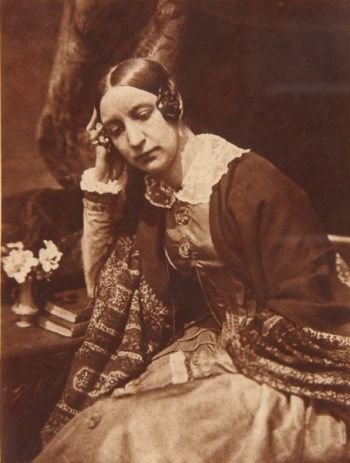
In an important essay written in 1857, Lady Elizabeth Eastlake suggested that what photography did best ‘was beneath the doing of a real artist’. Photography made exact copies of things: it saved artists’ effort, labour, and time, and it freed them to concentrate on imaginative or creative work. Those who wanted to dismiss this new image-form argued that it was just a mindless, automatic means of copying. But art-photographers also repeatedly echoed this distinction, arguing that it was necessary to wrench photography away from the automatic imprint of the apparatus, to imbue it with intellectual characteristics; to reject details, copies, and documents. Within photography itself, then, the same division evident in the Academic tradition was reiterated: documents were seen as objective, mechanical copies characterized by superabundance of detail and practical utility; art photography aspired to the status of invention and subjectivity.
This opposition generated some of the most significant functions of photography.
Objectivity
Photographic documents are central to our culture and we all have a sense of what they look like and what they do. We use pictures like this all the time. A great deal of our information about our world comes from these images, and all manner of specialist professions employ photographic documents in their work. Despite the evident importance of the document, however, there has been remarkably little critical attention paid to it. The exception is Molly Nesbit’s account of the photographs made by Eugène Atget at the turn of the 20th century.
Atget was not an artist, he made images of Paris for others to use, particularly some of those engaged in the skilled Parisian trades: theatrical designers, metal workers, illustrators, and those who worked off nostalgia for ‘old Paris’. He didn’t claim anything special for these images. When the Surrealists wanted to publish one of his pictures in their magazine, he declined any credit, adding ‘These are simply documents I make’. Nesbit describes Atget’s document as a ‘nonaesthetic’, workaday form, with two key features: firstly, it is a practical, utilitarian image; secondly, it is built on ‘openness’. The document is always defined by its viewer, who brings his or her specialist requirements to it. For those who employed Atget’s images, aesthetic significance was of little or no relevance.
Information, content, detail, and use are what count in documents. According to Nesbit, ‘an architectural photograph would be called a document, as would a chronophotograph, a police i.d., or an X ray’. The document, then, had no absolute form: the same image might be used by different specialists, and so it had to be open to interpretation. At get was skilled in creating images that served several constituencies.
However, some key characteristics of the document had been established well before Atget. Historians of science have recently paid considerable attention to investigating the category of ‘objectivity’ – a key concept in the functioning of the photographic document and in other documentary media. Common sense suggests that objectivity is a self-evident part in the toolbox of science and other specialist forms of observation (the news media typically claim objectivity). However, historical scrutiny suggests that objectivity emerged as a component part of the new subjectivity for observers during the 18th and 19th centuries. We are all familiar with this conception of subjectivity from popular representations of the scientist: this is not the wild-eyed genius on a bad hair day, but the white-coated, emotionless, super-logical analyst.
The modern conception of objectivity began to take root as a response to the capitalist division of labour, which fragmented work and knowledge into increasingly specialized portions. Some intellectuals responded to the challenge of specialization by adopting the values of detachment, disinterestedness, and self-effacement, thereby asserting a stance seemingly outside particular interests. This conception of objectivity entails eradicating all traces of the observer, which are seen to interfere with the process of recording data. This point of view presents observation as an activity independent of actual observers and their personal investments.
The long-standing tussle between scientific investigators and their illustrators offers one clear example of this process. Before photography, documents were obtained for scientists (or natural philosophers as they were called) from artists, but the men of science often disagreed with draughts men about what could be seen and how it should be depicted. The men of science opposed, what they saw as, the personal vision and aesthetic preferences of artists.
When the French Interior Minister announced the invention of photography to the Chamber of Deputies in 1839, he noted that it would enable the traveller, archaeologist, and naturalist ‘to note what they see, without having recourse to the hand of another’; similarly, William Henry Fox Talbot – the English scientist credited with the discovery of photography – dreamed of an automatic apparatus that would do away with his dependence on artistic skill. Photography, and in particular the photographic document, slotted neatly into this new vision of objective observation. Throughout its history, the camera has repeatedly been seen as an objective machine that captures information without any interference from the artist. We have already heard the sleeping photographer joke; in the early years of photography this was an often repeated theme: it was assumed that the sun made the picture, or the camera did, or even that the object in question depicted itself (Talbot spoke of his country pile, Lacock Abbey, as the first building ‘that was ever yet known to have drawn its own picture’). In each variant, the image emerges without any conscious involvement by the photographer. In this story, the camera figures as a model worker who never tires or loses attention, doesn’t demand more wages or go on strike. The document is, in its essentials, an objective form, which is deemed truthful because it seems to be independent of the values of actual observers. In this light, photographs can seem neutral witnesses to events.
Self/Other
The document was plain and artless; it was designed to be transparent so the viewer could look through its surface and concentrate on the things depicted. In the production of documents the camera is usually located in a frontal, straight-on position, providing as much detail as possible; the subject frequently fills the frame. Honoré Daumier’s Parisian Sketch of 1853 presents an anatomy of this form.
Daumier depicts two different Parisians and the way they comport themselves for the camera. The ‘natural man’ faces squarely up and stares into the lens – the resulting image will be direct and unadorned. ‘Civilized man’, in contrast, adopts an artfully contorted position and gazes thoughtfully into space; his stance requires the support of the draped table. The image – all fancy pose and deep shadow – is designed to convey dreamy reflection and sensitivity. It is, of course, a good joke about Parisian types – the no-nonsense, brutish bourgeois and his affected, artistic cousin – but it is also an excellent rendering of the difference between documents and pictures. Once again, these images assume their characteristic meanings through their contrast. Photographic documents have been employed to do many things, but it is instructive to turn briefly to the second half of the 19th century, when they were increasingly put to work by a wide range of state institutions and private organizations. In each case, the photograph was thought to produce an objective record, rather than an interpretation, or presentation, of information. One reason that this focus is useful is that it draws out the extent to which photographs depend for their meanings on networks of authority.
The image supplies little in itself. What counts is its use and the power to fix a particular interpretation of the events, objects, or people depicted. Some people, and especially some institutions, have much more clout in this process than others do. As John Tagg and others have argued during the second half of the 19th century, through depicting ‘abnormal’ cases, or those viewed as deviant – criminals, the sick, working people, colonial subjects, and so on – photography contributed to the definition of those who society classed respectable and normal. In the new intellectual disciplines and practices that developed during this period – psychiatry, anthropology, and others – the photograph was employed to identify and define new objects of knowledge; to categorize new specimens. One recent author, preparing a study of photographs made in Africa between 1840 and 1918, observed that his search for images led him not into art museums, but to museums of science, the archives of governmental ministries, professional societies, and former colonial companies. This process of investigation was built on a hierarchical vision, because in each case the person with the camera had the social authority, or money, to arrange and pose others for scrutiny: the photographer John Thompson, for instance, noted in 1873 the ‘trifling sums’ that he paid to poor Chinese people for ‘the privilege of taking such subjects’. Some people were authorized to look; others were looked down upon. The pictures made of medical bodies, criminals, colonial subjects, and slum dwellers were never intended for the gaze of those who appeared in the photographs; they were designed to receive the attention of ‘specialists’. Typically, these photographs were made in one place – the place where people of this kind were to be found – but circulated in metropolitan centres, in government departments, law courts, or professional institutions. Under these conditions, to be seen and pictured is to be caught up in the definitions of others deemed more expert or authoritative. The archives of photographs produced at this time were, in the first instance, subject to this kind of specialist, authorized attention. The images of the sick body were studied by medical students and surgeons; those of prisoners by detectives.
Nevertheless, these archives seeped into wider circulation. For instance, the images made by Dr Hugh Diamond of female inmates under his supervision at the Springfield asylum were issued as lithographic illustrations in John Conolly’s book The Physiognomy of Insanity in 1858.
Let me briefly examine a few examples from, what Tagg calls, these ‘archives of subjection’. Before the advent of photography police identification of suspects or repeat offenders relied upon eye-witness description and memory. Fingerprints emerged as a means of identification only during the late 19th century. When fingerprinting was combined with photographs, a powerful new technology of identification and surveillance came into being. (We tend not to pay much attention to the filing cabinet, but it played a significant role in this new system.)
Perhaps surprisingly, some time passed before photography was systematically employed by the police and prison network. Early photographic documents of British prisoners reveal lack of standardization: frequently men and women appear in their own clothes; there is neither regulated camera distance or position, nor any systematic pose; sometimes the images are presented in ornamental frames. Surprisingly from our perspective, initial prison photography was modeled on the middle-class portrait. When police photography really took off in the 1870s, it was much more regulated, with standard poses, camera positions, and so on. The documents produced were intended for comparison and differentiation.
However, there were two distinct tendencies involved at the time; the ‘police archive’ was torn between these rival models. On the one hand, was the idea of the ‘criminal type’, supposedly predetermined to offend against the law by his or her wicked nature. In this vision, the criminal was a kind of degenerate biological category. As Allan Sekula and others have shown proponents of this conception adhered to a ‘physiognomic’ model – the belief that interior mental states, or personality traits, are manifest in the characteristics of the body. Advocates of this pseudo-science attempted to produce images that would reveal innate criminal characteristics; photography was an obvious resource for this approach. In his book L’Uomo delinquente of 1876, Cesare Lombroso produced a range of portraits purportedly showing criminal types; more elaborately, during the 1880s, Francis Galton developed a technique of exposing multiple portrait negatives to form one image so that shared characteristics came through to give, what he claimed, was a physiognomic likeness of the inherent criminal type. At the opposite extreme to this generalizing trend was a particularizing vision, which sought to individuate criminals.
This approach, identified with Alphonse Bertillon, who directed the identification service of the Parisian Préfecture de Police from 1882, produced records of individuals that combined numerous photographic details of the body with careful measurements of the ears, the length and width of the nose, the distance between the eyes, and so forth. In both approaches, the photograph traces the marks of the body that would be used to identify and discipline those who offended against the existing norms of behaviour.
My other example of photography in the service of professional authority is drawn from the encounter between Western colonizers and the colonized peoples. The photographic document was one means through which the colonial powers envisaged their difference from their colonized subjects. These images originate from various sources: from the personnel attached to the colonial departments, missionaries, individuals working for colonial companies, and military officers. Anthropology, institutionalized during the 1840s, became increasingly concerned with photographic documentation during the 1870s. During this period, images of the colonial Other are overwhelmingly predicated on an idea of essential racial difference and a concomitant vision of racial superiority. Some observers were undoubtedly attracted to the way of life they recorded, which they imagined to be less repressed than Western society, but a basic hierarchy held.
Two different tendencies can also be discerned in the colonial archive. The first is based on a comparative method and follows some of the themes we saw in the police vision. This view, which was again physiognomic, saw the traces of racial difference on the body: cultural difference was here reduced to physical distinction (which was itself petrified and over-generalized). Photography played an important role in collecting images of different ‘races’, which could be anatomically compared and contrasted. In 1869, John Lamprey systematized this comparative approach by photographing the body against a gridded ground and establishing rules for camera distance, angle, and so on.
This method was designed to enhance comparison of the various specimens. Despite the seeming objectivity of this project, it was steeped in colonial ideology and illicit desire. The naked body of the colonized subject was scrutinized and displayed in a manner that would have been deemed entirely inappropriate for that of its colonialist counterpart. The images collected in this way were employed to sort and sift humanity – at the far end of this process lies ‘race theory’, genocide, and various forms of ‘ethnic cleansing’.
The second tendency involved projecting the fantasy of an ethnographic. Other thought to be outside of modern society, indeed outside of time. The culture of the colonized was thought to be locked in an eternal past and deemed incapable of change or dynamic transformation. There are plenty of examples of this kind of ethnographic photograph: African farmers posed for a hunt; people stripped of modern Western dress and arranged in traditional costume, and so on. Similarly, postcards circulating from colonial Algeria in the early 20th century purport to depict that which they could not possibly show: the closed space of the harem. In photographs of this second type, colonial fantasy mirrors itself –the image embodies the observer’s imaginary conceptions rather than any external conditions. Photography was employed from the later 19th century in a wide variety of archives, and each was subject to the authority of a new type of observer: a professional middleclass expert who lived by (usually) his claims to education, specialist knowledge, and trained, objective vision.
Documentary
Left like this, the document appears as an invidious image that serves powerful interests. But, as we saw earlier, documents are, by definition, open to diverse interpretations and uses. The ‘archives of subjection’ embody one kind of institutional use for documents. But other people and other institutions have cast them in other roles. We need to approach this subject with some sense of the contradictory possibilities in play, particularly as the document was transformed into documentary. The term ‘documentary’ was probably first used by John Grierson in 1926. Grierson wrote that Robert Flaherty’s ethnographic film Moana, ‘being a visual account of the events in the daily life of a Polynesian youth and his family, has documentary value’. (He was to become a central figure in organizing and promoting the film movement he described.) Documentary is an incredibly elastic category – perhaps even more so than ‘document’ – which is frequently used to describe war photography, photojournalism, forms of social investigation, and more open-ended projects of observation. It covers commissioned work (for newspapers, magazines, or books); pictures taken without direct commission, but that subsequently appear in some commercial format; and consciously planned books or exhibitions.
It is not uncommon to find a picture made in one context migrating to another: say, a photograph by We eyee made for a news story appearing in an exhibition, or a book representing his work as a photographer who has been awarded the status of auteur. It can seem very difficult to establish any common link connecting these disparate activities under the collective heading of ‘documentary’.
Nevertheless, we can detect some characteristic features that unite seemingly diverse documentary photographs. One approach to this problem and it has been a prominent one, claims that documentary, in all its forms, entails an objective, unmediated record of facts. Documentary is said to provide its viewers with direct access to truth. In his pioneering book on the subject, William Stott stated: ‘[t]he heart of documentary is not form or style or medium, but always content’. As we have seen, this is an argument rooted in the idea of the mechanical arts and the related conception of a detached observer. Most often, this approach is predicated on a range of negative injunctions: no colour (black and white); no cropping; no retouching; no posing, staging, or introducing extraneous objects; no additional lighting or dramatic light effects. What is left unsaid in this account is that some institutions or powerful individuals have the resources and authority to decide what counts as true or objective. As Tagg noted, if a photograph of the Loch Ness monster is to count as evidence for its existence it matters whether it was made by a private enthusiast or by the military. The site of its circulation matters just as much. In practice, the truth content of images is always open to dispute and can be challenged by contending interests. To take only one well-known example: in 1936, the American photographer Arthur Rothstein moved a sun-bleached steer’s skull from a patch of grass to cracked and parched soil, thus creating an iconic image of the effect of draught on small farmers. When this shift of site emerged there was a conservative outcry. This was not an objective record, the critics said, but an image that had been tampered with or set up – it was not a documentary record, but ‘propaganda’. In this instance, the presence of the photographer was deemed to disqualify the ‘content’ of the image.
There is another approach to documentary, though, which seems more defensible and more interesting. The art-photographer Ansel Adams criticized what is probably the most famous documentary project, the Historical Section of the Farm Security Administration, which produced 270,000 photographs of American society between 1935 and 1943. Adams claimed that those working for the FSA (including, among others, Arthur Rothstein, Dorothea Lange, and Walker Evans) where ‘not photographers’ but ‘a bunch of sociologists with cameras’. There is a point here: the two central subjects of documentary are war reportage and social investigation.
Evans himself outlined, for his boss at the FSA, an itinerary for a trip through the Southern States of America in 1935: Still photography, of general sociological nature. First objective, Pittsburgh and vicinity, one week; photography, documentary in style, of industrial subjects, emphasis on housing and home life of working-class people. Graphic records of a complete, complex, pictorially rich modern industrial center . . . .
It is important to grasp that Adams was committed to art photography as a form of self-expression: for him, significant photography involved the production of pictures, not mere records or documents. In one sense, Evans echoes this perception, referring to photography of a ‘sociological nature’, but there are other features from his itinerary that suggest another conception: ‘graphic records’ and, crucially, ‘documentary in style’. The latter idea represents an early articulation of a distinction that Evans returned to during the 1970s, when he stressed the difference between ‘documentary’ and what he termed ‘documentary style’.
Documentary, he said, was not a very clear idea because ‘an example of a literal document would be a police photograph of a murder scene’. What Evans, and those others we would label documentary photographers, did was work in a ‘documentary style’. Evans’s distinction is not quite as secure as he maintained, but it draws attention to an important point. Documentary photography is an aesthetic mode or a style. Often the champions of documentary deny this, claiming their work is style less, objective, and direct. Nevertheless, this work is always an approach to photography; a mode of representation predicated on the form of the document.
This style is characterized by two closely related factors: antisubjectivism and a gaze that looks outward to the world. (In his way, Adams registered this, but he was committed to the inward and the subjective.) Seen in this fashion, documentary seems more interesting and more defensible.