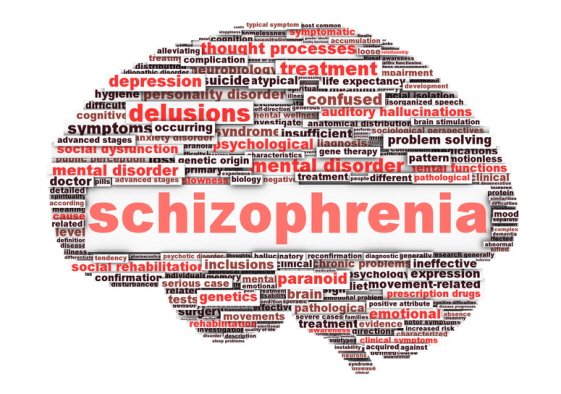
Schizophrenia: Stolen minds, Stolen lives
Psych Central – Schizophrenia and Psychosis
National Institute of Mental Health – Schizophrenia
Imposing categories on dimensions
The range of human variation is something we cherish. We would hate a world where everyone had the same personality, where there were no sensitive individuals, no moody individuals, no brave brash ones, etc. Similarly life without emotional variation would be intolerable. Aldous Huxley’s book Brave New World (where everyone was able to remain constantly content by taking a drug called ‘Soma’) was a nightmare scenario, not a utopia. Normal intensities of sadness (e.g. in grief ) or fear (e.g. in a house fire) match anything to be found in mental illnesses. There is no consistent cut-off, no absolute distinction between the normal and the abnormal – it is not a simple matter of degree. Even hearing voices when there is nobody about (auditory hallucinations) occurs in ‘normal’ people. Research in the Netherlands found a significant number of healthy people who regularly ‘hear voices’; widows and widowers regularly hear the voice of their dead partner quite clearly (and usually find it comforting). So how can the psychiatrist claim that hallucinations are symptoms of mental illness?
Medical practice involves pattern recognition. For most disorders there is a set of symptoms and signs that characterize it. Not all have to be present to make the diagnosis, although obviously that makes it easier. If some of the symptoms are very prominent then we hardly need to confirm the others, but if none is very striking we will seek to complete the picture. The intensity and duration of the symptoms also matter (how long the anxiety lasts, how persistent and disruptive the voices). Judgments must accommodate cultural differences. Northern Europeans are usually much less emotionally demonstrative than Southern Europeans so the thresholds for concern about expressions of distress may vary, for example, between a Finn and an Italian.
Traditionally medical training involved seeing as many patients as possible to learn these patterns within the normal range of expression. More recently diagnostic systems have become more formalized, often requiring some features absolutely and then a selection of others as shown in the current diagnostic criteria for depression. This has certainly improved consistency but the process is still the same. In this example ‘lowered mood’ is treated as a yes/no, present/absent quality, when we all know that mood varies continuously between people and over time. Psychiatric diagnoses require the imposition of categories (yes/no, present/absent) onto what are really dimensions (a little/quite a bit/a bit more/quite a lot/too much).
This is very obvious in psychiatry but it is certainly not unique to it. Our popular view of illnesses is usually based on the examples of infectious diseases or surgical trauma – you’ve either got an infection or you have not, your leg is either broken or it is not. There is no ambiguity and no need for agreement or consensus. However, few illnesses are that straightforward. Even the infection example is not that simple – you can find the same bacteria that cause pneumonia in lots of perfectly healthy people. The diagnosis is not made just by finding the bacteria but by finding them in the presence of a fever and cough. Even objective, verifiable data don’t always resolve the issue. What is considered ‘pathological’ will change depending on changing knowledge about diseases and available treatments. Just as improved treatments have led us to lower the threshold for depression so the diagnosis of disorders as apparently concrete and measurable as diabetes and high blood pressure is constantly redefined.
So psychiatry is not for the faint-hearted or those who need too much intellectual security. It is, of all the branches of medicine, the one that most clearly exposes the processes behind making a diagnosis. The language is revealing – doctors ‘make’ diagnoses, they impose their patterns rather than simply discovering them. It is also the branch of medicine which most explicitly acknowledges the impact of social considerations on its practice. Both the definitions of disorders used by psychiatrists and their expression in individuals are moulded by the social context. For example, modern society identifies and treats battle stress or shell-shock in war as a psychiatric disorder whereas a century ago we punished it as cowardice. Young adults at the start of the 21st century will seek help for their problems in a manner utterly unrecognizable to how their stoical grandparents would have done. This doesn’t make psychiatry particularly unscientific or unreliable (psychiatric diagnoses are about as reliable as those in medicine overall).
However, it reminds us that, like medicine, it remains (despite current wishful thinking) both an art and a science and draws from both social and physical sciences.
Diagnostic Criteria for Major Depressive Episode (DSM IV*)
Five (or more) of the following present during the same 2 week period and is a change from previous functioning; at least one of the symptoms is either (1) depressed mood or (2) loss of interest or pleasure.
Depressed mood most of the day, nearly every day (e.g. feels sad or empty) or observed by others (e.g. appears tearful).
Markedly diminished interest or pleasure in all, or almost all, activities most of the day, nearly every day (subjective account or observation).
Significant weight loss or weight gain (more than 5% of body weight in a month), or decrease or increase in appetite nearly every day.
Insomnia or hypersomnia nearly every day.
Agitation or retardation nearly every day (observable by others).
Fatigue or loss of energy nearly every day.
Feelings of worthlessness or excessive or inappropriate guilt nearly every day.
Diminished ability to think or concentrate, or indecisiveness, nearly every day.
Recurrent thoughts of death, recurrent suicidal ideation.
The symptoms do not meet criteria for a Mixed Episode.
The symptoms cause clinically significant distress or impairment in social or occupational functioning.
The symptoms not due to drug abuse, medication, or a general medical condition.
The symptoms are not better accounted for by bereavement.
*DSM IV = the fourth version of the Diagnostic and Statistical Manual produced by the American Psychiatric Association. A codification of diagnostic criteria for psychiatric disorders used worldwide. ‘Statistical’ refers to the use of these categories to record diagnoses and treatment.
The scope of psychiatry – psychoses, neuroses, and personality problems
Psychiatrists deal with a wide range of problems. The most severe disorders are often referred to as ‘functional’ (or non-organic) psychoses and include schizophrenia and manic depression (now usually referred to as bipolar disorder). The distinction into organic and non-organic is rather messy but still useful. Although we are increasingly convinced that there are organic (usually brain) changes underlying most of these illnesses, ‘organic’ is reserved for those psychoses arising from another, usually very obvious, disease.
These include a range of causes of confusion and mental disturbance such as injury, chronic intoxication, and dementia plus a range of more short-lived physical causes such as severe infections, hormone imbalances, etc. Functional psychoses are the conditions to which the older term ‘madness’ was applied. People with these were said to have ‘lost their reason’. Overall they affect nearly 3 per cent of the population at some stage in their life. So while they are not very common they are not that rare – about one person in an average secondary school class will suffer a psychotic illness in the course of their adult life.
The defining characteristic of psychosis is the loss of insight into the personal origins of the strange experiences. The patient loses the ability to ‘reality test’ – to check his or her terrifying or melancholic thoughts and feelings against external reality and judge them. He can’t think ‘I’m blaming myself for everything and can’t see a way forward because I’m depressed.’ Rather, he thinks ‘I feel this way as punishment for what I’ve done and there is no future.’ He may actively deny that he is ill and resist the attempts of those around him to balance these misinterpretations. Being so fixated on internal experiences, unable to modify them despite evidence to the contrary, is often referred to as ‘losing contact with reality’. He denies that he is ill and cannot see that family or mental health staff wants to help. Psychoses can be terrifying experiences with high levels of anxiety and distress. The two major psychoses have so defined the development of psychiatry that it is worth our time now to learn about them in some detail.
Schizophrenia
Schizophrenia is probably the most severe of all the mental illnesses. It does not mean split personality – Dr Jekyll and Mr Hyde was not a case of schizophrenia. The name was introduced by a Swiss doctor, Eugen Bleuler, in 1911 to emphasize the disintegration (‘splitting’) of mental functioning. It affects just under 1 per cent of the population worldwide and usually starts in early adulthood (during the 20s) although it can occur as early as adolescence. While it affects men and women in equal numbers, men often become ill earlier and fare worse. The prominent features are hallucinations, delusions, thought disorder, social withdrawal, and self-neglect.
Hallucinations are ‘sensory experiences without stimuli’. Far and away the most common are auditory hallucinations – hearing voices which talk to the patient or talk about them. Seeing things is not uncommon (though rarely as complete or persistent as auditory hallucinations) and many patients have strange physical sensations of things happening in their body. Hallucinations are not simply imagining our thoughts as a voice in the head – most of us do that.
They are experienced with the full force of an external event, fully awake in broad daylight; there is no ‘as if’ quality to them and the patient believes they are entirely real.
Delusions are ‘firm, fixed false ideas that are inconsistent with the patient’s culture’. Deciding that something is a delusion requires more understanding of context than identifying a hallucination.
The striking thing about delusions is the intensity with which they are held and how impervious they are to rational argument or proof to the contrary. The patient has no doubt either about their truth or about their importance.
The world is now a very culturally mixed place and a judgment often has to be made about whether ideas are really that odd for any particular individual. For example, two quite different patients described to me their conviction that there were invisible force fields traversing their living rooms which affected them. The first was a young ‘New Age’ woman preoccupied with Ley lines, Druidic culture, and mysticism. No illness here. The second was a retired schoolmistress who was convinced the force fields were electric, originated from her neighbour and represented an attempt to influence her sexually. This latter is a classic delusion in late-onset schizophrenia and had resulted in her exposing the electrical wiring in her house to get at the source. In schizophrenia delusions are commonly persecutory (‘paranoid’) and the source of the persecution (e.g. police, communists, the devil, freemasons) varies across time and place.
Thought disorder as a symptom is often considered particularly characteristic of schizophrenia. Schizophrenia differs from other psychiatric disorders in that not only is the content of thought often unusual (not surprising given the impact of hallucinations and delusions) but its logical and grammatical form can be disturbed.
With thought disorder it can sometimes be simply impossible to understand what the patient means, although each individual word can be understood. At its most extreme, conversation can be totally incomprehensible with lots of invented words and jumbled sentences. More often, however, sentences appear logical but lead nowhere or can’t be recalled. Where they can be recalled, despite repeating and exploring them, they simply can’t be understood.
Obviously you have to be careful before diagnosing thought disorder that it isn’t just a case of the patient being cleverer than you or knowing more (both always a possibility). However, recovered patients often tell us that at these times they did not feel fully in control of their thoughts. They may have experienced thoughts being directly inserted into, or withdrawn from, their minds or that they became suddenly aware of new connections between things that were uniquely revealed to them. This sense of unique new meanings is rare in other disorders and can lead to words being used in different and puzzling ways. A patient who had just ‘become aware’ that the colour green ‘meant intimacy’ (didn’t imply intimacy or wasn’t associated with intimacy but ‘meant’ intimacy) constructed sentences using it this way fully convinced that we also understood it. Withdrawal and self-neglect are probably among the most distressing and disabling features of schizophrenia. Bleuler, who first used the term, thought that withdrawal from engagement with others was central to the disorder and he used the term ‘autism’ to describe it. Although Bleuler was the first to use the term schizophrenia he was not the one who identified the condition.
Kraepelin did that in 1896, but he called it ‘Dementia Praecox’ based on the gradual deterioration over time which he thought always occurred. Both these early researchers considered what we now call the ‘positive symptoms’ (hallucinations, delusions, and thought disorder) to be secondary to the core process of withdrawal and turning inward – the so-called ‘negative symptoms’. During the last half-century, with the development of antipsychotic drugs (which target these positive symptoms), we have tended to see it the other way round – assuming that the negative symptoms are a consequence of the positive ones. After each acute episode recovered patients did not get fully better, they were that bit less engaged, less interested in themselves or the world around them.
However, the pendulum is swinging back with more attention to these negative symptoms, not least because our drug treatments are much less effective with them.
Kraepelin was very gloomy about schizophrenia and believed that virtually no patients really got better, but Bleuler was more positive and the truth lies closer to him. It is a fluctuating illness and most patients have several bouts. About a quarter probably recover well, having only one or two episodes. Most, however, have several episodes and take longer to get better after each one and rarely get back 100 per cent to where they started. A small proportion of patients has a very poor outcome and spends much of their adult lives overwhelmingly handicapped by the disease, unable to live independently. Modern treatments, particularly antipsychotic drugs, mean that most patients only come into hospital for a few weeks or months when they relapse, not the years that characterized pre-war mental hospitals. Schizophrenia runs in families and there is little real argument any longer that genetics play a role.