How to Prevent & Reverse Heart Disease
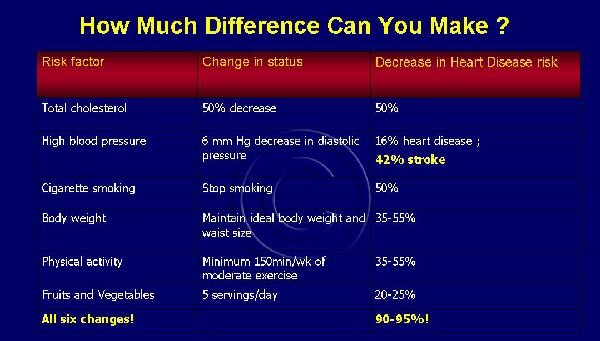
How does exercise help in reducing CAD risk factors?
Studies have shown that coronary artery disease is nearly twice as likely to develop in physically inactive people as compared to active people. Regular moderate aerobic physical exercise (e.g., brisk walking, jogging, and swimming) for 30 minutes at least three or four times weekly will be extremely beneficial in reducing coronary risk factors.
For example, brisk walking can benefit you in several ways: It reduces the heart rate and BP, it improves blood cholesterol levels (it can actually raise HDL and reduce both LDL cholesterol and triglyceride), and it reduces your blood sugar levels. It also may open up your arteries, and, combined with a healthy diet, may improve blood-clotting factors.
This type of exercise can reduce emotional stress and may promote a feeling of happiness and well-being. All individuals, however, should be evaluated by their physician to determine their ability to perform any physical exercise prior to embarking on any exercise program.
That is because sudden vigorous exercise, such as shoveling snow, pushing a disabled vehicle, and mowing the lawn, are undesirable for patients with angina and for heart attack victims. Any physical activity that requires raising your arms above your head may also be risky. Other vigorous exercises (e.g., competitive sports, rapid-tempo dancing, and the like) soon after a heavy meal or after alcohol consumption can be rather hazardous. By and large, if you have recovered from a heart attack, you should avoid any competitive sport.
Low to moderate physical exercise, such as walking, gardening, golfing, and moderate-tempo social dancing, is beneficial even for physically inactive people.
Exercise can reduce emotional stress and may promote a feeling of happiness and wellbeing.