VIDEO
Acupuncture & Chinese Medicine
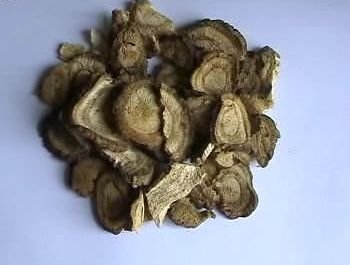
Ge Gen (Puerariae radix), Sheng Ma (Cimicifugae rhizoma), and Chai Hu (Bupleuri radix) are all commonly used herbs for dispersing and lifting the Yang-Qi. What are the differences between them?
Ge Gen, Sheng Ma, and Chai Hu all have the functions of releasing the Exterior, and dispersing and lifting the Yang-Qi.
However, there are some differences between their actions because they enter different meridians and work in different regions of the body.
Ge Gen enters the Spleen and Stomach meridians. It is pungent, but sweet and neutral. Pungency can disperse the Yang-Qi, but the sweet and neutral properties make the dispersing action gentler.
Generally speaking, Ge Gen is gentle and light in its action. It can gently disperse and lift the pure Yang and Qi, especially from the Spleen and Stomach. It is used for Exterior syndromes when the exogenous pathogenic factors have passed through the superficial layer of the body and entered the subcutaneous region and the muscles, which are considered to be governed by the Spleen and Stomach.
The corresponding manifestations are rashes and fever. Ge Gen can gently disperse the Qi from this region and expel the exogenous pathogenic factors to vent rashes. It is used to hasten recovery from measles when the expression of the rash is incomplete. Ge Gen can treat diarrhea due to weakness of the Spleen-Qi and sinking of the Yang. In this situation, dry-fried Ge Gen is the preferred choice because a warm property has been acquired from the processing, so it is more effective for lifting the Yang and Qi in the Middle Jiao.
It can treat diarrhea due to Damp-Heat in the intestines or due to sunken Spleen-Yang when it is used with other herbs to treat the cause of the disorder. As Ge Gen enters the Stomach meridian of foot Bright Yang (Yang Ming) and lifts the pure Yang-Qi, it can treat Wasting and Thirsty syndrome, which is termed diabetes in Western medicine.
This disease is caused by Dryness in the Stomach, while theSpleen-Qi is too weak to spread the Body Fluids. The patient may suffer from excessive thirst, and a dry mouth and throat. Ge Gen is able to lift the Yang-Qi from the Middle Jiao to assist the spreading of the Body Fluids and alleviate Dryness. Sheng Ma enters the Spleen, Stomach, Large Intestine and Lung meridians. It is sweet, pungent, and slightly cold. Compared with Ge Gen, it has the particular effect of clearing Heat and dispersing it from these meridians. It disperses Wind-Heat and treats headache in the forehead where the Bright Yang meridian passes through; it also clears and disperses Heat in the Stomach, Large Intestine, and Spleen, and treats ulcers in the cheeks, tongue, and gums.
Compared with Ge Gen, it has a stronger action of lifting the Yang-Qi in cases of prolapse of the stomach, uterus and rectum, and diarrhea. As Sheng Ma is slightly cold in nature, it should be used together with some warm herbs to tonify the Spleen if the Spleen-Qi is weak.
Chai Hu enters the Liver and Gall Bladder meridians. It is pungent, neutral, and aromatic. It possesses a dispersing and ascending capability. Chai Hu is particularly effective in spreading the Qi in the Lesser Yang (Shao Yang) meridians. It can disperse Wind-Heat if the exogenous pathogenic factors stay at the Lesser Yang level.
The symptoms of them are alternating chills and fever, a dry throat and bitter taste in the mouth, and fullness in the chest and hypochondriac region. As Chai Hu enters the Liver and Gall Bladder meridians, it can spread the Liver-Qi effectively. It is the most commonly used herb to treat stress, irritability, resentment, depression and other mental and emotional disorders due to stagnation of the Liver-Qi.
Chai Hu has similar functions to Sheng Ma, like lifting sunken Yang-Qi to treat prolapse of internal organs and tissues. The two are often used together to enhance the effect of each other.
These three herbs should be used with caution in clinical practice. As they all have dispersing and ascending abilities, the dosages should be well controlled.According to both theory and experience, small amounts of herbs may lead to a dispersing action whereas large amounts can actually lead to a descending and purging action, so the dosages of the three herbs should be less in their usual dosage than other herbs. If the concentrated herbal powder is prescribed, 0.3–0.5 grams is the daily dosage. In addition, these herbs should be used with caution in patients suffering from uprising of Yang or flaring up of Fire.
See also: Chinese Herbs In Western View