Mohs Surgery on the nose: Part 1 of 2, Taking Mohs Layers
Mohs Surgery on the nose: Part 2 of 2, Surgical Repair with Advancement Flap
National Institute of Arthritis and Musculoskeletal and Skin Diseases
AMERICAN SOCIETY FOR DERMATOLOGIC SURGERY
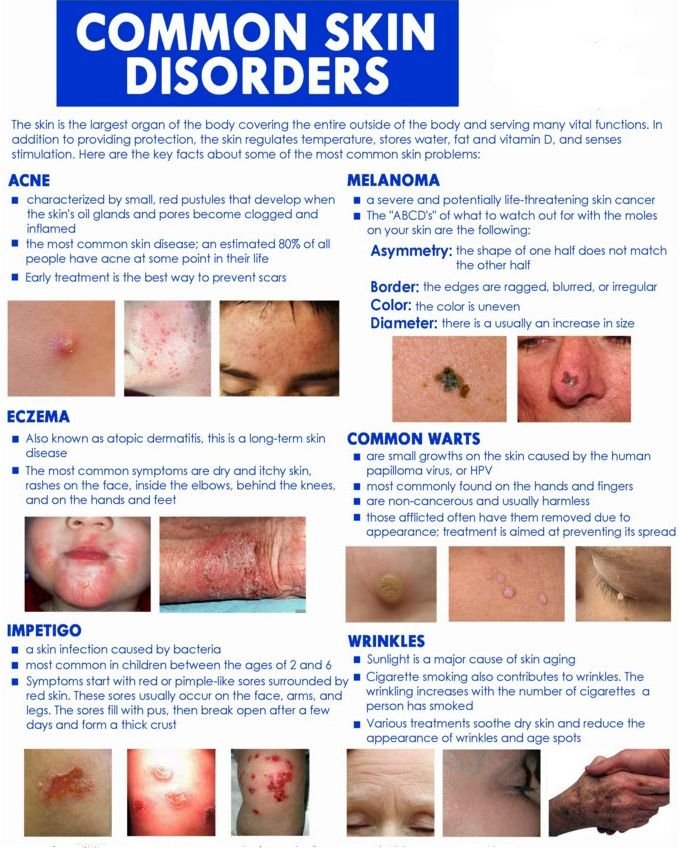
1.5 million Americans are diagnosed with skin cancer every year
How do I perform the self-exam?
When you examine your skin, look for any changes in moles or freckles, as well as any new spots that are asymmetrical, more than one color, the size of a pencil eraser or larger, or have uneven borders.
To conduct the exam you’ll need these items:
A full-length mirror
A hand mirror
A bright light
Two chairs
A blow dryer
Start by looking at your face and scalp in the mirror. Use the blow dryer to get a good look at your scalp. Next, focus on your hands, fingernails, elbows, arms, and underarms. Now examine your neck, chest, torso, and under your breasts, and then use the hand mirror to look at your back, shoulders, back of your neck, buttocks, and legs in the full-length mirror. Finally, sit down and closely look at your legs and feet, especially the soles, heels, and toenails. Use the hand mirror to examine your genitals. If you find any abnormalities, see your doctor as soon as possible.
What if I think I have a skin cancer but the doctor does not appear concerned?
It is very important that you explain to your dermatologist what you want. The ability to negotiate is a good skill, and if you feel that you want a lesion removed, make your point clear. Many times a patient felt that he or she had a problem and the doctor refused to biopsy it; later it was discovered to be cancer. Almost every week I see someone with a skin cancer who was told by a previous physician to “not worry about it.” Your intuition about your own body can be a very powerful tool.
It is impossible to know 100% of the time what a lesion is without a biopsy diagnosis. I have seen many lesions that look like a melanoma but later turn out to be a pigmented basal cell carcinoma or other less severe problems and not the more harmful melanoma. Providing reassurance and a clear diagnosis is one of the most rewarding parts of my job.
You can be a prevention advocate for your family. Because we know that the bulk of sun damage occurs during childhood, this period of life is a vital time for parents to be good role models and to teach their children effective sun-protection habits. More than 80% of skin damage happens before the age of 18 years. Skin cancer lags behind about 10 to 20 years later, after the major damage has already been done; therefore, it is especially important to protect children and infants from the sun. Even if you are over 18 years old, you are not out of the danger zone. Sun damage is cumulative. Each time your skin is burnt it keeps a diary and adds it to all the old damage that you’ve accumulated. With each sunburn, your risk for melanoma doubles.
What is Mohs surgery?
Mohs micrographic surgery uses histological prepared frozen tissue sections to evaluate the surgical margins of excisions performed to remove skin cancers. The use of microscopic control and horizontal excisions and sectioning of cetaceous neoplasms should maximally conserve the greatest amount of normal tissue and also provide the highest cure rate possible.
Mohs surgery is also very good for recurrent tumors that have failed to respond to previous treatment and for certain types of basal cell carcinomas.
Why does my skin seem to bruise easily?
As you age, your skin gets thinner, and the underlying blood vessels are less protected from injury. The resultant extravasations of blood into the surrounding tissue, commonly seen on the dorsal forearm and hands, is referred to as purpura or ecchymosis. An injury from even a mild trauma may result in a sizable bruise.
Bruising may be an indication of an underlying condition. If bruises consistently appear for no apparent reason, it is important to check for a bleeding disorder. A common reason for bruising is the use of anticlotting medications. Protect your skin against trauma and friction. Long-sleeved shirts reduce shear and friction.
Are liver spots a sign of liver disease?
Liver spots have nothing to do with the liver, nor are they an indication of liver disease. They are more correctly called age spots or photo aging spots and are not cancerous or precancerous. In medical terminology, they are called lentigines, lentigos, or solar lentigines. They are usually light to dark brown (nearly black) flat patches on the hands, face, legs, or feet. The edges of the spots are rounded, giving them a resemblance to a large freckle. One may appear by itself, or several may cluster together.
The causes of these spots are (1) an inherited tendency to form them and (2) chronic sun exposure.
You can help prevent more solar lentigines by avoiding excessive sun exposure and using effective sunscreen. Pigmented lesions that may be similar in appearance but have uneven rather than rounded edges could be melanoma and should be evaluated by a dermatologist.
I have brown patches on my face where it looks like my skin is stained. What are these?
The signs of melasma are dark, irregular patches commonly found on the upper cheek, nose, lips, upper lip, and forehead that often develop gradually over time. Melasma often occurs after giving birth or after stopping oral contraceptives or hormone replacement therapy.
Melasma is thought to be the stimulation of melanocytes or pigment-producing cells by the female sex hormones estrogen and progesterone to produce more melanin pigments when the skin is exposed to sun. Women with a light brown skin type who are living in regions with intense sun exposure are particularly susceptible to developing this condition.
Genetic predisposition is also a major factor in determining whether someone will develop melasma. The incidence of melasma also increases in patients with thyroid disease. Uncommon causes of melasma include allergic reaction to medications and cosmetics and as a symptom of Addison’s disease. Melasma does not cause any other conditions beyond the cosmetic discoloration.
Treatments to help fade the discolored patches include the following:
Tretinoin, which is an acid that increases skin cell (keratinocyte) turnover. This treatment cannot be used during pregnancy.
Topical depigmenting agents, such as hydroquinone, which are either in over-the-counter (2%) or prescription (4%) strength. Hydroquinone is a chemical that inhibits tyrosinase, an enzyme involved in the production of melanin. Combination products such as Tri-Luma® can also be used.
Azelaic acid (20%), which is thought to decrease the activity of melanocytes.
Facial peel with alpha hydroxy acids or chemical peels with glycolic acid.
Laser or red light treatment.
All of these treatments and effects are gradual. A strict avoidance of sunlight is required, along with the use of broad spectrum sunscreens with physical blockers because ultraviolet A, ultraviolet B, and visible lights are all capable of stimulating pigment production. Cosmetic cover-ups can also be used to lighten the appearance of melasma.
I have this reddish brown patch on my neck. What is this, and can I do anything about it?
You may have poikiloderma of Civatte. Poikiloderma refers to a change in the skin where there is thinning, increased pigmentation, and dilation of the fine blood vessels (telangiectasia). Civatte, a French dermatologist, first described this pattern that affects the skin of the sides and front of the neck. Poikiloderma of Civatte characteristically spares the shaded area under the chin.
Most people with poikiloderma of Civatte are usually asymptomatic, although occasionally patients report mild burning and itching and increased sensitivity of the affected skin. Many contributing factors have been identified, including chronic exposure to ultraviolet light, photosensitizing chemicals in perfumes and cosmetics, and a genetic predisposition.
Diagnosis is made on biopsy, laboratory tests, and clinical findings. Treatments include topical retinoids, hydroquinone, and alpha-hydroxy acids, as well as protecting the skin from the sun to prevent further damage. By reducing pigmentation changes, intense pulse light has been beneficial in the treatment of poikiloderma of Civatte.
As you age, your skin gets thinner, and the underlying blood vessels are less protected from injury.
Terms:
Mohs micrographic surgery – A surgical method that removes skin cancers while simultaneously analyzing the cancerous tissue.
Neoplasm – A new growth of the body’s own cells no longer under normal physiologic control
Lentigines – Commonly called liver spots. They occur when portions of the skin become sun damaged. They present with darkening of the skin in a specific region, commonly on the back of the hands, face, and neck.
Melasma – A condition that usually occurs from various effects of hormones present during times of pregnancy. The manifestation is the presence of a darkened color of the face due to increased melanin production
Poikiloderma of Civatte – Often occurs in middle-aged women on the sides of their neck resulting in appearance of tangled or leaky blood vessels and pigmentation. The condition is not serious, but its onset is believed to be due to hormonal changes