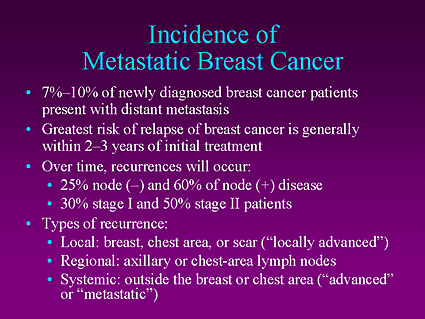
WHAT IS METASTATIC BREAST CANCER?

Is it true that the bisphosphonates that I take for my bones will damage my jaw?
Osteonecrosis of the jaw is a painful disorder caused by loss of blood to the bone tissue, and eventual collapse of the jawbone. Recent reports have linked it to the use of intravenous bisphosphonates, but it appears to occur in very few breast cancer patients who are given intravenous bisphosphonates for their bone metastases.
The risk is increased in patients who have received prolonged doses of intravenous bisphosphonates, especially in conjunction with chemotherapy and corticosteroids. Additional risk factors include a history of jaw trauma, dental surgery, periodontal (gum) disease, or dental infections. For that reason, doctors recommend that you have a good dental exam with preventive dentistry intervention before you start intravenous bisphosphonate therapy. You should also try to avoid dental procedures during your treatment.
Most oncologists feel that the benefits of intravenous bisphosphonate treatments far outweigh the minimal risk of jaw osteonecrosis. Though it does not effect overall survival, intravenous bisphosphonate infusions significantly decrease skeletal events (fractures, pain) in breast cancer patients who have bone metastases. Either pamidronate (Aredia) or zoledronic acid (Zometa) is effective, but zoledronic acid is probably slightly better.
In addition, it can be infused over 15 minutes and is, therefore, more convenient to get than pamidronate, which has to be given over 2 to 3 hours. Both drugs are given in the outpatient setting every 3–5 weeks. Your doctor may want you to take calcium and vitamine D while you are getting these treatments. She will also measure your blood calcium, phosphorous, and magnesium levels at periodic intervals to make sure that they are normal. The bisphosphonates can adversely affect your kidneys, especially zoledronic acid, and your doctor will need to monitor your kidney function with blood tests. Both zoledronic acid and pamidronate are also used to lower the amount of calcium in patients with too much calcium in the blood (hypercalcemia) caused by metastatic breast cancer.
How will my doctor treat the swelling and pain that I have in my abdomen?
If your cancer spreads to the lining of your abdomen (peritoneum) you may develop ascites. Just like a child’s bruised knee weeps fluid, tumor implants irritate the peritoneum and cause it to weep. The fluid that collects in the abdominal cavity is called ascites. It may cause swelling, pressure, and pain. The best way to control ascites is with systemic anti-cancer therapy, but your
doctor may also use diuretics (water pills) and pain pills. Occasionally, your doctor may put a needle into your abdomen (paracentesis) to remove some fluid, but this is only a temporary solution since the fluid usually comes back within days to weeks.
My husband and I have enjoyed an active sex life. Since my treatments have gotten more intense, this has been more difficult. What can we do to be able to still be sexually intimate?
We both miss it. The percentage of women dealing with metastatic breast cancer who are experiencing problems continuing sexual activity isn’t clearly known. Even for the general population of women not dealing with anything as serious as metastatic breast cancer, 43 percent have reported problems with sexual activity. Some patients find it very difficult to comfortably discuss this issue with their doctor, though it may be very important to their quality of life.
Side effects from treatment may result in lowering your libido or because of hair loss, weight gain, fatigue, or other symptoms, you simply don’t feel well enough to try or confident enough with your self-esteem to engage in sexual activity. Physical intimacy is one aspect of a loving relationship. It gives us personal pleasure and creates a feeling of closeness to our partner. Sexual intercourse is just one way of being physically intimate. Cuddling, hugging, touching, rubbing, and holding hands are all pleasurable ways of showing one another affection. Talk with your partner about your concerns and feelings. This will help both of you to know how to help each other. Experiment with different positions. You may find one to be more comfortable than another when having sex. Vaginal lubricants can help with vaginal dryness. Some women who have not had success with vaginal lubricants have tried egg whites for lubrication. Be sure to wash thoroughly after intercourse but do not use douche solutions. If lack of energy impairs sexual activity, plan ahead for intimacy by identifying when you are feeling higher levels of energy during certain times of the day or week. Vaginal discharge, burning, or itching may be signs of a vaginal infection. See your gynecologist if you develop these symptoms so they can be properly treated.
Terms:
Osteonecrosis – When some noncancerous bone cells die off in a way that is not normal.
Ascites – A build up of fluid in the abdominal cavity.
Sexual intercourse is just one way of being physically intimate. Cuddling, hugging, touching, rubbing, and holding hands are all pleasurable ways of showing one another affection.