VIDEO
How to cook Chinese herbal medicine
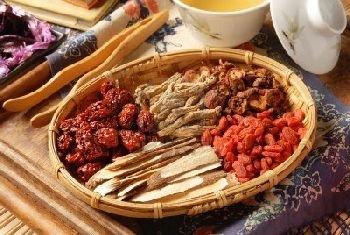
Bai Zhi (Angelicae dahuricae radix), Xin Yi (Magnoliae flos) and Cang Er Zi (Xanthii fructus) are often used together to treat rhinitis and sinusitis. What are the differences between them?
All of these three herbs enter the Lung meridian. They are warm and pungent, expel Wind-Cold, open the obstruction of the nose and stop pain; they are often prescribed together.
Bai Zhi enters not only the Lung meridian, but also the Stomach meridian. It is pungent with a rich aromatic smell, and so possesses a strongly ascending property. It is often used to treat disorders in the area of the head through which the Bright Yang meridians pass.
This is why this herb is often used for rhinitis and sinusitis. Moreover, it possesses a strong aromatic smell, which is believed to be able to penetrate turbidity, transform Phlegm and pus, dry Dampness and reduce swelling. It is appropriate for sinusitis, especially if there is a green nasal discharge that has a foul smell and the patient feels a sensation of fullness in the sinuses. Meanwhile, some herbs which are bitter and cold in nature should also be used simultaneously to clear Heat and dry Dampness.
Xin Yi is pungent, warm and aromatic, but more moderate in action and lighter in nature than Bai Zhi. It is particularly effective for opening the nose, and gently dispersing and lifting the pure Qi in the facial area. It is often used in cases of nasal obstruction, and loss of, or reduced, sense of smell, such as in atrophic rhinitis, pachyntic rhinitis and allergic rhinitis. Xin Yi is able to lift the pure Yang to the top of the head, so it can stop pain and can be used for ethmoidal sinusitis, frontal sinusitis, and sphenoiditis.
Cang Er Zi is bitter and warm and enters the Lung meridian. It is effective for drying Dampness.
Its warm and bitter nature gives it a spreading ability, so it can spread the Qi and expel Wind. It has a similar function to that of Bai Zhi in transforming Dampness and treating profuse nasal discharge.
However, its aromatic smell is less strong than that of Bai Zhi, so it has a lesser ability to transform turbidity and pus. However, it is used particularly when there are large amounts of clear nasal dischargedischarge and itchiness of the nasal passage, which is considered as Wind invasion.
Cang Er Zi also has a wider application range than Bai Zhi and Xin Yi. It can treat headache due to Wind-Dampness. It has a drying nature but is not harsh, so it is also used in some skin diseases where the skin lesions are characterized by itching and weeping.
As in rhinitis or sinusitis, these symptoms often exist simultaneously with nasal obstruction, a reduced sense of smell, a feeling of fullness in the nose or sinuses, an itchy nasal passage, profuse discharge and headache, so the three herbs are often used together.
Bo He (Menthae herba), Chan Tui (Cicadae periostracum), Niu Bang Zi (Arctii fructus), Jiang Can (Bombyx batrycatus), and Jing Jie (Schizonepetae herba) are able to expel Wind and alleviate itching, and are commonly used for different skin diseases. What are the differences between them?
Itching, in skin disorders, is considered in TCM to be an invasion of Wind in the Exterior or the Blood level. The Lung is believed to be the directly corresponding organ in skin disorders as it governs the superficial layer of the body. Any factor which directly or indirectly disturbs the function of the Lung may induce or aggravate skin disorders.
All of these five herbs enter the Lung meridian. Only Jing Jie is pungent and slightly warm; the rest are pungent and cold. Apart from the action of releasing the Exterior, they can expel Wind and alleviate itching, so are often used in various itchy skin disorders, such as eczema, urticaria and different types of dermatitis and pruritus. Sometimes the itching is so pronounced that these herbs have to be used together. However, these herbs all have their own characteristics and could be used in different types of itching.
Bo He is pungent and cold and enters the Lung and Liver meridians. It not only treats itchy rashesdue to Wind-Heat in the Exterior, but also clears Heat and benefits the throat. It is particularly appropriate for use in the acute phase of a chronic skin disorder, when Wind-Heat invades the body, and fever, chills, itching and a dry throat are present. It can also be used for infectious diseases in children, which are often accompanied by skin manifestations due to Heat in the Lung and Liver meridians (e.g. rubella, measles, chickenpox and scarlet fever).
Chan Tui is the sloughed skin of the cicada. It is very light in weight, salty and slightly cold. Its light, ascending property gives it a gentle dispersing action, and it can expel Wind-Heat in the Lung. Saltiness enters the Blood, and saltiness and Cold may clear Heat in the Blood and extinguish Wind, sweetness and Cold can generate the Body Fluids, moisten Dryness and calm Wind, while the slough (skin), enters the skin of humans according to the concept of Chinese herbal medicine. Therefore, Chan Tui can alleviate itching caused by external Wind and treat itchy skin diseases such as urticaria, eczema, pruritus and neurodermatitis.
Chan Tui also enters the Liver meridian. As saltiness enters the Blood and Cold can clear Heat, saltiness and Cold may cool the Blood and clear Heat in the Heart and Liver, calm the Mind and control spasm. It is effective for treating irritability, restless sleep, and even convulsions due to Heat in the Liver meridian in children. If a child suffers from skin disease and there is Heat in the Liver, Chan Tui is a good choice. It is also an appropriate choice in adults when skin disorders worsen under stress and in elderly people when there is deficiency of Body Fluids and Dryness of the Blood, which generate Wind and cause itching over all the body, especially during sleep.
Niu Bang Zi is pungent, bitter and cold, and enters the Spleen and Stomach meridians. Pungency can disperse Wind; bitterness and Cold can drain Heat. It is rich in plant oils so can moisten the intestines and promote bowel movement. It is the coldest of these herbs and is able to remove Heattoxin.
For skin problems, this herb is more appropriate for red skin lesions which are not only itchy, but also slightly painful with a burning sensation, and where the skin problem worsens when there is also constipation, which suggests that Heat from the Bright Yang meridians may be affecting the Lung. Jiang Can is pungent, salty and neutral. It enters the Lung and Liver meridians.
Pungency can disperse Wind so it is good at relieving itching in skin conditions. Jiang Can is able to dissolve Phlegm andalso calms the Mind. It is preferred for treating patients who have fever, itchy skin rashes, irritability and restless sleep-for instance in some infectious childhood diseases.
Jing Jie is an excellent herb in TCM for treating disorders caused by Wind. It is a gentle herb, warm but without a drying property and is particularly effective for expelling Wind. Jing Jie is pungent, slightly warm and enters the Lung and Liver meridians. It can disperse Wind-Heat from the Blood level to stop itching. It can be chosen for different kinds of skin disease due to Wind-Heat in the Lung or Heat in the Blood. It is often used together with Jin Yin Hua (Lonicerae flos) and Lian Qiao (Forsythiae fructus) for red skin lesions. Its powder can be applied topically to stop itching.