What is liposuction?
Unwanted fat deposits are one of the visible signs of ageing. Despite diet and exercise to keep looking young and trim, you may still have unwanted fatty deposits. Common areas of concern are on the face, chin, neck, breast, abdomen, hips, thighs, buttocks, knees, and ankles.
Tumescent liposuction is a procedure that removes these localized fat deposits and is performed only after a full medical evaluation. It is important to be in good health and have realistic expectations of liposuction before having the procedure.
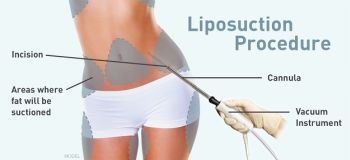
An incision is made in the skin, and the fat is removed with a vacuum tube into a collection system. This procedure is performed in an outpatient setting with local anaesthesia and anti-bleeding medication. Fat cells that are removed by liposuction do not grow back. The postoperative pain and need for of postsurgical swelling, the final results after liposuction are not seen for 12 to 16 weeks, although most people see improvements within 4 weeks. Liposuction is not a substitute for diet, exercise, or weight reduction but can be used as an adjunct method of improving your looks.
What is Retin-A, and should I use it? Retin-A (tretinoin) is used to reduce fine wrinkles, blotchy pigmentation, and rough skin associated with chronic sun exposure. This is a topical vitamin A derivative and has been used quite effectively for many years to help reverse sun damage. Retin-A is one of the products that we include for the majority of patients who want to maintain more youthful skin and reverse sun damage.
What about exfoliators for my face?
The skin constantly renews itself by sloughing its top (horny) layer. At times, because of either overproduction or inadequate removal, these cells build up. This makes the skin appear scaly and can be rough to the touch. Removing this excess scale with exfoliators makes the skin feel better and might make other agents such as moisturizers work better.
How can my skin be like Cleopatra’s?
Alpha-hydroxy acids (AHA) are compounds that can now be found in over 200 skin treatment products. Mild exfoliation, wrinkle effacement, nails rejuvenation, and overall improved skin and hair come in the form of shampoos, moisturizers, cleansers, toners, and cosmetics that contain alpha-hydroxy acids. In higher concentration, physicians and others use alpha-hydroxy acids as superficial or mid-depth peeling agents. To maintain her beauty, Cleopatra used red wine, which contains alpha-hydroxy acid, on her face. This may have been the secret of success for one of antiquity’s most attractive women. Alpha-hydroxy acids comprise a group of organic compounds derived from sources such as fruit juices (thus the name fruit acids), sugar cane, milk, and grapes. How do they work? Although still not completely understood, they may weaken the bonds between cells and facilitate sloughing and may also be mild irritants that stimulate the skin to renew itself faster by losing its horny layer more efficiently.
Alpha-hydroxy acid is primarily used as a mild exfoliant. A few of the currently available brands include these:
• Eucerin® Plus (5% AHA)
• Lac-Hydrin® Five (5% AHA)
• Alpha Hydrox® (8% AHA)
• Dermalogica® Skin Smoothing Cream (8% AHA)
• Aqua Glycolic® Face Cream (12% AHA)
• MD Formulations® Facial Lotion (12% AHA)
Alpha-hydroxy acids are easy to use after cleansing and drying your skin. Apply a thin layer of the product as you would a moisturizer. You might have a few seconds of mild burning, but if this is too intense or if it lasts for a long time, use a lower concentration of the alpha-hydroxy acid.
Do not use other potential irritants, such as alcohol or harsh soaps. Your skin may seem flakier than usual for the first few weeks of use, and that is okay, as the alpha-hydroxy acid is doing its job.
What else works to improve my face?
Blepharoplasty (eyelid surgery) can be used to correct droopy eyelids by removing excess fat pads and skin. A brow lift may reduce lines in the forehead and raise the eyebrows. Rhytidectomy (facelift) tightens and trims excess skin on the cheeks, chin, and neck and around the mouth. This procedure works quite well for those with Favre-Racouchot.
Terms:
Blepharoplasty – A procedure in which the extra skin of either the upper or lower eyelids is surgically removed.
Rhytidectomy – A plastic surgery procedure more commonly called a facelift.
Blepharoplasty (eyelid surgery) can be used to correct droopy eyelids by removing excess fat pads and skin.