Ancient Egypt: Medicine and History
Science Museum’s History of Medicine – Exploring the History of Medicine
Johns Hopkins University Press – Bulletin of the History of Medicine
The discovery of anatomy
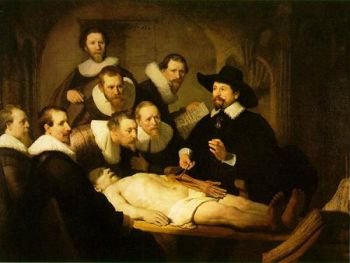
Galen and a number of other ancient and Arabic authors had had a good deal to say on the internal structures and functions of the human body. Since then, the occasional autopsy, mostly performed when an important person died suddenly or in suspicious circumstances, had revealed more of what the body looks like when it is cut open. For all that, it was a bold step when the medical faculties gradually began to offer public demonstrations of dissected bodies in the 14th century. Frequently, a menial prosecutor would open the corpse (often of an executed criminal) while the professor read relevant passages from Galen or another authority. These ‘anatomies’, as the whole process was called, were scheduled for the winter months, when the colder weather slowed down the body’s putrefaction; the order of exposing the internal parts was also dictated by the speed of decay: abdomen first, followed by the contents of the thorax, then the brain, and finally, the limbs.
The first recorded public dissection was performed in Bologna in about 1315, by Mondino de’ Liuzzi (c. 1270-1326), who also wrote the first modern book devoted to anatomy, in about 1316. It took almost a century for dissections to become relatively common, a combination of the difficulty of obtaining corpses, and the theoretical bias of most medical education. From the 15th century, however, the pace quickened, with more dissections and more works devoted to human anatomy. Renaissance artists wanted to appreciate what the human body looked like on both the outside and inside; Leonardo da Vinci’s (1452-1519) anatomical drawings are some of the most famous of the period, although they had remained virtually unknown, and therefore without influence.
The greatest of the early anatomists was Andreas Vesalius (1514-1564), Belgium born but professor of anatomy and surgery in Padua. His great work De humani corporis fabrica (1543: ‘On the fabric of the human body’) is the first medical book in which the illustrations are more important than the text.
What Vesalius, himself an ardent dissector rather than simply a reader of Galen, had noticed was that the human body was not always as Galen had described it. While others had done so before, Vesalius not only said so – diffidently at first, more forcefully as he gained confidence – but he demonstrated it through the magnificent plates that accompanied his large book. The muscular walls between the right and left side of the heart, for instance, were dense, with no way for blood to pass through, as Galen’s physiology required. The human liver did not have the four or five lobes that Galen assigned it (through dissecting pigs and other animals); the sternum, uterus, and many other anatomical structures were accurately described by Vesalius for the first time.
We divide the history of anatomy into pre-Vesalian and post-Vesalian, with Vesalius as the fulcrum. This probably exaggerates the immediate impact of Vesalius’ book, for he left Padua and anatomy shortly after its publication for a lucrative job at the Spanish court. By the mid-16th century, however, the anatomical revolution was well underway, and the desire to see for oneself, instead of taking the ancients on childlike trust, was widespread.
Anatomy was the queen of the medical sciences for some three centuries, and no branch of medical knowledge benefited more from that catalyst of social and intellectual change, the printing press. A German artisan, Johannes Gutenberg (c. 1400-1468), introduced the movable type printing press into Europe in about 1439 (the Chinese already had them). The impact on all aspects of human life was enormous. Medical books were well represented in the early incunabula (books printed before 1501), although Bibles, works of theology, and editions and translations of ancient authors dominated.
Books could then be mass-produced, and even ordinary doctors could own a few of them. In addition to the texts, woodcuts and engravings allowed books to be illustrated, so not only could people read about the human body, they could see its parts displayed on the page. Vesalius’ De Fabrica was not the first illustrated anatomy text, but it set standards for dramatic artistic representation as well as anatomical accuracy. Over the following centuries, anatomy books crystallize a deep paradox in early-modern medicine. Anatomy was an aspect of medical activity that attracted revulsion from many members of the public: dissecting was seen as morally debasing, disgusting, and cruel. It led eventually to an underground trade in the supply of bodies by illegal means, generally grave-robbing but sometimes murder. It certainly was smelly before preservation methods improved, although the sickly sweet aroma of formaldehyde made modern medical students easy to identify on the street, permeating as it does their clothes and skin.
Dissection was thus bad for medicine’s public image. It was also the subject of elaborate, expensive, and beautifully produced and illustrated books, with the upper end of the market aimed at the connoisseur. For the medical student, there were small textbooks with crude illustrations and a price to match. No other discipline within medicine so combined art and science, or knowledge and presentation. Increasingly, even would-be physicians dissected, their curiosity getting the better of their gentlemanly pretensions. Many of the great names in early-modern anatomy – Gabriele Fallopio (1532-1562), Fabricius ab Acquapendente (1533-1619), Frederik Ruysch (1638-1731), William Cheselden (1688-1752), William Hunter (1718–1783) – had affiliations with surgery or obstetrics, but curious physicians, such as William Harvey (1578-1657), also used their hands in their research.
Harvey’s great treatise announcing his discovery of the circulation of the blood (1628) is actually entitled an ‘anatomical exercise’ on de Motu Cordis (On the motion of the heart). Given the nature of medical (or even surgical) practice in the period, doctors learned more anatomy than they could actually use. But the parts of the body were palpable and it was easier to agree on an anatomical structure than on some theoretical nicety. And anatomy was a discipline in which progress was discernible. New parts were regularly being described, such as the lacteal vessels, the valves of the veins, or the ‘circle of Willis’ – the arterial anastomosis at the base of the brain, named after Thomas Willis (1621–75). By the early 17th century, few anatomists would have deferred to Galen, and in the ‘battle of the books’, that widespread debate covering all fields of natural knowledge about whether the ancients or the moderns know the most about the world we inhabit, anatomy was one field in which the moderns won hands-down.
The chemical, the physical, and the clinical
The liberation affected by the injunction to look for oneself touched many aspects of medicine as well as natural philosophy. The Renaissance coincided with the period that later historians have named the Scientific Revolution, which influenced medicine as well as astronomy, cosmology, physics, and other sciences. The two natural sciences that most closely impinged on medicine were chemistry and physics.
The chemical movement within medicine had its roots in an eccentric Swiss genius, Paracelsus (c.1493–1541). Paracelsus was how he was known to his followers: his full name, Theophrastus Philippus Aureolus Bombastus von Hohenheim, was something of a mouthful. The story that he meant his adopted name to mean ‘greater than Celsus’, the Roman author who wrote an influential compendium on medicine, is probably mythical, but it embodies one of two particularly striking and influential characteristics of his chequered career. He was passionate about the fact that medicine (and science) needed to be founded again on first principles, by the moderns. He had little use for the wisdom of Hippocrates or Galen, publicly burning one of the latter’s books in a defiant display during a (brief) stint as a professor in Basel. Although he probably never converted to the new Protestantism, Paracelsus was obviously influenced by the intellectual and emotional ferment that Martin Luther’s movement formally inaugurated early in his life. Paracelsus repeatedly said that learning was to be found in nature, not books, although this did not stop him from penning dozens of books himself, many of which were printed in his lifetime. Perhaps he really meant that learning was to be found in his books, not those of his predecessors.
His second lasting contribution was his emphasis on chemistry, as a way of understanding the way the human body works, and as a source of drugs to treat disease. He used metals such as mercury and arsenic as much as the traditional botanicals in his treatments, and his followers, the iatrochemists (literally, chemical doctors), continued in his wake. His notion of disease, as something external to the body, is sometimes rather inappropriately described as a forerunner of germ theory, but it was in fact rooted in his mystical, alchemical notions of the way nature operates. There is more to the thinking of this strange man, who provoked controversy in his lifetime and afterwards. His followers, of which there were many for well over a century, attempted to rewrite the theory and practice of medicine, in a chemical language.
Another group, the iatrophysicists, slightly later and drawing on the triumphs of astronomy and physics, saw the body as a wonderful mechanical contrivance. Whereas the iatrochemists considered digestion as a chemical process, the iatrophysicists saw it as a mechanical grinding down. These later advocates analysed muscular movement, calculating the forces generated by contraction, and sought to represent human physiology mathematically whenever possible. Their heroes were Galileo, and later Newton, men who had replaced Aristotle’s view of the universe with a much more powerful model, in which matter and force were the operative things to be measured. Throughout the 18th century, Newton’s notion of gravity as a force that extended throughout the universe and explained so much was a spur to doctors seeking similar principles in medicine.
The new relationship to enquiry introduced a period of great ferment within medicine (and science). Theories abounded and optimism prevailed. The approach to understanding health and disease altered dramatically, but changes in what doctors actually did in treating patients were less striking. To be sure, the chemicals introduced by Paracelsus and his followers were mostly new, and the prevalence of syphilis meant that mercury had a prominent medical presence. Syphilis had taken Europe by storm in the 1490s. Appearing first in Naples, where some of the Spanish mercenaries had been to the New World with Columbus, the assumption that it was a new disease imported with Columbus was a natural conclusion. Historians are still debating this scenario, but the fact remains that syphilis in the late 14th and early 15th centuries behaved like a new disease, in its virulence and rapidity of spread. Because of the rash caused by syphilis, mercury, a standard treatment for skin diseases, was used, and it seemed effective in suppressing symptoms, even if it was toxic for the sufferer, producing intense salivation, loss of teeth, and other side effects. The metallic odour to the patient’s breath was difficult to conceal, and although popes, artists, and doctors suffered from it, its sexual transmission was suspected early on (the genital lesions were usually the first sign), and the introduction of the bark of the guaiacum tree, from South America, soon became the favoured therapy for those who could afford it. It reinforced the notion that syphilis had come from the New World, the assumption being that God placed remedies near to the origins of diseases, to encourage us to look for them.
Despite these new diseases and new remedies, Hippocrates would not have been surprised at most medical ministration to sufferers. Bloodletting, emetics (to invoke vomiting), cathartics (to induce purging), and the gamut of remedies associated with humoralism continued as the mainstay of doctors. Indeed, as Galen’s star waned, that of Hippocrates still shone brightly. Among clinicians of the 17th century, Thomas Sydenham (1624–1689) still commands respect. Called the ‘English Hippocrates’, he sought to return medicine to the empirical art that he identified with the Father of medicine. Medicine, he wrote, should concern itself with careful clinical descriptions of disease (he left graphic accounts of gout, hysteria, and smallpox, among other illnesses). With the security of correctly diagnosing a disease, remedies could be empirically sought. He was instrumental in advocating another New World remedy, quinine (variously called Peruvian bark, or Jesuit’s bark, reflecting its origin), in the treatment of intermittent fevers.
Sydenham’s experience with Peruvian bark fundamentally changed his whole concept of disease. Although he was still comfortable with Hippocratic humours, quinine seemed completely to stamp out intermittent fevers, root and branch. It seemed to be a specific, dramatically effective against this one disorder in all patients. It encouraged him to believe that diseases could be classified, like botanists classify plants, and that the variation of a disease and its symptoms in individuals was adventitious, like the differences in individual violets or other flowers. As he famously wrote:
Nature, in the production of disease, is uniform and consistent, so much so, that for the same disease in different persons the symptoms are for the most part the same; and the selfsame phenomena that you would observe in the sickness of a Socrates you would observe in the sickness of a simpleton.
Sydenham’s reflection can be seen as a kind of turning point in clinical thinking. It encouraged doctors in the generations that followed to classify diseases; more significantly, it began the modern process of teasing out the difference between the disease and the person suffering from the disease, and of identifying those universal features of each kind of disease that could make a specific therapy rational. The irony is, Sydenham never saw himself as anything but a good Hippocratic, but his thinking had posed the modern medical dilemma: how to retain a belief in the unique individuality of each patient, and still apply the more general findings of a scientifically grounded diagnosis and therapy.
Enlightened medicine?
Sydenham enjoyed a good reputation in the century that followed his death. His works were originally published in Latin, still the lingua franca, but also appeared in many translated editions, in English, French, German, Spanish, and other European languages. The most famous medical teacher of the 18th century, Hermann Boerhaave (1668–1738), reputedly never mentioned Sydenham in his lectures without lifting his hat in salute. Boerhaave was the leading light at the University of Leiden for more than 40 years, and his pupils came from all over Europe, and influenced educational initiatives in Edinburgh, Vienna, Göttingen, Geneva, and elsewhere. Boerhaave was intellectually an eclectic, drawing his medical ideas from chemistry, physics, botany, and other disciplines, but also possessing a wonderful common sense and diagnostic acumen.
Both his lectures and his bedside teaching were famous, and he had an extensive private practice, including, as was still common, a large postal consultation, both with puzzled doctors and worried patients. Equally important, Boerhaave wrote a string of textbooks in chemistry, materia medica (i.e. medical therapeutics), and medicine, as well as numerous publications in anatomy, botany, and venereal disease. He influenced two or three generations of doctors, even if his forte was synthesis rather than fundamental discovery. Despite his fascination with the natural world (especially his beloved botanical garden), he remains a part of the learned tradition of library medicine: Hippocrates was still a vital figure for him, and he continued to look back for facts and approaches to medicine, even while retaining the confidence in progress that had been won in the previous century. Boerhaave’s pupils included the most famous naturalist of the 18th century, Carl Linnaeus (1707–1778). Linnaeus turned classification into an avant-garde science, introducing the system of binomial nomenclature, whereby organisms are known by their genus and species. Linnaeus devoted his life to ordering the objects of the natural world, especially plants. He saw himself as a second Adam, the first having been charged with the task of naming the animals and plants in the Garden of Eden. Uppsala, where Linnaeus was professor of medicine, was no Eden, but he orchestrated a series of expeditions by his students to many exotic parts of the world from which they dutifully brought back (if they survived) natural specimens of all kinds for him to classify. Linnaeus also produced a classification of diseases, but his nosology was less influential than several other Enlightenment ones, including those of François Boissier de la Croix de Sauvages (1706–1767) of Montpellier, William Cullen (1710–1790) of Edinburgh, and Erasmus Darwin (1731–1802), a poet, botanist, inventor, and medical practitioner in Lichfield and other places in the English Midlands. All these nosologies were elaborate affairs, and based primarily on what we would call symptoms, rather than signs or causes.
Fever was a disease in itself. Most tellingly, pain was minutely classified, according to its characteristics, intensity, and location. These mappings of disease revealed a prominent aspect of Enlightenment medicine, in that it was patient-orientated, thus continuing the Hippocratic tradition. Doctors relied on patients’ accounts of their own feelings and symptoms to make their diagnoses, and within this scenario, patients are generally described by historians as dominating the encounter. It is possible to exaggerate this, just as it is possible to describe the medicine of the 19th century and beyond as universally doctor dominated.
Nevertheless, before the diagnostic methods of modern times, patients would not have taken away from their encounter the bad news that their blood pressure or blood sugar was too high (or too low), or that there was a suspicious shadow on a chest X-ray. In the ancien régime, patients and their doctors spoke the same language and had similar conceptions of disease and its causes. They might go away with a grave or a favourable prognosis, but it would have been directly related to the symptoms that led them to seek medical advice in the first place.
Two further aspects of Enlightenment medical practice ought to be mentioned. First, it was a time of impressive medical entrepreneurialism. Health mattered, and people were prepared to pay for it. This meant that ambitious (or devious) healers of all stripes could seek to carve out their niche in the medical market place. Telling the difference between the ‘quacks’ and the ‘regulars’ was not always easy, since many so-called quacks also generally operated within the cultural cosmology of medicine, and ‘regulars’ might advertise their therapies, use secret remedies, and cultivate notoriety as a means of attracting attention, and thereby patients. The complementary medicine of the present, based as it usually is on an alternative set of causal explanations of health and disease, had little resonance in earlier centuries. Individual quacks might have had their own idiosyncratic notions of what caused disease, or how it might best be treated, but as often as not they would also assimilate important historical figures within medicine – Hippocrates and Galen both feature in the advertisements of irregular healers of the period. Paracelsus is a notable exception, in rejecting not only the theories but also the whole tradition of medicine. His was a genuinely a historical mentality; most ‘quacks’ relied instead on the familiar and traditional, slyly turning it to their own advantage, in what they promised or in how they plied their wares and services.
The second striking characteristic of Enlightenment medicine was its busy optimism. It was an age of projects and institutions. Hospitals were established with great regularity, attempts were made throughout Europe to reform military medical services, and medically orientated philanthropy was common. The idea of progress, including medical progress, was taken for granted, and doctors and their patients both believed that the medicine of the future could do even more than the medicine of the past or present. At the same time, learned physicians and surgeons still looked to Hippocrates or Sydenham, not simply for inspiration but for information and example. For Boerhaave or Cullen, the history of medicine was not of mere antiquarian interest, but a source of living wisdom. During the 19th century, the old doctors were consigned to history, as a new generation of doctors began increasingly to look to the future.