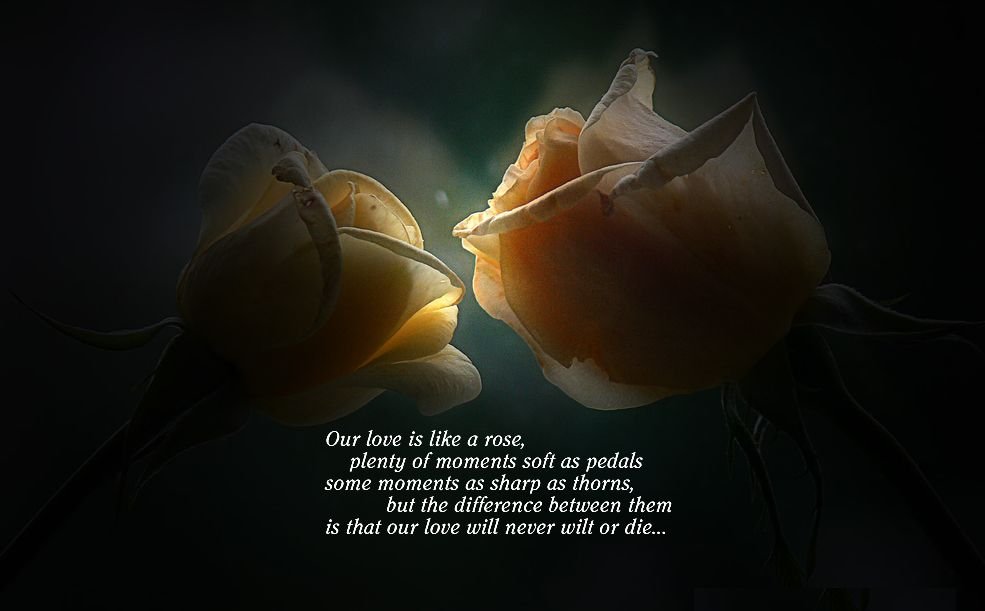
So Much is Included in Love-The Crises and Disappointments as Well
According to a Finnish proverb, “love takes half of a mind from a wise, all from an insane.” The enrapturing symbiotic phase of falling in love lasts between half to one year depending on how intensive the lovers are together and how long time the images can hold it up. Despite it being enchanting, the early phase of falling in love is temporal and
no one can avoid the crises or changes. The fabulous and appealing displays of falling in love inevitably end before long, no matter how happy or satisfying the relationship was by its basis. The lovers are no longer satisfied with the hopeful anticipation and amorous illusion of their needs becoming fulfilled; little by little they will also start demanding these promises to come true.
When life becomes back to normal, the new kinds of expectations are aimed at the partner. At the early phase of falling in love, the young concentrate on taking care of the other and being accordant with a partner’s expectations but when the relationship becomes stable satisfying one’s own needs and selfish demands become more important. The wishes of the one in love can be illustrated in children’s words: “I have been good long enough, now it’s time for my salary.
Now, give me what you promised.” The lovers take a real step apart and expect that the dividends of togetherness will start to show profit. The change can take place suddenly or step by step but at some point, the partners will notice that their relationship has cooled down. The expressions of love become more infrequent and so does cuddling. Lovers realize they disagree with several matters. The other is not a constant support or cover, nor does love offer just pure pleasure. Instead of being together, the young may start longing for space.
Maybe it was that we spend way too much time just together. The phase of crises produces disappointments, helplessness, and insecurity. The difficulties the partners confront are the same with which they have to struggle in their intimate relationship all the time, from year to year and from decade to decade.
Losing Dreams Hurts
When lovers get to know each other better, they notice features in each other that they had not noticed before. The partner is not equivalent to their expectations. Disappointments hurt and some might become distressed. The fear of engaging with
a wrong person preys on their mind. The new features in the partner may even be a
threat to their own security. And then I was annoyed by the partner’s features to which I hadn’t paid attention previously; that you started to search for faults… so that it started to
make me a sort of anguished.
The bitterest loss for the one in love is losing the dreams. The future with the partner seemed to be filled with miracles and promises. The relationship was supposed to be the beginning for the great hopes full of love, of which all the pop songs and movies tell about, and which you have waited for and planned to build your life on. All these ideal dreams are collapsing and losing these dreams hurts.
I guess that I then noticed that after all, he isn’t that wonderful than I thought. After the disappointments, one’s condition and the whole surrounding world may seem dark and cold. When feeling distressed, one may blame the partner for what has happened. When the partner seems distant and the atmosphere of togetherness cold, the young may find it difficult to come up with functional solutions for the problematic situation. They can choose desperate means of exercising power and try to make the partner be more loving. They can even hurt the other rather than tell about their worries.
I was bossing and demanding that the things have to be done like I wanted to. I nagged about almost every insignificant thing. He was also different than before; cold, unresponsive, distant. He asked for trouble, deliberately annoyed me. The new reality may seem chaotic and full of threats. It is not easy for the young to see through the bad feeling: it is not easy to understand that the other did not really want to hurt you but was not capable of anything else either. No one can focus just on fulfilling others’ needs. Accepting one’s own inability and insufficiency as well as one’s own limitedness is part of the development of human personality. Self-knowledge and strengthening the ego result from tolerating groping, insecurity, and the fear of becoming abandoned.
Love is not easy because when you live with someone you have to compromise and even give up some of your dreams. Maybe you have to give over a piece of yourself but you will get back double its worth.
Together and Still Alone
Falling in love creates yearning for being together constantly and the wish for permanent symbiosis. A crisis erupts when one finds out that the other is not a constant support and cover after all. The other is not a part of oneself. The young in love may find it intolerable that the partner is not interested in the same things, acts differently than they selves do, and wants to do things alone. Facing the other’s dissimilarity causes the fear of being left outside and alone.
I tried so hard to please the other; I tried even if I didn’t want to. Then, little by little, I realized that it enchained way too much my life and freedom… demanded something that I was not capable of.
The difficulty in love is that it requires two people to become one but still remain two individuals. The toast of love can turn out to be sweet poison. Love does not necessarily appear as wanted; not by trying nor demanding. Love cannot be enhanced by intimidating and it involves the risk of losing and becoming abandoned: love does not guarantee requited love, trust can lead to disappointment, and confiding may hurt. Love is not always enough.
A proper balance between intimacy and distance should be found in a love affair. Lovers may signal various paradoxical hopes for each other; such as “come near, go away” is one of them. On the one hand, they want their independency and freedom, and on the other hand, they want to conform to the other’s expectations. The inconsistency of expectations mystifies. Both partners may think that either they did this or that the solution will not be satisfying.
I had fun to be with her, but I had so much more to experience too. All the new plans came up and the other didn’t want to let me go; eventually, the situation became too narrow.
Lovers may find it weird that regardless of appreciating proximity the other or both of them need their privacy from time to time. Although I am dating, I need a lot of time for myself, kind of privacy; usually, the partner didn’t understand it and thought that I don’t care… But I am not me if I’m not allowed to bunch myself up every now and then. Intimacy is essential in love. Many people find the experiences of symbiosis quite comfortable: you do not have to fight for the admiration of the opposite sex, worry about lonely nights or becoming turned down or blazing quarrels. Despite all this, an excessive intimacy also involves problems.
An excessive need for intimacy may cause convulsive entanglement or adhering to the other; then, one starts to avoid being responsible for oneself as an individual and does not want the other have life of his or her own. The world seems to end if the other does not agree in everything or he/she wants to be alone or with other people sometimes. At its worst, togetherness may turn into an ownership or a subjugating relationship where the other thinks of having the right to shape the other to fit one’s own hopes and needs. Then, the thirst for power, jealousy, and desire to own the other and treat him/her as an object are involved.
On the other hand, being too far away may also be damaging – affinity fails to develop. A proper way to combine both intimacy and individuality should be found; however, there is not any general pattern or model for finding this balance. The lovers just have to learn to know how much intimacy both of them can tolerate and how much distance they need. They have to have quite the ability to give space both for the other and themselves so that being apart does not make the intimacy disappear. In this way, they will not lean solely on each other nor anchor themselves to each other.
“I Need You”
For some, love can turn into a need and for others into entanglement or destructive addiction. Despite being so harrowing, sticking to someone means living in a relationship in which it is impossible to live but without it living is impossible as well. This kind of dependency can deceivingly feel like love. However, the determining feeling is fear-fear of becoming abandoned, left alone, and that you do not exist without the other.
I think that I’m nothing without him. The price for love can be high. The traditional conceptions may rule: you have to struggle and be able to carry on, but you are not allowed to quit. The doubt whether the relationship could even be something more is preying on mind. Young people can compare their own relationship with others’ relationships in their thoughts and wonder if the others have it any better than they selves do. Should you be satisfied with the prevailing situation or could life alone be better? Those who live in a harrowing relationship remember from time to time the good moments together; and again, there is something to deliberate: whether we should still try, whether the partner is able to change, and could the good time they had at the beginning come back.
I waited all the time that the great time we used to have would come back, all the sweetness we experienced. The one who treats the partner badly is also able to soothe and act in a way that the partner blindly believes that the other will change and be good.
All the unpleasant things in a relationship can be interpreted for the best and togetherness can be constructed by hoping positive changes. Caring about the partner even when he/she is quite troublesome can be understood as a salient and binding part of love. I think that I can’t leave him, how can he handle it? Belief in the magnificent power of love can make one tolerate mistreatment: the troublesome features are thought to be only temporary.
DISCUSSION
Young people of today may have unreasonable expectations toward love: love is seen as an answer and solution to almost all problems they have. Love is considered as the most important source for personal coping and pleasure. The young learn to expect that love heals and makes things easier, removes all the obstacles to happiness, makes their own deficiencies and flaws disappear, and offers the perfect pleasure. The higher are expectations, the greater are disappointments. Dreams turn into a trap if they consist of hopes that cannot be fulfilled by any means. Instead of making life easier, love can actually hurt.
How could we support the young when they try to create permanent intimate relationships? Falling in love is also a learning experience for the young people. When dating and falling in love they search, test, and assess themselves and others. They learn about their inner reality, those things that please them and hurt them. At the same time, they increase their awareness and understanding not only about the separateness between their own and others’ feelings and expectations but also about the dissimilarity between them. Consequently, falling in love is often a climax in life, a certain turn of events, or border crossing where life and one’s own self are formed in a new way.
Learning to appreciate the self can be the way to cherish human relationships. To be able to love the other, one has to love oneself as well. The ability to love requires that one accepts one’s own self and uniqueness. In this sense, love is a space where the relationship with the other is not in priority but the relationship with the self is. If one is capable of appreciating oneself, one can appreciate one’s decisions and defend them by respecting the other’s dissimilarity and individuality. When loving oneself, one can accept one’s own good and bad sides and find it easier to have the same attitude toward the partner-and will not expect the partner to be perfect either.
But how can young people learn to accept themselves? How can one learn to respect oneself as is without asking for evidence from others? Self-appreciation is enhanced by learning to enjoy one’s own success and achievements instead of clinging to others. Everyone has their own fields of expertise and competencies. Studying, work, friends, recreation, and relaxation in the midst of various hobbies, artistic and operational activities provide the youth with opportunities of success and content for life. When having many fields of know-how and sources for satisfaction, one understands better that love is not the answer to everything and one does not expect having non-stop proof or guarantees of love.