Cancer Treatment: Chemotherapy
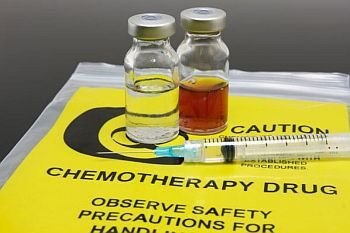
What is chemotherapy, and how is it given?
Chemotherapy is the treatment of cancer with drugs. Unlike surgery and radiotherapy, which are aimed at removing or killing cancers in localized parts of the body, chemotherapy is a systemic treatment. Chemotherapy travels throughout the body and can kill cancer cells anywhere in the body. Besides destroying cancer cells, chemotherapy can damage normal, healthy cells, especially healthy cells in the lining of the mouth and gastrointestinal tract, the bone marrow, and the hair follicles. Damage to healthy cells is why chemotherapy causes side effects. Healthy cells can usually repair themselves, and most side effects resolve after treatment.
There are more than 100 different types of cancer, and many different chemotherapy drugs are available. Your doctor will decide which chemotherapy drug(s) are right for you based on where your cancer started, on whether it has spread to other areas of your body, and on how healthy you are. For many types of cancer, your doctor will use a combination of drugs.
Chemotherapy can be given to cure the cancer, to control the disease, or to relieve symptoms (palliation). Neoadjuvant chemotherapy is chemotherapy treatment given before the primary treatment (such as surgery); it is used to shrink the tumor, making it easier for the surgeon to remove. Chemotherapy may also be given in this way before radiation therapy. Adjuvant chemotherapy is chemotherapy treatment used after a tumor has been removed surgically to destroy any microscopic cancer cells (those that cannot be seen with the naked eye) that may be left behind. For people with metastatic cancer, which usually cannot be cured, chemotherapy is the primary treatment, given to extend life and relieve symptoms.
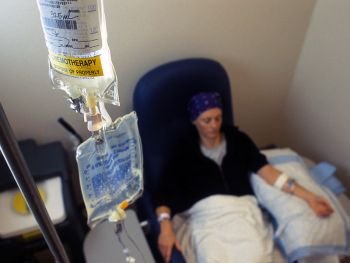
Chemotherapy can be given in any form that other drugs are given, but it is most commonly given intravenously (IV), that is, through a thin needle inserted into a vein (the needle is taken out after the treatment is completed). Sometimes a special thin, flexible catheter is placed in a large vein in your body and left in place over a number of months or years, until it is no longer needed. The catheter is used for drawing blood and giving you chemotherapy, avoiding the need to stick a vein in your hand or arm. for more information about catheters.) Intravenous chemotherapy can be given over minutes (“IV push”), dripped in over a number of hours, or even infused continuously over a number of days. For some types of cancer, chemotherapy is given into an artery rather than a vein. (Arteries carry blood away from the heart; veins carry blood to the heart.) Chemotherapy can also be injected under the skin (subcutaneously), into the muscle, or into the cerebrospinal fluid. For some types of cancer, it is infused into a body cavity (e.g., the bladder or the abdomen).
For some types of skin cancer, chemotherapy can be applied as a cream or ointment directly to the skin. Increasingly, chemotherapy can be given orally (by mouth), in the form of a tablet, capsule, or liquid.
Patients commonly take oral chemotherapy at home. If you are responsible for administering your own chemotherapy, you must take it exactly as prescribed. If you are unable to do this, you need to notify your doctor immediately. Ask your doctor or nurse if you should follow any special instructions when handling chemotherapy at home.
Chemotherapy is given according to a schedule based on the type of cancer being treated and on the drugs being used. It may be given daily, weekly, every 2 to 3 weeks, or monthly. The schedule is often described as being in “cycles,” with treatment for a defined period followed by a rest to allow the normal tissues of the body to recover from the effects of the chemotherapy.
Chemotherapy may be given for a specific period of time (e.g., in six cycles) or indefinitely. Diagnostic tests are ordered periodically during chemotherapy treatment. Some tests evaluate how the tumor is responding; for example, a CT, MRI, or bone scan may be ordered every 3 to 6 months to see if the tumor has gotten smaller, remained stable, or grown. Other tests evaluate how the normal tissues in your body are responding, to ensure that the side effects of the treatment are not putting you at risk for further problems. For example, before each treatment, a complete blood count (CBC) may be ordered; this is a blood test to measure the number of white blood cells, red blood cells, and platelets. Its purpose is to check that your blood counts are not too low.
Blood chemistries may be ordered to make sure your kidneys and liver are functioning normally.
Terms:
Neoadjuvant chemotherapy – Chemotherapy treatment given before the primary treatment (such as surgery) that is often used to shrink the tumor, making it easier for the surgeon to remove.
Adjuvant chemotherapy – Chemotherapy treatment and/or radiation therapy used after a tumor has been removed surgically to destroy any remaining microscopic cancer cells (those that cannot be seen with the naked eye) that may be left behind.
Complete blood count (CBC) – A blood test to measure the number of white blood cells, red blood cells, and platelets.
There are more than 100 different types of cancer, and many different chemotherapy drugs are available.