Under Pressure: Teen Body Image and Eating Disorders (Video)
Media, Body Image, and Eating Disorders
National Eating Disorder Collaboration AU – What is body image?

What is the “female athlete triad”?
The female athlete triad (or “the Triad”) is a term that identifies three interrelated problems of female athletes: disordered eating, amenorrhea, and osteoporosis. According to a report published by the Medical Commission of the International Olympic Committee (IOMC), although any one of these problems can occur in isolation, inadequate nutrition in a female athlete may lead to all three occurring in sequence-hence the term “female athlete triad.”
The IOMC stresses that presence of any one of these components indicates the need to evaluate an athlete for the other two concerns. Furthermore, not all three of these features need be present to warrant concern.
Those at greatest risk for developing the Triad are women who participate in aesthetic sports (e.g., gymnastics, diving, cheerleading) and endurance sports (e.g., swimming, rowing, running), and “weight-class” sports (e.g., body building, karate).
Women who are already underweight when they begin sports training are at the greatest risk. Although the occurrence of the Triad is highest in elite athletes, it can occur at any age or athletic skill level. A history of amenorrhea is one of the easiest ways to detect the female athlete triad in its earliest stages. Other menstrual disorders, low energy levels, and low bone mineral density may also serve as early warning signs of the Triad.
Lynn shares:
Many of the elite female distance runners that I met in the 1970s experienced some aspect of the Triad. The absence of a period was only discussed confidentially, and we believed it was due to hard effort rather than low body fat. None of us understood the long-term consequences. Although most would not have been diagnosed with clinical anorexia, many were obsessive about trying to maintain a very low body weight, believing it was essential for optimum performance. I remember being at an international competition in Europe where three of the top women distance runners in the world discussed how fat and inadequate they felt.
The consequences of those years of food and weight obsession, even without a true clinical eating disorder, can chase you into your older years with osteoporosis, stress fractures, injuries, and often continuing obsession with food, weight, and body image. These may not be life threatening or seem severe enough to require a treatment program, but they can decrease quality of life. It is so important and so worthwhile to address these issues early on, when they are easier to treat and the long-term consequences can be lessened.
How can coaches be involved in screening for and preventing eating disorders?
First, coaches should be aware of the risk for anorexia and other eating disorders in athletes and learn about warning signs associated with these conditions. Coaches should also learn to recognize when healthy training routines may turn into dangerous obsessions and be willing to consult with healthcare professionals when necessary. Training staff also need to reassure their athletes that they will not be criticized when coming forward for help.
Coaches should strongly consider becoming involved in an athlete’s eating disorder recovery process, recognizing that their support and influence may be just as significant as that of a family member. Indeed, athletes care tremendously about the opinions of their coaches, value their input, and will often look to them for advice and support. Coaches therefore have the unique opportunity to present a balanced approach to training, health, and nutrition that will have lasting effects on their athletes. For this reason, coaches are strongly encouraged not to comment on body shape or size, or to require weight loss in young athletes whose bodies are still developing.
Coaches should also examine their own beliefs regarding weight, dieting, and sports performance, as these beliefs may inadvertently affect their athletes. Additionally, public weigh-ins should be discouraged or avoided, thus diminishing the risk of increased body-image discomfort or comparisons between athletes. Early intervention and prevention strategies should be a priority for coaching staff. The NCAA stresses the need for coaches’ involvement in such programs for them to be successful.
A program to consider, for example, may include soliciting the help of a nutrition expert to educate athletes about healthy eating, the nutritional needs of athletes in training, the expected increases in weight and body fat in athletes during puberty, and related topics. Another good way for sports programs to get started is to have prepared health and nutrition guidelines and materials that they can make available to all of their athletes. Toward that end, the NCAA has recently published a handbook for coaches about eating disorders and the female athlete triad. In educating themselves, coaches can simultaneously educate their athletes. Additional prevention strategies for coaches are recommended for consideration by the Rader Institute.
They include:
• Educating athletes on the symptoms and warning signs of an eating disorder
• Educating athletes on the physical risks of maintaining a low body weight
• Not overplaying the impact of weight on athletic performance
• Promoting healthy nutrition
• Eliminating public weigh-ins
• Providing a resource for emotional counseling
• Eliminating critical remarks about body shape or weight
• Setting realistic goals, taking into account the individual athlete’s body type and shape
• Recognizing when healthy training regimens turn into obsessions
• Encouraging positive self-image and self-esteem
What is body image?
Body image is made up of three core elements:
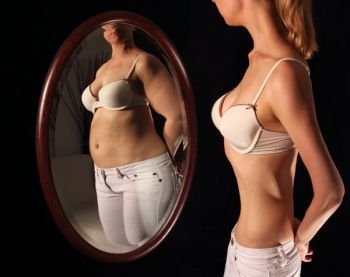
(1) The way you see yourself when you look in the mirror,
(2) The mental picture you have of your body, and
(3) Your attitudes about your body (including your perceptions, feelings, and beliefs).
Body image is based in part on the body’s actual appearance, but it can also be affected by personal experiences, feelings, and ideas, as well as by interactions with (and reactions from) other people. Beliefs about personal body image affect not only what we believe about our bodies; they can also affect the way we feel in our bodies. Our own beliefs about our bodies can also affect how we think other people perceive our bodies.
For example, if you are satisfied with your own appearance and body image, you are more likely to believe other people perceive your body in a positive way, and, conversely, if you are dissatisfied with your own body image and appearance, you are more likely to think others will be dissatisfied with it too.