Hormone Replacement Therapy Overview (Menopause – HRT)
Menopause and HRT
I am 51 years old and have just discovered that I have high BP. Is the menopause a cause of high BP?
No. Most women have their last menstrual period between 45 and 55 years. Blood pressure rises with age, and many women consult around this time for menopausal symptoms such as flushes and palpitations, so discovery of high BP can coincide with the menopause, but is not caused by the menopause. My doctor has put me on HRT patches.
Does HRT have any effect on BP?
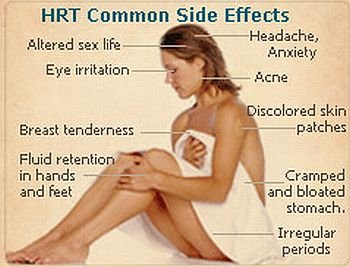
The use of hormone replacement therapy (HRT) is not associated with an increase in BP. The benefits of HRT relate to reducing the symptoms of the menopause, such as hot flushes, palpitations, mood swings, and sleep disturbance. HRT is also helpful in reducing the risk of osteoporosis (thinning of bone density) and subsequent fractures, and has been shown to reduce the risk of colon cancer.
These benefits of HRT have to be balanced against the small increase in the risk of venous thromboembolism, breast cancer, and endometrial (womb) cancer in HRT users.
Cardiovascular disease, most particularly coronary artery disease, was initially thought to be reduced by the use of HRT.
Unfortunately, recent clinical trials have not confirmed these benefits and suggest that HRT increases the risk of such disease in women who have previously suffered coronary artery disease.
The association with coronary heart disease and HRT relates primarily to ‘opposed’ HRT (containing both oestrogen and progestogen components). ‘Unopposed’ (oestrogen-only preparation) has not been shown to be harmful or protective in terms of risk of coronary artery disease.
If I already have high BP, is this a reason not to take HRT?
HRT can be used by women with high BP. The main issue is to make sure that BP levels are controlled by means of BP-lowering medication. Because of the potentially harmful effects of HRT on coronary heart disease, you should have your BP checked two to three times in the first 6 months and then at regular 6-monthly intervals.
Living with high BP
Having high BP can influence many different aspects of your life.
Work
Are there any kinds of work that people with high BP are not allowed to do?
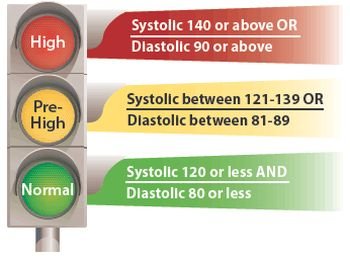
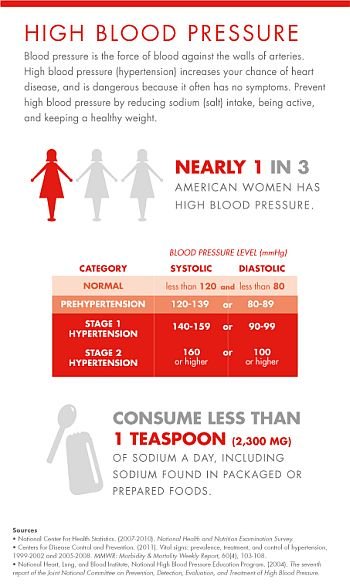
Providing high BP is well controlled by medication, the only kinds of work you cannot do are those excluded by employing authorities, for example flying a plane, scuba or aqualung diving, or other work under raised atmospheric pressure (as in diving bells). These jobs are dangerous for anyone with treated high BP, because all BP-lowering drugs impair the usual responses to the extreme conditions of atmospheric pressure or gravitational force normally experienced in these activities. Anyone with an untreated BP at or over about 140/90 mmHg will be excluded from such employment.
Driving trains or lorries, or operating machinery, might also be barred if you are on BP-lowering drugs that make you drowsy. Discuss this with your doctor so that drugs with this side effect can be avoided.
What kinds of work might be bad or dangerous for people making their BP rise? I work in the chemicals industry. Could my high BP have been caused by my work?
This question is difficult to answer, because we still know relatively little about what the environmental causes of high BP are. Some research suggests that sustained industrial noise, at levels that make it necessary for workers to shout in order to be heard over a distance of under a meter (1 or 2 feet), may cause a sustained rise in BP. There is no convincing evidence of any effect from shift work.
Several metals, their soluble salts, or their welding fumes can cause high BP either directly, or by damaging the kidneys. These chemicals include cadmium and lead. The many workers who handle unknown chemicals of all kinds need to be aware of the possibility that these may cause many different sorts of damage, usually to the liver and/or kidney, and this in turn may be expressed as high BP. Carbon disulphide, once used in a now obsolete process for making viscose rayon, was correctly suspected of being a hitherto unknown cause of coronary heart attacks by a vigilant family doctor in North Wales. Other discoveries of this sort may be made in the future; it is sometimes important to keep an open mind. In studies of Norwegian present and past shipbuilders, both unemployment itself, and fear of impending unemployment, were shown to raise both BP and blood cholesterol. There is good evidence from
Travel and holidays
Does flying in a pressurized aircraft have any effect on BP?
No, but middle-aged and elderly people with problems of overweight or heart failure should make sure that they have room for their legs without pressure from luggage, that they do frequent static leg exercises by alternately tightening and relaxing their calf muscles every half hour, and get up and walk and stretch regularly on long journeys. Drink plenty of water and avoid alcohol on long-haul flights. There are high risks of developing deep vein thrombosis (blood clots in the veins) in the legs if this advice is not followed.
I am going to
People living long enough at very high altitude to become fully acclimatized develop thicker blood because they need more red blood cells to carry the smaller available load of oxygen. As blood viscosity increases, so does BP and stroke risk. People whose high BP has not yet been fully controlled by medication might be wise to postpone travel to such areas until their BP has been brought down to normal.
Is it difficult to get the same BP medication abroad if I run out?
All the commonly prescribed BP-lowering drugs are available in other economically developed countries, but often at very high prices. Brand names are often entirely different, so you should make sure that you know the generic names of your medication before you go.
Unless you are going away for more than 3 months or so, your family doctor will prescribe enough of your medication to cover the whole period of your absence. If you have to take more than 100 of any tablets for your personal use, it is wise to ask your doctor to write a note confirming what has been prescribed, how much, and that this is necessary for your personal care. Customs officials can be very difficult about bringing large quantities of drugs into countries.
If I need to see a doctor while I am abroad, what should I do?
If you are getting good regular supervision from your own family doctor in the
Make sure before you go that you know exactly what medication you are taking, generic names as well as brand names, and roughly what your BP was before you started treatment. It may help to have this written down.
Think carefully before adding any new medication. South and Central European countries have strong traditions of prescribing lots of drugs for everything, which you should avoid. Local doctors occasionally imagine that no tourist can be satisfied with a visit that does not end with a new prescription. Just ask what exactly it is for, and if in doubt, don’t collect it. You are more likely to suffer from overtreatment than under treatment. Lastly, be careful if you take over-the-counter medications for colds or ’flu. Many of these drugs contain ephedrine and caffeine, which raise your BP. It is usually better to take a supply of paracetamol tablets with you.
What should I do about medication if I get diarrhea or vomiting while travelling?
Travellers’ diarrhoea and/or vomiting is rarely severe, and usually self-limiting, getting better after 3 or 4 days without antibiotics or any treatment other than increased fluid intake. Whatever the cause, you should continue your medication unless you have to be admitted to hospital for intravenous fluid replacement, which is extremely unlikely.
Infection with protozoa (‘giardiasis’) is common in Eastern Europe and the Middle East, and often causes more prolonged diarrhoea and nausea, sometimes dragging on for months unless it is actively treated with the antibiotic metronidazole. This interacts in the blood with alcohol to produce severe headache, but it does not interact harmfully with any of the drugs used to treat high BP.
Diarrhoea is caused by rapid movement in the stomach (gut). Gut movement can be slowed by drugs such as co-phenotrope (Lomotil) and loperamide (Imodium). Either of these drugs is safe to use with BP-lowering drugs.
The main risk from diarrhoea and vomiting is dehydration and depletion of sodium and potassium. Rational treatment mainly depends on correcting these losses by drinking water (drink half a litre – about a pint – after each passage of diarrhoea or vomit).
Glucose helps a sick gut to absorb the extra water. You can do this yourself by drinking orange juice or Coca-Cola (for glucose and potassium), adding 1 level teaspoon of table salt to each litre (just under 2 pints); or you can get Oral Rehydration Salts (Dioralyte) from a chemist and dissolve these in water strictly according to the instructions. Make sure that the water you are drinking is pure.
For people on an ACE inhibitor, the normal kidney mechanisms for correcting sudden fluid and salt loss cannot operate. They therefore have much higher risks of collapse, with dehydration and salt loss. For people on ACE inhibitors, rehydration and correction of salt levels must be taken more seriously and medical advice sought.