St. John’s Wort Benefits Emotional Health
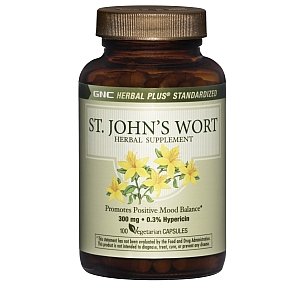
St John’s wort
Are there any herbal remedies for depression?
There is now good scientific evidence that extracts of a herb called St John’s wort are as effective as imipramine, a standard conventional antidepressant drug regarded as a benchmark for comparison in antidepressant medication. Some of the research is a little dubious, but there is evidence that it can be effective in mild to moderate depression, if taken in adequate dosage.
Why can’t my doctor prescribe it then?
At present it hasn’t been included in the British National Formulary as a licensed medication. More work is needed on which ingredient of the plant is the active one; there are several active compounds.
What exactly is St John’s wort?
Its Latin name is Hypericum perforatum. A shrubby plant producing yellow flowers, it’s also known as goatweed and Klamath weed. It is said to flower on the birthday of John the Baptist, 24th June. First described as a herbal remedy nearly 2 millennia ago, it’s been used as a folk remedy since the Middle Ages against infectious diseases (TB, syphilis, worms, dysentery and whooping cough) and also nervous complaints.
Mainstream medical interest in it was reawakened in the 1980s with published research describing benefits for people with depression, anxiety and insomnia. Its active ingredients seem to be hypericin and pseudohypericin, which are weak MAOIs (monoamine oxidase inhibitors), and hyperforin, which inhibits the uptake of serotonin, dopamine and noradrenaline, as well as GABA and L-glutamate (the brain’s neurotransmitter molecules).
This gives it a broader base of antidepressant activity than any other antidepressant drug. Most other antidepressants act on one of these neurochemicals. Interestingly it is also being researched as an antiviral drug for AIDS patients. Its use for menstrual cramps has been described for over 2000 years.
I’m on the Pill. Can I take St John’s wort?
St John’s wort can make the oral contraceptive pill ineffective. You will need to discuss this urgently with your doctor or family planning doctor.
Someone said I should wear dark glasses while I’m taking St John’s wort. Is this true?
Not exactly, but St John’s wort does cause you to become very sensitive to the sun, and you will certainly get sunburn much easier when on it. There are one or two reports in the research literature of cataracts forming in people using this herbal remedy, perhaps, just perhaps, owing to the same effect on the lenses of the eyes. This finding is certainly only at a research level and may not turn out to be more than a chance finding. More research is needed.
So does St John’s wort have any side-effects?
In the clinical trials, fewer people experienced side-effects than on the conventional drugs, and fewer had to drop out of the trials owing to these. The main down-side is that it does cause photosensitisation: your skin becomes extrasensitive to the sun, and users should be particularly careful in the summer months to cover up and use sunblock.
It can also interact with other drugs. It induces liver enzymes, in particular the cytochrome P450 enzyme system, which means that levels of certain other medications will be reduced if you are taking St John’s wort.
The commonest is probably the oral contraceptive, but warfarin, and drugs used for asthma and HIV treatment are also involved. Some of the really complex medications used for transplant patients also interact, and there have been reports of transplant rejection in people who have not mentioned that they were taking St John’s wort after a transplant.
It’s an herbal remedy so there is unfortunately no regulation that these interactions should be on the label. Conventional prescriptions nowadays have to include a slip with information about any possible side-effects and interactions. See the list below for drugs that might interact with
Like some antidepressant medication, St John’s wort can provoke mania (severe excitement) in people with a tendency to bipolar illness (manic depression). Reduced sperm motility and effects on egg cells have also been mentioned in animal experiments.
Shouldn’t everybody try these themselves before using conventional antidepressants?
Almost certainly not. People who have become even moderately, let alone severely, depressed should really be in touch with their doctors for their own sake, rather than just treating themselves. Depression often reduces our own insight and we may not realize how unwell we are, when an outsider would notice something wrong at once.
Herbal extracts are not manufactured to the same standards of consistency in some cases as conventional remedies, nor are they regulated in the same way. How can you be sure you are getting the right dose?
Some researchers say that the late flowers contain more active ingredients and are more effective than herbs gathered earlier in the season, so different herbal products may vary in effectiveness. This could explain why some trials didn’t demonstrate benefit, yet others did. There are potential drug interactions with some prescribed medication. Your pharmacist should be able to check this out for you, though an herbal supplier may not be aware of this.
Avoid St John’s wort if you are taking any of these:
• Warfarin (an anticoagulant, used for heart and circulatory problems)
• The oral contraceptive pill • cyclosporin (used to prevent rejection after liver or heart transplants)
• Certain drugs used for HIV (AIDS treatment)
• Some anticonvulsants used for epilepsy: phenytoin, phenobarbitone, carbamazepine (also used for neuralgia and mood disorders)
• Digoxin (used for heart failure)
• Theophyllines (used for asthma)
• Triptans (used for migraine), e.g. sumatriptan (Imigran), naratriptan (Naramig)
• Any SSRI.