Arrhythmias — What is an arrhythmia and what treatments does it require?
Mayo Clinic – Heart arrhythmia
National Heart, Lung and Blood Institute – What Is an Arrhythmia?
The Organic Diabetic
Which arrhythmias are common?
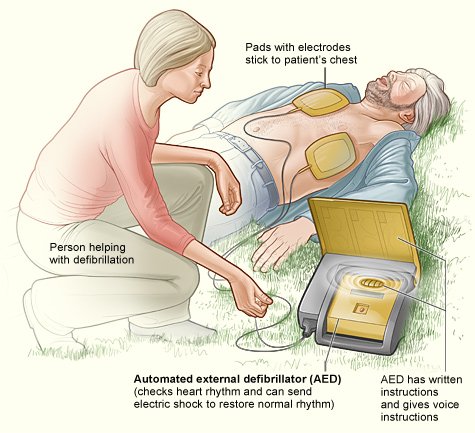
A variety of common arrhythmias have been identified. Ventricular fibrillation (VF) is the most serious and life-threatening arrhythmia. In VF, the cardiac impulses arising from the ventricles (lower chambers) produce very fast, irregular and chaotic heart rhythm with no pumping action. Most people with VF become unconscious, and emergency treatment (medications, electrical shock, and CPR) must be provided immediately to prevent sudden death.
Premature beats or contractions are the heartbeats that occur earlier than the usual heart cycle and momentarily interrupt your heart’s regular rhythm. Atrial fibrillation (AF) causes your atria (the upper heart chambers) to beat very rapidly and chaotically.
Your ventricles (the lower heart chambers) also beat rapidly at a rate of 120 to 160 beats per minute, which leads to an irregular and rapid heart rhythm. AF is very common among older adults, particularly those with diseased hearts. Atrial flutter also causes your atria to beat very rapidly, and your ventricles also beat rapidly but at a lesser rate (usually 125–175 beats per minute). Atrial flutter is not nearly as common as atrial fibrillation.
Super ventricular tachycardia (SVT) is a fast and regular heart rhythm arising from your atria or AV node. In most cases, SVT begins and ends abruptly. People with Wolff-Parkinson-White (WPW) syndrome are born with an extra electrical pathway (called accessory pathway) between the atria and the ventricles. (This syndrome is named after three physicians who first described it.) In WPW syndrome, this extra pathway allows too many electrical impulses to reach the ventricles. That surplus of impulses can lead to a very rapid heart rhythm-up to 250-300 beats per minute in some cases.
In ventricular tachycardia (VT), the heart impulses arising from the ventricles (lower heart chambers) produce a rapid heart rhythm (160–200 beats per minute).
VT produces a broad (bizarre) QRS complex on an ECG. Ventricular tachycardia often deteriorates to ventricular fibrillation. When heart block (or AV block) occurs, the electrical impulses from the atria (upper chambers of your heart) do not reach the ventricles (or lower chambers). This happens when a block occurs in the electrical conduction system, and it leads to slow heart rhythm. Your doctor would install an artificial pacemaker if such a block persisted or for symptomatic heart block.
Sick sinus syndrome (SSS), a disorder of the sinus node (the natural pacemaker) prevents the sinus node from producing sufficient heart impulses, leading to a slow heart rhythm. An artificial pacemaker is necessary for advanced SSS.
Another syndrome, the long Q-T syndrome, is an inherited medical disorder. It often produces ventricular fibrillation and sudden death. In many cases, doctors treating patients with this syndrome would use certain medications, artificial pacemakers, and electrical shock treatment.
What are common signs and symptoms of arrhythmias?
Although arrhythmias may occur without producing symptoms at all, most people who have arrhythmias experience some symptoms and signs. Those symptoms and signs depend upon the nature and the type of arrhythmia.
Arrhythmias often cause palpitations, skipped heartbeats (premature beats), and a fluttering or pounding sensation in your chest. Then, too, you might feel racing or rapid heartbeats or, conversely, slowing of your heartbeats. Arrhythmias also cause irregular heartbeats.
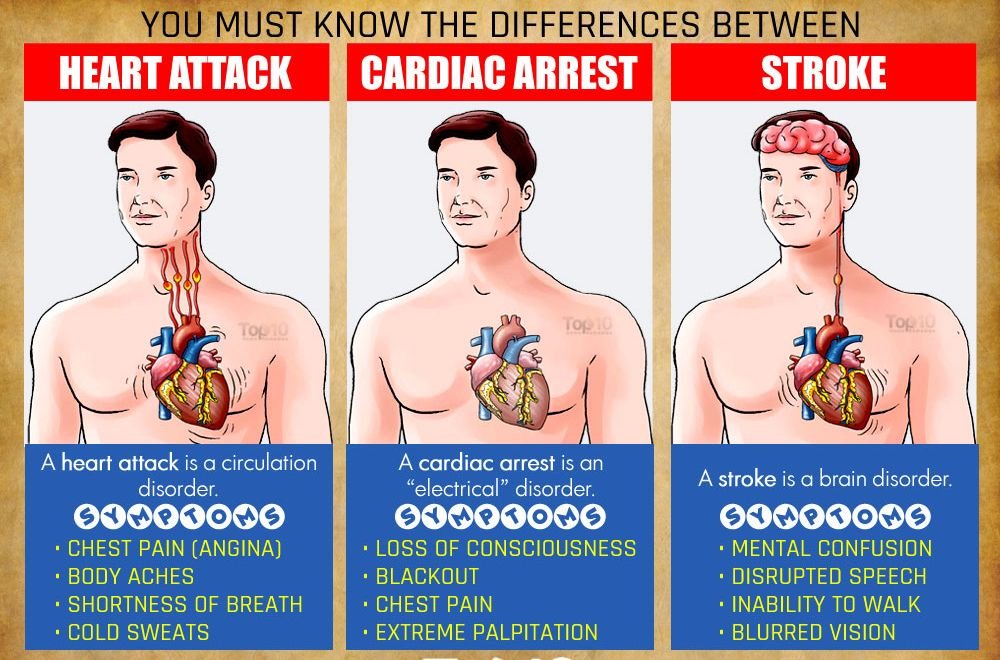
Arrhythmias have been known to bring on chest discomfort or actual chest pain and shortness of breath (dyspnea). You might develop a periodic cough (usually from premature beats) and feel weak and fatigued. In addition, you might become light-headed or dizzy to the point of nearly fainting (near-syncope) or actually fainting (syncope).With extreme arrhythmias, you would lapse into unconsciousness (usually from ventricular fibrillation) or even die suddenly (from cardiac arrest or ventricular fibrillation).
What are common complications of arrhythmias?
When an arrhythmia is either very rapid or very slow and that pattern continues for a prolonged period, serious complications may occur. For example, if you were a victim of congestive heart failure (CHF), initially your heart would beat very quickly for a prolonged period. If that condition were not treated, your heart’spumping action would become inadequate, causing the CHF. On the other hand, CHF causes a variety of arrhythmias. Thus, the relationship between arrhythmia and CHF is bidirectional (i.e., it works both ways).
In certain arrhythmias, such as atrial fibrillation (AF), small blood clots tend to form in your heart. When these blood clots break loose and travel through your bloodstream to your brain, a stroke usually follows. Your chance of developing a stroke increases when you possess various coronary risk factors, such as high BP.
When a very rapid or very slow heart rhythm significantly reduces blood circulation to your brain, you may develop fainting (syncope) or near-syncope. In a severe case, you would become unconscious. Further, very rapid ventricular tachycardia (rapid and regular rhythm arising from the lower chambers), and particularly ventricular fibrillation, often cause sudden death unless treated promptly.
Sudden cardiac death is very common among heart attack victims.
Terms:
Atrial fibrillation (AF) – chaotic, irregular, and rapid cardiac rhythm arising from the atria.
Supraventricular – any location above the ventricles, namely in the atria or in the A-V node.
Tachyarrhythmia (or tachycardia) – rapid heart rhythm.
Wolff-Parkinson-White (WPW) –syndrome form of congenital anomaly that often causes a very rapid heart rhythm.
Ventricular tachycardia (VT) – regular, rapid cardiac rhythm arising from the ventricles, a serious arrhythmia.
Heart block – slower-than-usual or absent conduction of the cardiac impulse from the atria to the ventricles. Also called AV block.
Sick sinus – syndrome dysfunction of sinus node resulting in abnormally slow heart rhythm and leading to dizziness, near-syncope, or syncope
Long Q-T syndrome – inherited medical disorder that often produces ventricular fibrillation and sudden death.