Documentary: Addicted to Pleasure – Tobacco (BBC Series)
Risk, Prevention, and Epidemiology
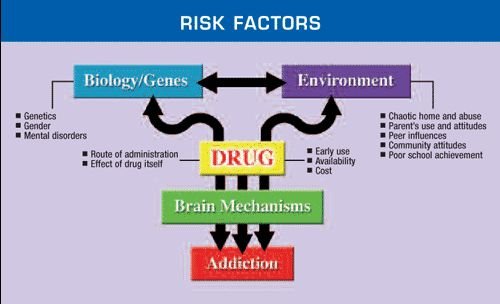
What risk factors contribute to people smoking?
Does my risk for a specific illness related to smoking change after I quit smoking?
How do I know if my child will become a smoker?
How long does it take to become addicted to tobacco?
Risk
If I am addicted to tobacco, will I be predisposed to other addictions?
Smokers are far more likely to develop an addiction to tobacco and far less likely to successfully quit than people who use other addictive drugs. It is harder to break a smoking addiction than a heroin addiction. And while the majority of smokers are not addicted to other drugs, the majority of drug and alcohol addicts are also addicted to smoking.
It appears that all addictions-whether they are street drugs, alcohol, tobacco, or certain behaviors such as gambling, sex, or even shopping-are mediated at some level via the brain’s reward system and its principal neurotransmitter, dopamine. We know this from a variety of sources both direct and indirect.
Laboratory research has found an overlap between the effects of nicotine and opiates on dopamine signaling. Additionally, certain drugs known as dopamine agonists prescribed for Parkinson’s disease have unusual side effects, including an increase in sexual behavior, gambling, and shopping.
The dopamine reuptake inhibitor bupropion, which increases the amount of dopamine in the brain, has aided patients in smoking cessation. Nicotine and alcohol also influence the body’s internal opiate system, known collectively as endorphins, which cause analgesia and euphoria, which also affects the dopamine system.
One of three medications approved for the treatment of alcoholism is naltrexone, which blocks the opiate receptors and thereby reduces craving for alcohol. Finally, brain imaging studies have demonstrated that various drugs of abuse activate the same areas of the brain in addition to their own individual actions. These overlapping areas are pathways regarded to be part of the brain’s reward system.
All in all, the susceptibility to develop any addiction is general. But the odds of becoming addicted vary not only with one’s own genetic susceptibility but also with the type of drug one is using, because some drugs are more prone to cause addiction than others. Given that nicotine has a greater addictive potential than other drugs, more people will become addicted to it, including those who are not generally susceptible to addiction. Individuals who are more highly susceptible to addiction will very quickly become addicted to nicotine along with a variety of other drugs they might use on a regular basis.
Thus, becoming addicted to tobacco does not necessarily predict that one is more susceptible to other addictions. What does predict susceptibility, however, is the speed with which one becomes addicted, and this is often determined by the age of first use and the age when one begins to use regularly. Early use of tobacco and early heavy use of tobacco especially, is a strong predictor for the susceptibility of becoming addicted to other drugs.
Terms:
Bupropion – Generic name for the drugs Wellbutrin, marketed as an antidepressant, and Zyban, marketed as a smoking cessation medication.
Analgesia – A type of drug that relieves pain. Analgesics include no steroidal anti-inflammatory (NSAIDs) agents such as aspirin and opiates such as morphine.