Risk Factors for Heart Disease~Smoking
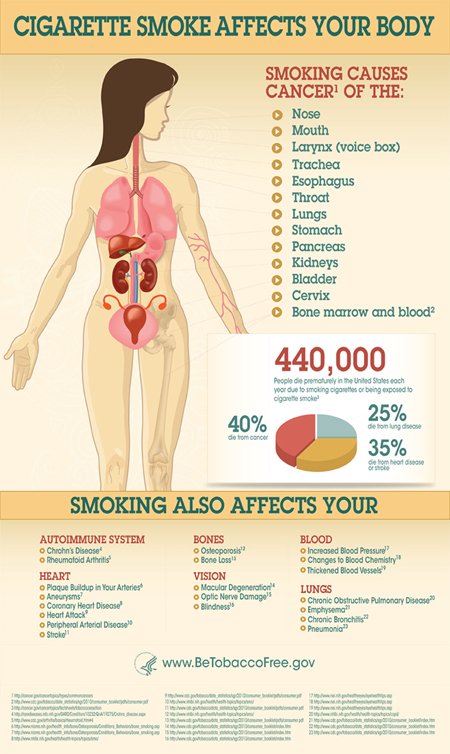
What risk factors contribute to people smoking?
Risk factors are the characteristics that increase the chances of developing a disease or disorder. Epidemiology is the study of disease or disorder rates in large populations, and the various circumstances both biologically and environmentally that are common among individuals who develop a particular disease or disorder under study.
It is through these studies that risk factors for a particular condition are discovered.Some risk factors are modifiable, which means the individual can lower his or her risk for developing a particular condition by making changes in his or her life, such as modifying diet, activity, or exposure. Some risk factors are non-modifiable, which means that the individual has no ability to lower or modify the risk, such as gender or other heritable traits.
The following is a list of risk factors associated with the development of nicotine dependency:
• Age: It appears that teens become addicted more quickly because of developmental and biological factors.
• Gender: A higher percentage of teen smokers are males. More white females smoke than other ethnic groups. Adult males were more likely to smoke, but that has changed now that more women are joining the workforce and are exposed to other smokers. Females have more difficulty quitting than males.
• Ethnicity: Higher rates of smoking are found among Caucasians and Native Americans; lower rates of smoking are found among African Americans, Latino Americans, and Asian Americans.
• Geographical area in the United States: Higher rates of smoking are found in the southern tobacco-growing states and the Midwest as well as Nevada; the lowest rates of tobacco use are in the West, namely Utah (The Mormon religion forbids smoking).
• Mental illness: A higher percentage of the mentally ill are heavy smokers.
• Children and adolescents with neuropsychiatric disorders: Higher rates of smoking are seen in young people diagnosed with attention deficit hyperactivity disorder (ADHD) and conduct disorders.
• Alcoholism: There is a strong association between the two addictions. If you attend an Alcoholics Anonymous meeting, most likely you will find yourself in a smoke filled room.
• Poor education or lower socio-economic class: Today, there are more smokers among the poor and uneducated than among the middle class, the wealthy, and the well educated.
• Living in a developing country: Smoking rates are higher in the developing nations.
• Parental and peer smoking: Role modeling is a powerful learning tool. Rates of smoking increase in families where the parents smoke. An even stronger influence is the peer group. Teens are far more likely to smoke if their teenage peers smoke than if their parents smoke.
It appears that teens become addicted more quickly because of developmental and biological factors.
Term:
Attention Deficit Hyperactivity Disorder (ADHD) – A persistent pattern of inattention and/or hyperactivity, impulsivity that is seen more frequently in children with ADHD than in children at comparable developmental levels.