How to Have a Healthy Heart (Video)
Importance of Balanced Body Chemistry
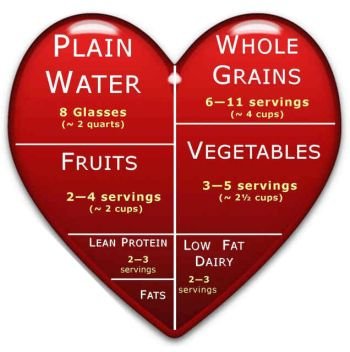
In Heart Fitness Program we have thus far been emphasizing the don’ts because we consider these much more difficult to follow than the do’s. Now we’ll detail what kind of food program you should follow for heart fitness, health and longer life.
Every time you plan a meal, check off these four items on the fingers of your hand to see if you are eating a nutritionally well-balanced combination of foods: protein, carbohydrates, fats, fruits and vegetables.
1. Protein – Building Blocks of the Body
Protein foods are nuts, seeds (such as sunflower, sesame, pumpkin), nutritional yeast, wheat germ, soy beans, dairy products, whole grain cereals, meat, fish, poultry and protein supplements.
Protein is one of the most important food elements and is essential for keeping the heart fit. You must have protein for building every cell of your body. This fundamental demand of Mother Nature rules every creature living on the face of the Earth.
Protein is you – flesh, muscle, blood, heart, bones, skin and hair – all the components of the body are essentially composed of protein. You are literally “built” of protein. This basic function of your body – of converting food into living tissue – is one of life’s miracles. Your life processes and the factors that help you resist disease are all composed of protein (amino acids) components.
Every time you move a muscle, every time your heart beats, every time you breathe, you consume protein in the form of amino acids. The link between protein and body tissue is the amino acids – and the bloodstream carries them to every part of the body where they work to repair, rebuild and maintain body tissues. They enrich blood and condition the organs, including the heart.
It’s magnificent to live long if one keeps healthy, alert, youthful and active. – Harry Fosdick
Amino Acids – The Body’s Building Blocks
Human tissue is renewed daily. Scientists once believed that there were great masses of protein in the body in an inactive state – stores of protein built up in the muscles, tissues and organs which remain there until the body might need them. Now we know that the great builder protein is not stationary, but in motion. This activity requires a replenishment of essential protein for the rebuilding process, especially in older people.
What is the connection between Amino Acids and proteins? Amino Acids are the building blocks from which different food proteins are constructed. When we eat a protein food, such as meat or soybeans, the natural hydrochloric acid in the stomach digests the protein, releasing the Aminos Acids. They are the link between the food we eat and assimilate for our body’s tissues. Amino Acids are what make our food turn into us!
Unlike vitamins, the activators in our nutrition, Amino Acids actually enter into the structure of the body tissue itself. They are the very foundation of all protein foods. They build muscles, tissues and organs and circulate freely in the blood – the body’s vital life stream. Your blood is your precious river of life – protect it!
The phytochemicals found in soy are specifically known as isoflavins. These isoflavins have been shown to be strong antioxidants that help repair cellular damage in the body, and they have anti-tumor effects. Soy can contribute to optimal health and has remarkable health-promoting properties. See phytochemical chart on page 145.
Amino Acids – Life-Givers & Life-Extenders
Famous Pioneer Endocrinologist and Biochemist, Dr. W. Donner Denckla, with the National Institute of Health, has been immersed in path finding research on longevity for years. Dr. Denckla has the opinion that ageing is not inevitable and that Amino Acids and their interaction with a hormone secreted by the pituitary gland seem to be the key to slowing down ageing.
The longevity secret is eating & drinking intelligently. – Gayelord Hauser
If we could look within the body, we would see all the living cells that make up the tissues, organs and bloodstream are in a highly active state. Paul C. Bragg was the first to preach the gospel of Amino Acids, their relationship to ageing and how they can help keep you younger, longer! He stressed that when the protein supply – the Amino Acids – are replenished regularly, the new cells that are constantly growing and being born can then thrive and live with more positive intensity! Another important benefit of Amino Acids – they help form antibodies to fight germs, infections and disease!
Bragg Introduces Miracles of Soybeans
Over 88 years ago Paul C. Bragg introduced Bragg Liquid Aminos to the health-minded as a way to help them increase natural, life-building vegetable protein intake in a form that’s easily digestible and delicious to use! It’s a liquid form of soy protein from pure, healthy (certified non-genetically engineered) soybeans – a 100% health product that contains no coloring agents, preservatives or added sodium. Lack of adequate Amino Acids in your body may make it impossible for the vitamins and minerals to perform their specific duties. Amino Acids are inseparably interwoven with vitamins and minerals for good sound nutrition. Bragg Liquid Aminos contains no meat, and adds delicious natural flavors and zest to most all foods by sprinkling or spraying on foods. It’s the most delicious, nutritious and unique gourmet health seasoning, for it contains 16 important vital Amino Acids and Isoflavins for super health.
What are Amino Acids? They’re the building blocks of all our organs and tissues. They are the building blocks of proteins. They are essential for production of energy within us, for detoxification and for the vital transmission of nerve impulses. In short, they are the very soup of life, and they are almost always overlooked and neglected. – H.J. Hoegerman, M.D.
Amino Acids are needed for building every part of the body . . . bones, blood, hair, skin, nails and glands – and are Mother Nature’s and God’s life–giving secret to a long, vital life. – Paul C. Bragg
Up to 90% of deaths annually are self-inflicted by an unhealthy lifestyle!
2. Carbohydrates – Starches and Sugars
Starches and sugars come under the classification, carbohydrates, in the FDA standard for food groups. These provide the principle source of food energy. Carbohydrates are needed as fuel for muscular work and physical activity. Excess sugars and starches that are not utilized as energy are transformed by the body chemistry into fat and stored in the least active body parts.
Carbohydrates originate in plants as sugars created by photosynthesis. Then they are formed into clusters as starches. Consumed by humans, they are broken down by the body’s metabolism into a simple sugar – glucose – for use by the cells of the body. It is important that you eat only natural starches and sugars, and avoid those which are refined and depleted of vital elements (refined white flour, sugar and their refined products, etc.).
Natural starches and some natural sugars are found in all fresh fruits and vegetables, honey, pure maple syrup, sorghum, stevia and blackstrap molasses, organic whole grains and their flours (wheat, oats, rye, etc.), beans, lentils and peas, organic brown rice and potatoes. In fact, all natural foods contain some carbohydrates.
3. Fats Can Be Healthy or Unhealthy
Fat is also an important source of dietary energy. It has more than twice the energy value of the same amount of carbohydrates or protein. As already pointed out elsewhere in our Heart Fitness Program, a certain amount of fat and even cholesterol is part of a healthy diet. Let us remind you that your fat intake should ideally consist of only unsaturated fats. The saturated fats in meat, eggs, poultry and dairy products should be avoided or kept to a minimum. It is these saturated fats which can overload your body with cholesterol.
Cholesterol is a fatty substance produced daily by the liver for normal use in the body. As noted earlier, when we overload our bloodstream with cholesterol (saturated fats) in our diet, it can stockpile and form waxy deposits on artery walls and block blood flow.
Let food be your medicine and medicine be your food. – Hippocrate