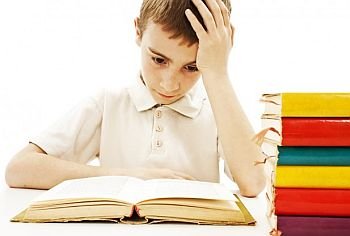
Children and headaches
Children can get the same sorts of headaches as adults. There are times when diagnosing the problem is harder but patience and listening to the parents and the child are usually rewarded. The criteria for making a diagnosis have been changed and modified over time to better reflect the reality of headache in childhood.
Non-drug treatments are often underrated as a way of improving headache in childhood: relatively simple changes can have a dramatic effect on the frequency of headaches. Choosing drugs to treat the acute headache can also be difficult because of drug licensing rules. The same range of drugs can be used for children but there must be careful discussion resulting in informed consent involving the parents or guardian or other responsible adult and the child. Similar choices and decisions have to be made with preventative drugs as well.
Diagnosing Headache in Children
How will the doctor be able to tell that my child has migraine?
The diagnosis of migraine in children, as in adults, is made on the basis of the International Headache Society (IHS) classification, which uses a set of criteria that need to be met. Diagnosis can be more difficult in children, as the symptoms may be short-lasting and may not always occur every time. The child may not associate the symptoms
with the headache, or have the ability to describe them. The symptoms must be sensitive enough and specific enough to make the diagnosis of migraine. Sensitivity is about choosing the symptoms that discriminate and separate the different types of headaches accurately enough. Specificity is about choosing the symptoms that are precise and limited enough to separate the different types of headache. The higher the sensitivity and specificity of a set of symptoms, the more accurate, and reliable the diagnosis of migraine compared with any other headache.
The IHS criteria for diagnosing migraine in a child are:
• The headache attack lasts from 2 to 48 hours
• The headache has at least two of the following:
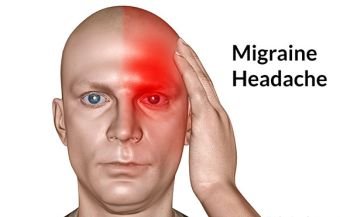
– It is one-sided
– Has a throbbing quality
– Is of moderate to severe intensity
– Is aggravated by routine physical activity
• The child has at least one of the following:
– Nausea and/or vomiting
– Sensitivity to light or sound gets migraine and finds it hard enough to describe my symptoms.
How can I get my daughter, who is eight, to explain hers to our doctor?
It is difficult to describe symptoms that you are experiencing to someone else, but do the best you can with prompting from the doctor. Your doctor will, with time and patience, be able to get a feel for what is happening to your daughter. You can help by describing what you see happening when your daughter is having her attack or you could ask your daughter to draw a picture to show how it affects her. There are some points your doctor needs to be aware of, because migraine in children can be quite different from that experienced by adults. The headache, if present, is often much shorter than in adults.
Nausea and vomiting may be more dominant than the headache. Migraine sufferers are often very pale and quiet during an attack. This may be the best clue, rather than a description of what is happening. I’m worried about my grandson. He doesn’t complain of headache but every now and again goes really pale and just curls up on the sofa rocking back and forth. He’s like this for a few hours and then bounces back, right as rain.
I remember his mum having similar problems and now she has migraine. Could this be the start of migraine in him?
Yes, it could. What effect or impact the symptoms have is often the best guide to what is happening. Going pale and looking ill may be the only symptom of migraine in young children. How he seems looks or behaves may be the only clue you have that he might be having a migraine. Headache does not always occur, or if it does may not be particularly severe.
The diagnosis of migraine is made on the basis that the same sequence of events recurs over time, and follows the same pattern on each occasion. This is called ‘being stereotypical’.
I think my son has migraine but my doctor says it doesn’t last long enough. Is he right?
Migraine headache in children tends to be shorter than in adults, and generally tends to be shorter the younger the child. The headache may last as little as 1 or 2 hours and perhaps no longer than 24 to 48 hours. Making the diagnosis is not just about how long the headache lasts but also the other associated symptoms of migraine such as being sensitive to light or feeling sick. An accurate diagnosis is about getting a feel for the balance of different symptoms and how they come together – the need for high sensitivity and specificity.
My son keeps having bouts of gastroenteritis, or at least that’s what I thought they were. I took him to see our doctor because he often has two or three days off school with diarrhea and vomiting. The doctor has suggested that it could be migraine. Could it?
It is certainly a possibility, especially if no other cause can be found. Children experience migraine in different ways and this sort of episodic bouts of illness is consistent with a possible diagnosis of migraine, especially if he looks pale, has some abdominal pain and is very quiet and withdrawn. If your doctor has ruled out any infective or other cause then migraine is quite possible. I thought the pain of migraine had to be one-sided and not on both sides.
I am sure my daughter has migraine but she gets pain on both sides of her head. Could it still be migraine?
One-sided pain is only one possible symptom in the diagnosis of migraine. The pain can occur on both sides, the diagnosis depending on what the pain feels like, and some or all of the other associated symptoms. So it could still be migraine despite the fact that pain occurs on both sides of your daughter’s head. Remember that migraine does not follow all of the rules all of the time, and headaches in children are the most unpredictable of all.
I think my daughter has migraine but when we went to the doctor she found it difficult to describe her pain. How important is that in deciding what sort of headache she has?
Describing pain is never easy but the severity or impact of the pain tends to offer a better clue to the diagnosis. Making the diagnosis of migraine is not just about describing the pain but asking about all the symptoms that are associated with migraine as well.
I took my son to see a specialist and she said that he has a migraine variant. What does that mean?
A migraine variant tends to be a form of migraine in which the headache tends to be less significant and the other migraines symptoms more prominent.
There are three different types currently within the International Headache Society classification:
• Cyclical vomiting
• Abdominal migraine
• Benign paroxysmal vertigo of childhood
It is felt that although these types are not migraine they do occur in childhood and may herald the development of migraine in later years.
What is cyclical vomiting?
I was reading about it on a website and wondered if that is what my grandchild has. She has been admitted to hospital twice now with dehydration. Cyclical vomiting is a condition that is associated with intense nausea and vomiting, lasting for at least one hour and up to five days. The vomiting will occur several times an hour, for at least an hour. The child is often very pale and lethargic during an attack, and completely well between attacks.
Our doctor says that my daughter has ‘abdominal migraine’. I thought you had to have headache to have migraine, so what does she mean?
No, you don’t have to have a headache to have migraine. In abdominal migraine there is abdominal pain that tends to last from 1 hour to 72 hours. I would expect your daughter to look pale, feel nauseated, or vomit, and she would choose to avoid bright lights. These last symptoms are similar to those of migraine, which is why the condition is called abdominal migraine. The abdominal pain is a substitute for the head pain and tends to be moderate or severe in intensity. It can be dull or the child will describe it as ‘sore’. The pain can be quite generalized or might be around the belly button (umbilicus).
I was told that I had abdominal migraine when I was a child but as I got older I seemed to get more and more headaches. Is that normal?
Yes, it is, or at least it can be. The consensus seems to be that, if you get abdominal migraine, you are likely to develop more typical migraine as you get older. There will be a shift from abdominal pain to headache with time.
I know what vertigo is like, but how can it be ‘benign’ when the symptoms are so horrid?
It is not particularly benign as an experience, but is benign in that there is no underlying ‘sinister’ or pathological cause. It affects young children and they become unsteady quite suddenly, grabbing on to any nearby object to stop them from falling over. They vomit, often profusely. If you look closely at the eyes you may see nystagmus – a jerking, side-to-side or up-and-down movement. The attacks occur repeatedly over several days before settling for a few weeks before recurring.
I used to get travel sickness as a child and now I have migraine. My son has started to get problems with travel sickness. Do you think he could develop migraine, too?
Yes, it is possible. Up to 40% of children with migraine have travel sickness. Migraine being triggered by travel may be a result of many different factors, including changed eating patterns, dehydration and flickering bright lights, to name a few.
How on earth can my young son have a tension headache? He’s only a child.
Anyone can get a tension-type headache, be it child or adult. The term is used to describe the particular mix of symptoms involved, not necessarily the cause. A tension-type headache can be similar to migraine in some children because the migraine headache is often not as severe as in an adult. Tension-type headache is not associated with nausea or sensitivity to light and sound whereas migraine is. Moreover, the headache is more likely to occur on both sides, and to be of mild to moderate intensity rather than severe. It is more likely to be felt as a tightness or pressure than pulsing or throbbing. The headache can last for as little as half an hour or for several days.
My neighbor’s teenage son has headaches that sound very like my cluster headache. Can children get cluster headache?
Yes, they can. Cluster headache is rare under the age of 10, but can occur for the first time at any age. It most commonly occursfor the first time between the ages of 20 and 40, with more men being affected than women.
My daughter seems to be getting a headache most days. She does not often have time off school but she always seems to have a headache by the time she gets home. What sort of headache could she have?
It is difficult to be sure, but daily headache is not migraine. It may be a tension-type headache or possibly a chronic daily headache or even a chronic tension-type headache. If she has been taking regular painkillers, it could also be a medication overuse headache. From what you have described so far, it is not possible to be sure. I would look out for the usual diet and lifestyle things initially, such as regular meal patterns and a sensible fluid intake. It might be worth having a word with the teacher to see if there is anything your daughter is having problems with that she is not telling you. What should I do if I am worried about my daughter’s headaches? She seems to be getting them more often than ever before.
If you are worried about your daughter’s headache, it would be sensible to go and have a chat to your doctor. If your doctor feels that your daughter’s headaches fit neatly into a particular ‘diagnostic box’, he will offer appropriate advice for that type of headache. If he feels that your daughter’s headache does not neatly fit into any ‘box’, she may be referred to a paediatrician or paediatric neurologist. Headaches can be difficult to assess, especially in children, even though they can get the same sorts of headaches as adults.
One of my friends at school seems to be taking lots of paracetamol. She says that she has to take them to stop her headache getting worse. Should I get her to talk to someone about it?
Yes, you should – the challenge will be to convince her that she needs to. The regular use of any painkiller to treat headache has the potential to cause a shift from occasional headache to daily headache that becomes less and less responsive to the treatment. If she is using paracetamol that often, it is quite possible that she has a medication overuse headache and needs to see her doctor for help in stopping the paracetamol.
My son is getting what I thought were migraines but they seemed to be happening more often. At what point should I take him to our doctor?
You should take him if you are worried or concerned in any way. If you feel that there has been a significant change in how often he gets his migraine, an assessment by his doctor will help rule out a potentially serious (or ‘sinister’) cause.
Your doctor will want to know:
• If there are any new symptoms associated with his migraine
• If the symptoms have become more intense or dramatic
• If the headache is always on the same side or changes and swaps sides
The sorts of symptoms that cause concern are basically anything that is out of the ordinary and is different from anything that has been experienced before. If you are worried about it, do ask.