The History of Modern Medicine [1]
Medicine in the hospital
Vive la France
The phrase ‘hospital medicine’ has acquired a specific meaning for medical historians. Hospitals emerged in the early medieval period, and ‘medicine’, in the sense of medical practice, has an even longer history. Nevertheless, ‘hospital medicine’ is a convenient shorthand for the values that flourished within the medical community in France, and especially Paris, between the revolutions of 1789 and 1848. This period constitutes an epoch, during which Paris became the Mecca of the medical world. It was centered squarely within the Parisian hospitals and the tools and attitudes that dominated medical education and practice there resonated throughout the Western world.
This French period has sometimes been described as a ‘medical revolution’, appropriate since it grew out of a political revolution. Historians who have minutely unpacked the educational structures, medical procedures, and doctor–patient relationships have uncovered sufficient precedent to argue for evolution rather than revolution within medicine, but the fact remains that doctors in the 1840s had acquired a new confidence, when compared to their predecessors a couple of generations before, and much of this can be ascribed to the influence of Paris.
Like many revolutions, the Parisian medical one began small, and could have hardly been predicted during the turbulent days of the Terror.
As the political and military forces of the Revolution gained power, the institutions of medicine – physicians, surgeons, hospitals, the old academies and faculties – were swept away, along with the other detritus of the Ancien Régime. For a couple of heady years in the early 1790s, it seemed best for everyone to be his or her own doctor, and revolutionary leaders promised that universal health would inevitably follow the abolition of privilege and corruption associated with the old hierarchies and inequalities.
The optimism did not last long. Disease did not disappear, and the Revolutionary government soon discovered that its soldiers and sailors demanded medical care when they were sick or wounded. The army needed its doctors, and, more particularly, doctors trained in both medicine and surgery. The old dichotomy was inefficient in the midst of campaigns and battles, and in 1794, three medical schools were reopened, primarily to produce men to serve the military needs of the new republic.
Fortunately, the key man on the commission appointed by the Revolutionary Assembly to consider the medical requirements of the new era was a doctor and chemist sympathetic to the aims of the Revolution. Antoine Fourcroy (1755–1809) had made his name as a chemist, and served as professor of chemistry in the new Parisian school he helped create. Politically astute and genuinely well-meaning, he masterminded the blueprint for the schools in Paris, Strasbourg, and Montpellier. The report he largely produced recognized the military needs of the contemporary political situation and stressed three aspects of the new medical education.
First, it ought to be intensely practical from the first day of the student’s training. In his ringing words, the student ought to ‘read little, see much, and do much’. No theory and much practice were the orders of the day.
Second, the new medical education was to be based squarely within the hospital, where the opportunities for experience were much greater and more intense than in the lecture theatre or practice outside the hospital.
Finally, the new medical graduate should be trained in both medicine and surgery. In effect, this meant the importation of surgical thinking into medicine proper. Whereas physicians had traditionally been concerned with the whole body, with humors, spirits, or other generalist conceptions of disease, surgeons had always been confronted with the local: with abscesses, broken bones, specific abnormalities requiring definitive intervention at a particular site. With the rise of the French medical schools, the lesion acquired medical significance.
A lesion is a pathological change, induced by disease. It could thus be seen, either with or without a microscope. Physicians learned to think surgically, and the solid parts of the body came into their own within medicine.
French hospital medicine came to be based on three pillars, none entirely new, but which together constituted a new way of looking at disease. The three pillars were physical diagnosis, pathologic clinical correlation, and the use of large numbers of cases to elucidate diagnostic categories and to evaluate therapy. With many modifications, these have remained fundamental to medicine, as has the centrality of the hospital.
Physical diagnosis: the new intimacy
An encounter with a doctor has its own etiquette and intimacy. He or she can ask the patient to undress, can touch and feel in ways generally reserved for spouses or partners, and can cause discomfort. For the past two centuries or so, most patients have accepted this relationship with doctors, on the assumption that this dependency is for their own good. The relationship became routinized in the Parisian hospitals in the early 19th century, as a consequence of the physical examination that doctors developed in the newly opened hospital medical schools.
This is not to suggest that doctors, always male until the late 19th century, had never examined naked patients before.
The vaginal speculum, for instance, was developed in Roman times, and operations for bladder stones or anal fistulae, the treatment of genital lesions, or deliveries of babies by male practitioners had occurred with some regularity in earlier centuries. Nevertheless, most medical encounters did not involve much physical contact with the doctor, other than his feeling the pulse and looking at the tongue.
Bodily excretions such as the urine and faeces might also figure in medical diagnoses, but the doctor sometimes examined these without ever seeing his patient. The doctor–patient encounter shifted in the Parisian hospitals of the early 19th century. Hospital patients were mostly the poor and uneducated, and therefore powerless to have much say in the way they were treated. Further, the new medical ideology encouraged doctors to look for objective signs of disease, rather than simply rely on the patient’s account of his or her symptoms.
A symptom, such as pain or tiredness, is private to the individual; signs, such as muscle wasting or an abscess, are more public matters, and the leaders of French hospital medicine wanted to base their practice on the objectivity of signs and lesions.
Physical diagnosis was central to this endeavour. The four cardinal dimensions of physical diagnoses, still taught to medical students, are inspection, palpation, percussion, and auscultation. In various forms, all had been used occasionally by doctors since the Hippocratics. The French hospital doctors put them together, made them routine and systematic, and forever changed doctor–patient relationships.
Inspection is the most basic: look at the patient. ‘Stick out your tongue’ has been a familiar medical command for ages. Furred tongues were deemed to be the key to fevers and other acute disorders. Yellow eyeballs pointed to jaundice, and flushed faces also indicated fevers or the end stages of a ‘hectic’ (a late stage of consumption, or tuberculosis), or the plethora of gout. A green tint to a pale face made the doctor think of chlorosis, a disease of young girls which mysteriously disappeared in the early 20th century, about the same time as hysteria, and possibly for the same reasons. For the most part, however, inspection was confined to the ‘public’ parts of our bodies: the face, hands, and other parts exposed without breech of convention. When a doctor looked elsewhere, there had to be a good reason, and surgeons were more likely to have a reason than physicians.
The French made inspection systematic, part of a general assessment of a patient’s health. They did the same thing for palpation, an even more intimate manoeuvre, since it involves touching. A tender spot, lump, or enlarged organ can sometimes be observed, but it can more often be felt. The Hippocratics knew that intermittent fevers often produced an enlarged spleen, occasionally so prominent that it could be seen, but more often it could be detected by palpation. Within the gentlemanly culture of physicians in the early-modern period, however, probing the patient’s body with one’s hands smacked of manual labour.
Palpation was thus another aspect of diagnosis imported back into medicine by the French injunction to integrate medicine and surgery. By locating disease processes within the organs, and emphasizing the importance of the lesion, French medical students were taught to use their hands as part of their diagnostic tools.
Percussion (tapping the chest or abdomen) was the third part of routine physical examination. Despite isolated comments in earlier case histories, the Viennese physician Leopold Auenbrugger (1722–1809) was within his rights when he called his 1761 treatise on the technique Inventum novum (New Discovery).
The son of an innkeeper, the young Auenbrugger reputedly learned the value of percussion when, sent by his father to the cellar to discover how much wine and beer were left in the casks, he discovered the technique while tapping on the sides. At the point of the fluid level, the sound changed. This meant he did not have to take off the covers and peer, with the aid of a candle, into the barrels. As a practising physician, he adopted the procedure, to help determine when the heart, liver, or any other organ was enlarged, or when accumulations of fluids in the chest or abdomen meant that normally resonant body cavities were changed through disease.
Auenbrugger’s modest little volume is an excellent example of the fact that classics are made, not born. It was barely noticed after publication, and only a handful of references to it in the following four decades have been recovered by historians. Doctors of the 18th century were simply not attuned to worrying too much about the solid parts of the body to aid their diagnoses. All this changed with the coming of the French way of teaching and learning medicine.
Auenbrugger’s Latin treatise was rediscovered by Jean-Nicolas Corvisart (1755–1821), Napoleon’s private physician and professor of medicine in the Paris school. Corvisart was well attuned to the new organ-based orientation of early 19th-century French medicine, and particularly interested in diseases of the heart.
He recognized the value of percussion in cases of heart enlargement, collections of fluid around the heart, and other cardiac diseases. He began teaching percussion to his students and translated Auenbrugger’s treatise in 1808 into French, adding extensive notes that quadrupled its length. His notes made it very clear how important this new technique could be in assisting the doctor in diagnoses. Two years earlier, his treatise on heart diseases had been published, largely through notes taken by one of his pupils. The case histories in this innovative volume make sober reading: Corvisart pessimistically concluded that organic diseases of the heart could rarely be effectively treated with the therapies available to him. It could be diagnosed, however, and one gets a spectrum of the patients in the Parisian hospitals from these histories: working-class men and women with grave disease, forced to seek the sanctuary of the hospital as a last resort.
Mortality rates in the Paris hospitals were very high, and hospitals then were sometimes seen as ‘gateways to death’. To Corvisart’s popularization of percussion was added the fourth, and most innovative, diagnostic tool: mediate auscultation. Doctors had sometimes listened to sounds coming from within their patients’ bodies. Wheezing can be heard by other people, and not simply the individual having difficulty breathing; some heart murmurs are so loud that they can also be audible to others; an overactive intestine makes prominent noises. Sounds like these provide clues to what is going on inside a person’s body, and they had been noted by doctors for hundreds of years.
Occasionally, doctors had noted that they had put their ears directly on the patient’s chest or abdomen, the better to hear. This is immediate auscultation, listening directly with the ear. Mediate auscultation involved something between the patient’s body and the doctor’s ear. This was the stethoscope, the invention of R. T. H. Laennec (1781–1826), one of the most complex and gifted of the French clinicians.
Laennec’s career well illustrates the importance of external considerations in who’s in and who’s out. As a Catholic and Royalist, his career languished during the secular atmosphere that permeated the Republic and Napoleonic epochs. A hospital appointment and, eventually, a chair came only after the fall of Napoleon and the restoration of the monarchy.
He had already imbibed the ideals of the French school, and contributed much as a journalist, editor, and practicing doctor. His original stethoscope was no more than a tightly rolled notebook, constructed because he wanted to listen to the chest sounds of a plump young woman, and decorum meant that he could not place his ear directly on her chest. He was delighted to discover that the sound was transmitted even more clearly than it would have been had he employed immediate auscultation. He quickly devised a simple stethoscope (his word), a hollow wooden tube, with two fittings at the end, a bell and a diaphragm, the better to reproduce sounds of different pitches (he was a skilled musician).
His encounter with his female patient occurred in 1816, at the Necker Hospital, in Paris. Laennec’s three years between 1816 and 1819 constitute one of the most creative periods for any individual in the whole history of medicine. By the time he published his treatise on mediate auscultation in the latter year, he was an accomplished stethoscopist.
He created much of the vocabulary that doctors still use to describe breath sounds and argued cogently that he could diagnose many diseases of the heart and lungs by the specific auditory patterns revealed by his stethoscope. He was especially interested in the auscultory signs of phthisis, or consumption, the leading killer of Laennec’s era. His wards were filled with its victims, and the disease eventually claimed him as another one.
Laennec’s 1819 treatise consisted of two parts, one on the art of using the stethoscope, the other on the pathological anatomy of the organs of the thorax. He was a true disciple of the French school, versed not only in the nuances of diagnosis, but also routinely following his deceased patients from their bedside to the morgue, where he conducted the autopsy and compared the findings he had diagnosed in life with the lesions that were in the dead body.
Inspection, palpation, percussion, auscultation: these four steps in systematic medical examination were not adopted instantaneously and universally. More than a decade separates Corvisart’s translation of Auenbrugger (1806) and Laennec’s treatise on his stethoscope (1819). Laennec taught stethoscopy to a number of French and foreign students, and the value of his diagnostic instrument was recognized by a group of influential physicians.
His English translator affirmed that private patients would not willingly submit to the intimacy of a stethoscopic examination, but it would be useful in ‘captive’ populations, that is, poor people in hospitals and military personnel. In fact, the power those doctors acquired in hospitals only gradually permeated outwards.
He who pays the piper has ever called the tune, and paying patients had to be convinced that doctor knows best. A complete medical history and examination of the kind that French hospital doctors initiated is still a rare event outside of hospitals and diagnostic clinics. Nevertheless, the ideal elaborated by French clinicians in the Paris medical school still resonates and ought to be part of the mindset that doctors bring to the bedside.
To the morgue: clinico-pathological correlation
The Paris medical school was reopened with its reformed curriculum in 1794. Arguably, it was rooted earlier, in 1761. Auenbrugger’s description of percussion appeared that year; so did Giovanni Battista Morgagni’s De sedibus et causis morborum (On the Seats and Causes of Diseases), a work that underpinned the French pathological approach, just as Auenbrugger’s little book contributed to its clinical one.
Morgagni’s massive treatise was more an encyclopaedia than a textbook, organized in the traditional way of head-to-foot presentation. It offered case histories and autopsies of some 700 patients, many of them his own. Beginning with diseases of the head and working his way through the human body, Morgagni focused on the pathological changes that occur in the organs in disease. His case histories relied on the patient’s own account of their illness, in ways that would have been familiar to the Hippocratics, and they also share the concern with close attention to detail. In addition, Morgagni brought that same case to the autopsy room, and his descriptions of morbid changes went well beyond the ancients, who of course performed no post-mortem examinations.
Morgagni’s work contains a number of original observations, but it was its method that reverberated. It was translated into most European languages and stimulated the use of the autopsy to learn about disease before the French school routinized it.
Morgagni (1682–1771) taught both anatomy and medicine at the University of Padua for more than 50 years. Many of the patients whose cases he included in De sedibus came from his extensive private practice, and although Morgagni’s series of autopsies was impressive, it was soon dwarfed by the Paris school, whose clinicians practically lived in the hospitals and could accumulate in a couple of years as many post-mortem records as Morgagni collected during his long life. Hospitals offered concentrations of diseased humanity and the French exploited the conditions to the hilt.
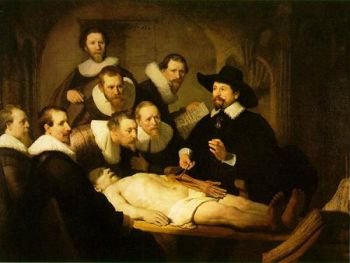
If physical diagnoses helped the doctor find the lesion, the autopsy enabled him to interpret his earlier diagnoses and modify or reinforce them. Clinico-pathological correlation was thus a two-way street, with the repeated bedside observations giving the opportunity of following the patient’s illness during his or her life, and these records being discussed in the light of the final observations on the corpse. The clinician was his own pathologist, caring for his patients in death as in life. Thus, Corvisart, Laennec, and the other leaders of the French school were equally at home at the bedside and the morgue.
They were driven by the search for the lesion, those pathological changes produced by disease. The philosopher Francis Bacon (1561–1626) called these changes ‘the footsteps of disease’, and the image is apposite, of some personified ‘disease’ walking through the organs of our bodies, leaving behind traces of its visit. Identifying these traces was the point of the post-mortem examination.
Post-mortems were conducted by French clinicians in the same spirit as the physical examination: to objectify the phenomena of disease, and thereby replace the speculations of 2,000 years with the hard, palpable, visible, weighable, material consequences of pathology. ‘Open a few corpses’, Xavier Bichat (1771–1802) had exclaimed, and the airy theories of the ancients would disappear. He himself opened more than just a few in his short life (he was 31 when he died), displaying nevertheless the perfect trajectory for what Paris medicine was all about. He had served in the military, and was a surgeon turned physician, thereby living that integration of the localist thinking of surgery with the more philosophical, thoughtful perspective of the physician. His death was widely mourned, and he quickly became a hero of the new medical ways of thinking.
He is remembered today mostly as the ‘father of histology’, since he recognized that pathological processes are common in the same kinds of tissue wherever they occur. Thus the serous membranes that line the heart, brain, thorax, and abdomen react in similar ways to disease processes. Working with the naked eye and a simple hand lens, he identified 21 such types of tissue, such as osseous, nervous, fibrous, or mucous.
He also considered veins and arteries as special ‘tissues’. Bichat was more intrigued by process than many of the French clinicians who were inspired by him, and brought a more theoretical perspective to his work than the flat-footed empiricism that characterized much of French hospital medicine. But he lived and died in the hospital, dividing his time between the bedside and dead room, and he inspired others both by his ideas and his energy, the latter extinguished too soon.
The hospitals of Paris (there were far more beds there than in the whole of Great Britain) offered an unparalleled opportunity to observe desperately sick people, drawn from the needy classes and required to offer their bodies, in life and in death, to the service of clinical medicine, in return for whatever care was on offer.
The French combination of physical diagnoses and clinico-pathological correlation constituted a new approach to disease, and embodied new power structures within the hospital. It gradually produced a new organization (nosology) of disease, grounded in the organs, and elevating the solid parts of the body to pole position. It was arguably the Hippocratic approach writ large, but based in the hospital and situating disease in the organs rather than the humours.
Organ pathology became the dominant theme. Monographs on the diseases of the heart, lungs, kidneys, brain and nervous system, stomach and intestines, liver, skin, and reproductive organs became the way French clinicians made names for them. Corvisart’s monograph on diseases of the heart and Laennec’s on diseases of the lungs were linked to their diagnostic innovations. Others – Alibert on the skin, Rayer on the kidneys, Andral on the blood, Ricord on the reproductive organs – extended the approach to other parts of the body.
Of all diseases, phthisis was undoubtedly the most written about and most commonly encountered among the patients (and their doctors) in the French hospitals. It was the leading cause of death throughout Europe in the early 19th century. ‘Phthisis’ (consumption) was described by the Hippocratics as a dangerous wasting disease with fever, chronic cough, and other pulmonary symptoms, and there is good palaeopathological evidence that tuberculosis has been common in human societies for millennia. Phthisis became ubiquitous from the late 18th century, and there is reason to suppose that most cases of ‘phthisis’ would today be diagnosed as tuberculosis.
The latter disease category received its modern definition only when Robert Koch identified the bacterium, the tubercle bacillus, as the causative agent of tuberculosis in 1882. Nevertheless, Laennec and his colleagues defined ‘phthisis’ pathologically, and their descriptions of both the clinical symptoms and the post-mortem findings confirm the assumption that phthisis and tuberculosis are for the most part two names for the same disease.
Laennec claimed to be able to diagnose phthisis with his stethoscope, arguing for ‘pathognomonic’ (i.e. unique to that condition) sounds in the upper chest in patients with the affliction. He argued on both clinical and post-mortem grounds that the tiny lesion called the ‘tubercle’ (literally, a small swelling) was the hallmark of a single disease, no matter where the lesion was found.
He thus unified a number of different diagnoses, such as scrofula, tuberculous meningitis, or tubercles of the intestine. He likened the development of larger granular lesions from the initial tubercles to the ripening of fruit. His grouping diseases of many organs containing tubercles into a single entity was vindicated by Koch’s work on the bacillus, but within the pathological tradition, it took a leap of the imagination and was counter-intuitive given the organ-based paradigm within which he worked. As for the cause of phthisis, Laennec suspected that it would never be known for certain, although his own causative framework veered towards the psychosomatic. Strong passions were often associated with the disease, and he quietly assigned them causative significance.
Laennec’s brilliant diagnostic work underscores both the strengths and weaknesses of the clinicopathological approach: by concentrating on the end-stage of disease, the lesions, French clinicians were often left short on both the processes by which the lesions were formed, and the aetiology (cause) of the changes.
More positively, by looking closely at the correlations between clinical signs and pathological changes, they were able to differentiate many diseases that have remained in the medical vocabulary, even after germ theory and other later developments offered different sets of diagnostic criteria.
One good example was the separation of typhus and typhoid fevers. The two words are similar and their clinical presentations could be close enough that it is sometimes difficult in the older medical literature to sort out one from the other, or from alternative conditions that might be diagnosed today.
They were two varieties of fever, a disease in its own right in earlier times. In the 18th-century disease classifications, ‘fever’ was the disease, broken up into various kinds with adjectives such as intermittent, continued, typhus, typhoid, low, nervous, putrid, hectic. ‘Typhoid fever’ still sounds acceptable to us, and ‘yellow fever’ is the full name we use for the disease caused by a virus. These names linger even after 19th-century doctors gradually came to define ‘fever’ as a sign of disease (elevated body temperature, measured by a thermometer), rather than a disease itself.
The differentiation of typhus and typhoid was effected more or less independently by several doctors, each under the spell of the French way of doing medicine, but working in Britain and the United States as well as France. In France, Pierre Louis (1787–1872) established pathological criteria for typhoid in 1829. His career epitomizes the French era. Young enough to train in the ‘new’ medicine, he spent a few years in Russia before returning to Paris in 1820, convinced that he did not know enough about disease.
He gave up private practice and attached himself to the Charité hospital, carrying out more than 2,000 autopsies over a six-year period and keeping elaborate records of both clinical and pathological findings. These became the basis of his subsequent monographs on phthisis and enteric fever (typhoid). Louis identified the swollen lymph nodes (Peyer’s patches) in the membrane of the large intestine, arguing that they are pathognomonic for enteric fever. William Jenner (1815–1998) in London, W. W. Gerhard (1809–1872) in Philadelphia, and several others completed the differentiation of the two diseases.
During the first half of the 19th century, pathological anatomy was the queen of the medical sciences. It provided doctors with palpable evidence of the consequences of disease, which led to a streamlining of the elaborate nosologies of earlier times. It would not have been possible without the vast collections of patients in hospitals, allowing doctors to make clinical and pathological observations on so much ‘material’, as they often disparagingly called it. The numbers game constituted the third pillar, called by Louis, its most systematic practitioner, the méthode numérique (numerical method). He applied it to help gather his pictures of diagnostic categories, but also to evaluate therapy.