Boy with Autism Gets Surprise Gift from Trash Man
What are some treatments for involuntary movements, vocalizations, and Tourette’s Syndrome associated with autism?
Tourette’s syndrome is an inherited neurological disorder that is characterized by involuntary movements and vocalizations. Involuntary movements or vocalizations also occur more commonly in autistic children when compared with the general population. Autism and Tourette’s may be linked by a common biochemical derangement and can occur together in some children.
Medications are currently the only effective treatments for these conditions. These medications include:
High blood pressure medications: Researchers have found low doses of clonidine or guanfacine to be useful in treating autistic people with these types of movement disorders. As a consequence, clonidine hydrochloride (Catapres) and guanfacine (Tenex), two alpha 2-adrenergic agonists, are the most frequently prescribed medications for tics in the United States. Clonidine was developed as a blood pressure medication, but was found to decrease the rate and severity of tics. Though originally indicated for persons with high blood pressure, clonidine and guanfacine can generally be taken by individuals with normal blood pressure. Clonidine is available in tablet and sustained-release (transdermal) patch form. Like all medications, clonidine does have some side effects that can be problematic. The mostproblematic side effects reported have been dry mouth and drowsiness or somnolence. Guanfacine has the same side effect profile, although the drowsiness tends to be somewhat less. Although many patients adjust to the medication’s side effects, others don’t and discontinue the medication. Even if clonidine does work, it may take time before its effect builds up in the system.
Antidepressant drugs: Preliminary results from a small study of five autistic children show a significant improvement in movement disorders using the antidepressant drug clomipramine. (It is sold under the brand name Anafranil in the United States.) Anafranil, a chemical cousin of tricyclic antidepressant medications such as Tofranil and Elavil, is commonly used to treat people who suffer from obsessions and compulsions.
Antipsychotic drugs: Medications such as olanzapine (Zyprexa) and risperidone (Risperdal) can help reduce tics and other symptoms of Tourette’s syndrome. Nevertheless, they often produce unpleasant side effects, such as drooling, muscular rigidity, tremor, and lack of facial expression. Drugs used to treat Parkinson’s disease often can reduce these side effects. Prescription of low doses of antipsychotic medications may be necessary for resistant cases.
Tourette’s syndrome is an inherited neurological disorder that is characterized by involuntary movements and vocalizations.
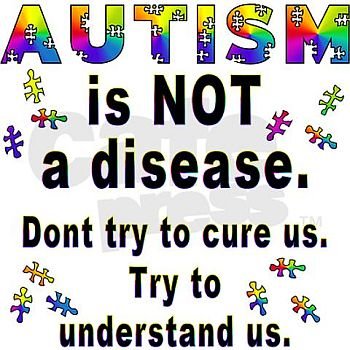
Is there any harm in trying unproven treatments on my child?
The ideal treatment for an autistic child would have the following characteristics:
- Curative (rather than just improving symptoms)
- Effective in all children (not just some a certain type or degree of autism)
- Quick (it would not take years of therapy to accomplish)
- Easy to administer (a pill or an injection)
- Risk free (no side effects)
- Inexpensive (cost would be minimal or free)
Currently, no treatment for autism can achieve this ideal. Even the most promising treatments for autism often fall far short. Additionally, years of intensive treatment with an unexplored therapy could leave the autistic individual with substantial additional impairments. Despite this, parents desperate to help their autistic child can be lured into trying unproven treatments. It is natural for parents, educators, and even mental health professionals to ask: “What harm is there in trying this new treatment?” Unfortunately, the answer to this question is “great harm.” There are good reasons to be cautious; some of the more common reasons are listed here:
Expense: No treatment is without cost, even if a practitioner were not to charge for the unproven treatment. Costs a parent can incur while trying an unproven treatment include:
Direct financial cost: Unproven treatments are often quite expensive. Money spent on an unproven treatment takes money away from more effective treatments or from other financial obligations of the parent.
When employing unproven therapy, the time to a “cure” or “substantial improvement” is unknown. Without this information, there is a tendency for parents to continue therapy long past the point where an honest professional would suggest that the therapy is not working. The hope for a cure keeps many parents spending money long after a reasonable chance of success has passed. Adding financial stress to a household with an autistic child is unwise.
Opportunity costs: The time and resources parents spend on an unproven therapy are time and resources that could have been spent on an intervention with a greater likelihood of success. For example, many experts feel that early intervention programs that use accepted behavioral modification techniques, such as applied behavioral analysis, are particularly effective. However, if the child spends the early years in an unproven and ultimately ineffective therapy, then the opportunity for early intervention is lost.
Psychological costs: Parents who seek “cures” or dramatic improvements in their children from unproven therapies are often disappointed. A repeated experience with treatments that are promoted with much fanfare but turn out to be ineffective can cause family members of autistic individuals to become depressed or unnecessarily cynical about new treatments, even those that are legitimate interventions.
Physical harm: Physical harm can come from pharmacological, dietary, and behavioral interventions. The annals of the FDA are filled with numerous examples of substances that were initially believed to be useful and without harmful side effects that turned out to bequite harmful. Examples range from the birth defects associated with the fertility drug thalidomide to heart valve damage associated with the use of the diet drugs fenfluramine and dexfenfluramine (i.e., Fen Fen).
Some practitioners are now recommending the use of substances like secretin and dimethylglycine (DMG) for the treatment of autism. The effects of long-term use have not been investigated and are unknown.
Dietary interventions that recommend a very limited diet (such as a gluten-free diet) are difficult to achieve and may deprive children of needed nutrients. Other diets that encourage high-dose vitamin or mineral supplementation have sometimes led to sickness or death.
Even behavioral interventions are not without risk of harm. In the past, some behavioral interventions have encouraged parents to use physical punishment to decrease the amount of socially inappropriate behavior. In some cases, this punishment has resulted in allegations of child abuse by family members. Overly restrictive or intense behavioral interventions can increase a child’s frustration level and result in an increase in autistic behaviors, with further regression from socially acceptable behaviors.
Dr. Quinn’s comment:
I am not suggesting that parents and professionals not be allowed to explore a range of treatment options. What is suggested is that they do so with as much information as possible, and armed with an attitude of healthy skepticism. For several reasons, such skepticism is particularly important in considering treatments for autism as it acts as a balance to the strong desire to do “something” for your child. Finally and perhaps most importantly, one must always be aware of the potential for harm.
William’s comment:
There is no mountain a parent won’t climb barefoot if they think it would be beneficial to their autistic child. It takes real discipline to plot out a course of action and to stick to it. Financial liabilities, as Dr. Quinn mentions, can be tremendous in proven therapies (ABA). It’s not a great idea to go looking for something new and unproven.
Term:
Secretin – A polypeptide neurotransmitter (chemical messenger); one of the hormones that controls digestion, increasing the volume and bicarbonate content of secreted pancreatic juices.