Obesity/Bulimia/Anorexia/Vitamins
Eating Disorders – Vitamins, Minerals and Deficiencies
Should I take a vitamin supplement when I am in recovery?
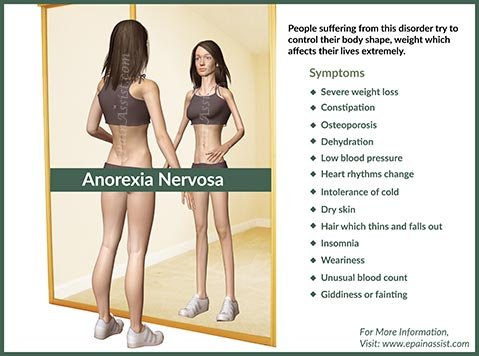
Individuals differ in their need for supplementation; however, anorexia patients are at increased risk for vitamin and mineral deficiencies. Your doctor may recommend supplementation of key vitamins and nutrients, but still, the best way to get them is through a balanced diet; merely taking supplements does not reduce the risk of complications that can arise from malnutrition. A balanced diet that includes a wide variety of foods can provide important vitamins, minerals, and other nutrients to patients in recovery.
These includes:
- Vitamin A (beta-carotene): Important for healthy eyes, skin, teeth, and immune functioning. Found naturally in fish and liver, and in certain fruits and vegetables.
- Vitamin B complex: Found in dairy products, meat, nuts, oatmeal, peanut butter, whole grains, yogurt, and some vegetables.
- Vitamin B12: Found in beef, cheese, fish, eggs, liver, milk and milk products, pork, and tofu.
- Vitamin C: Found in green vegetables, berries and citrus fruits, mangos, sweet peppers, pineapple, radishes, spinach, and tomatoes.
- Vitamin D: Found in fish and dairy products fortified with Vitamin D, eggs, butter, milk, oatmeal, salmon, sardines, sweet potatoes, and tuna. With moderate amounts of exposure to sunlight, the body also naturally converts vitamin D. Both vitamin D and calcium are important in decreasing the risk of osteoporosis.
- Vitamin E: Found in vegetable oils, whole grains, nuts, seeds, peanuts, brown rice, eggs, milk, organ meats, sweet potatoes, soybeans, wheat germ, and dark-green, leafy vegetables.
- Vitamin K: Found in alfalfa, broccoli, soybeans, cauliflower, egg yolks, liver, oatmeal, rye, wheat, and dark green, leafy vegetables.
- Folic acid: Found in beans, beef, whole grains, brown rice, cheese, chicken, dates, lamb, lentils, liver, milk, oranges, pork, salmon, tuna, yeast, and green, leafy vegetables. A deficiency of folic acid may contribute to depression and anxiety, and birth defects.
- Calcium: Found in dairy foods, seafood, seaweeds, nuts, buttermilk, cheese, shellfish, oats, parsley, prunes, whey, tofu, yogurt, and green, leafy vegetables. Calcium is an essential mineral for overall health and the prevention of osteoporosis. It should be combined with vitamin D for proper absorption.
- Magnesium: Found in most foods, especially dairy products, fish, meat, fruits, vegetables, whole grains, and seafood. The use of diuretics and laxatives and purging behaviors can significantly contribute to magnesium deficiency.
- Phosphorus: Found in most foods, especially asparagus, bran, corn, dairy products, eggs, fish, dried fruit, garlic, sunflower and pumpkin seeds, meats, poultry, salmon, and whole grains. Important for electrolyte balance.
- Potassium: Found in dairy foods, fish, fruit, meat, poultry, vegetables, whole grains, dried fruit, garlic, lima beans, and nuts. Also important for electrolyte balance.
- Sodium: Found in most foods, but may need supplementation with the use of laxatives, diuretics, or if purging symptoms are present. Important for electrolyte balance.
- Zinc: Found in fish, meats, poultry, seafood, egg yolks, lima beans, pecans, pumpkin seeds, soybeans, and whole grains. Some scientific studies have found zinc deficiencies in anorexia patients, suggesting that zinc may contribute to loss of appetite and affect a person’s sense of taste and smell.
- Iron: Found in lean beef, prunes and other dried fruits, spinach, and whole grains.
- Omega-3 fatty acids: Found in fish oil, certain cold water fish (e.g., salmon, herring, cod, and anchovies), cod liver oil, walnuts, and flax seeds. Essential fatty acids may play a critical role in brain function, heart function, and hormone regulation. Some studies also suggest that omega-3 fatty acids help to regulate mood and promote an anti-inflammatory response in the body.
Will I be able to stay on my vegetarian diet during recovery?
People with special dietary needs (e.g., vegetarians, vegans, those with reported food allergies or diabetes) should be sure to discuss dietary concerns with their physician and dietitian, as some special diets may increase the risk of vitamin and mineral deficiencies. In addition, be open with your treatment team about your reasons for following a special diet. While some people are vegetarians for religious or ethical reasons and some hold the belief that vegetarianism is a healthier way to eat (although there is little evidence to support this claim), special diets may also be a symptom of one’s eating disorder. Distorted beliefs about food can hinder the recovery process; therefore, it is important to remain open about your dietary preferences and to discuss your unique needs with your treatment team.
What is orthorexia Nervosa?
Introduced by Steven Bratman, orthorexia Nervosa is a term used to describe a fixation with eating foods that are considered “pure” in quality. Literally translated, the term means “fixation on righteous eating.” Although it is not an officially recognized medical condition, it can be a symptom of an eating disorder. Typical orthorexia behaviors include restricting foods to those perceived as “healthy,” eating only organic foods, feeling guilty if “unapproved” foods are consumed, and self-punishing for deviations from these restrictions.
Orthorexia can lead to social isolation, can impede healthy relationships, and may lead to physical and mental health problems. In contrast to anorexia, orthorexia is not necessarily associated with a desire to be thin or the fear of becoming fat. Thus, while it may be a contributing factor to anorexia or another eating disorder, its symptoms alone do not meet the criteria for anorexia nervosa.
A friend of mine was encouraged to keep a food diary when she was in treatment, but I find this worsens my tendency to obsess about food. Should I stop using the food diary?
Psychotherapists and nutritionists alike often recommend food diaries and food records when treating eating disorders. They are used to track progress in treatment, take note of disordered eating patterns, and identify antecedents to binge/ purge behavior. However, studies show that for some patients, monitoring food intake is associated with an increase in eating disorders symptoms, food preoccupation, and body image dissatisfaction.
This can be especially true with anorexia patients. In such instances, an alternative to a food diary is an “appetite diary.” Appetite monitoring can help anorexia patients perceive physiological cues that signal hunger and satiety, something that is frequently impaired with an eating disorder. A typical diary entry may include the recognition of hunger cues (e.g., a gnawing feeling in the stomach, lightheadedness, stomach “growling,” poor concentration, fatigue, headache, or an irritable mood) along with a hunger rating (e.g., on a scale of 1–10). Satiety cues are recorded in like manner. Appetite monitoring can also help patients distinguish between physical cues and emotional cues (such as anxiety, stress, shame, fear, anger) that may be mistaken for hunger or satiety-a problem that is common to eating disorder patients. Another alternative is a “food and feelings diary” in which a patient records his or her emotional reactions to mealtimes and food but does not include a record of the amount or types of foods eaten.
Lynn shares:
I’m sure there is much individual variation in how the issue of eating is experienced in people with anorexia. I was one who was constantly and ravenously hungry but afraid to eat. During this period, it was most helpful for me to concentrate on desired energy levels rather than track how much I was eating, which would have been overwhelming and frightening at that time. During times when I felt out of control and fearful of the weight gain, I would keep a record of the desired positive changes, such as improved ability to concentrate, improved sleep, better endurance, better performance, and feelings of increased strength and well-being.
I have always thought to eat starchy foods would make me gain weight, but my dietitian says this is actually a “food myth.” What are some other food myths?
Erroneous beliefs about food and weight gain are surprisingly common, even among the general population. However, inaccurate beliefs about food can lead to food aversions and may exacerbate eating disorders symptoms.
Some of the most popularly held diet and food myths are listed here:
1. Myth: One extra snack will lead to immediate weight gain. Fact: For the average diet, it takes 3500 calories to gain one pound. Therefore, adding an extra snack will not cause immediate weight gain.
2. Myth: Dairy products cause weight gain.
Fact: A certain type of food does not cause weight gain. Rather, weight gain is a function of total calories consumed, a person’s energy expenditure, and metabolic rate.
3. Myth: Eating after 8 p.m. results in weight gain.
Fact: See fact #2 of this list.
4. Myth: Red meat causes weight gain.
Fact: See fact #2.
5. Myth: Fat-free foods do not cause weight gain.
Fact: See fact #2.
6. Myth: Fried food goes straight to the hips and thighs.
Fact: See fact #2.
7. Myth: If I eat more than my friends or family, it means I will get fat.
Fact: See fact #2.
8. Myth: If I purge I will not be adding any calories for that meal.
Fact: Experts note that most calories are retained despite self-induced vomiting or the use of laxatives.
9. Myth: Low-carbohydrate diets are good for you.
Fact: Low-carbohydrate diets are not necessarily any better for you than a diet rich in complex carbohydrates. On the contrary, such diets may even be harmful. Low-carb diets may lead to fatigue, bone-loss, dehydration, hypoglycemia, mood imbalances, nutrient deficiencies, and electrolyte imbalances. Cholesterol levels and rate of blood flow to the heart can also be affected by diets that are extremely low in carbohydrates.
10. Myth: Eating certain foods in combination can cause weight loss or weight gain.
Fact: The combining of foods has no effect on weight loss or weight gain.
11. Myth: Occasional fasting and “detox-diets” are good for your system.
Fact: Recent research has shown that fasting has no impact on removing toxins from the body.
12. Myth: If I feel full, it means I have eaten too much.
Fact: Satiety sensations do not indicate weight gain.
13. Myth: Some foods have weight-loss properties in them.
Fact: Grapefruit, celery, and cabbage are examples of foods commonly referred to as “weight-loss foods” or “negative-calorie foods.” There is no scientific evidence to support these claims.
14. Myth: Fat in a diet is bad for you.
Fact: Fats are essential nutrients contained in food. Fats provide the body with energy and assist with satiety.
15. Myth: Sugar is addictive.
Fact: In medical terms, sugar is not an addictive substance.
Lynn shares:
The myth that was scariest to me was that if I ate in accordance to hunger, my weight would continue to go up, and there would be no end to it. I also believed that all weight gain would, of course, be fat, and how could so many additional pounds of fat possibly be healthful? The truth is, when you gain weight after being severely underweight, there is a lot of lean body tissue mass added in addition to the essential fat reserves that account for weight gain.