VIDEO
Diet and Cancer
Diet can promote or inhibit the formation of cancer in many ways. Diet can promote cancer through:
(1) the presence of carcinogens in food (which can be natural constituents or man-made additives);
(2) the generation of carcinogens by cooking-for example, when foods are smoked, fried, or grilled, polycyclic hydrocarbons are produced;
(3) the increased exposure of the body to carcinogens by a diet low in fiber, which slows bowel movements; and
(4) “over nutrition” or excess body weight.
Some of the ways that diet prevents cancer include the ingestion of vitamins and nutrients that help our bodies detoxify carcinogens (present in cruciferous vegetables-broccoli, Brussels sprouts, cauliflower, and kale) and the presence of cancer-fighting chemicals in fruits and vegetables.
In the sections that follow I discuss some of the ways in which fruits and vegetables lower cancer risk and why over nutrition increases it.
Can food prevent cancer ?
Trying to understand how nutrition affects cancer is difficult for a number of reasons.
First, the chemistry of foods is enormously complex. Fruits and vegetables contain thousands of different compounds, called phytonutrients or phytochemicals, plus a host of vitamins, minerals, and fiber. Teasing out which plant constituents are most important for disease prevention is not easy.
Second, research that involves obtaining dietary histories from individuals over many years can be inaccurate.
Third, lifestyle factors other than those under study, such as exercise and changes in weight, may affect the results. For these and other reasons, we often hear conflicting reports in the news about the role of certain foods in preventing cancer. Some research is done well, some poorly; no matter, the news reports it all! No wonder people can become exasperated and lose faith in scientists to provide definite answers to important questions about nutrition and cancer.
There is ample evidence to suggest that a diet high in fruits and vegetables lowers the risk for a number of cancers. But it has been difficult to prove that adhering to a diet high in fruits and vegetables will decrease an individual’s cancer risk. To try to prove the connection, researchers follow people over time and see if fewer cancers develop in those who eat more fruits and vegetables. So far these studies have failed to prove such a broad link. One explanation could be that because so many factors affect the development of cancer it may not be possible to isolate the contribution of certain foods. Another reason may be that specific types of fruits and vegetables can help particular types of people (who have a certain genetic makeup) prevent the growth of only some types of cancer. This speaks to the complexity of the interaction between our DNA and the environment, which scientists are just beginning to unravel.
Despite the lack of precise scientific guidance, there is strong evidence from the study of cancer in different populations around the world that there are both good and bad foods when it comes to influencing the development of cancer. Our Western diet, full of animal fat and refined sugars and low in fruits, vegetables, and fiber, is associated with much higher rates of breast, prostate, and colorectal cancer than a vegetarian style Eastern diet. When people migrate from Japan and China to the United States (and other countries with similar diets), their rates of these cancers quickly rise to that of Americans, as successive generations of their descendents eat a Western rather than Eastern diet.
More direct links between particular dietary components and cancer have been confirmed by some recent studies. For example, long-term consumption of red meat and processed meats has been clearly shown to increase the chances that colorectal cancer will develop; and among more than a thousand patients treated for stage III colon cancer in a study sponsored by the National Cancer Institute, those adhering to a typical Western diet (higher intake of red meat, fat, refined grains, and desserts) had higher rates of cancer recurrences and lower survivals than those adhering to a diet high in fruits, vegetables, poultry, and fish. In postmenopausal women trying to avoid a cancer recurrence after being treated for breast cancer, the Women’s Intervention Nutrition Study (WINS) suggested that a diet low in fat (15 percent of total calories) is superior to a high-fat diet.
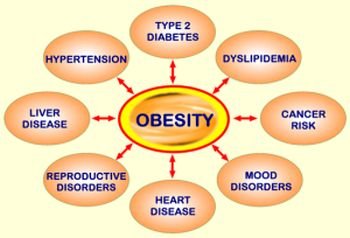
However, because the low-fat diet group also lost weight, experts currently debate whether weight loss, a low-fat diet, or both may lead to fewer breast cancer relapses. Firm dietary recommendations for breast cancer survivors must therefore await future studies. Beyond the effect of any food or food group on the development of cancer is the increasingly important role played by being overweight or obese. This condition has been proven to raise the chances that cancer will occur. Most people know that overweight and obesity increase the risks of cardiovascular diseases and diabetes, but cancer is also on the list of diseases caused, in part, by excessive body weight. Cancers of the colon, breast (in postmenopausal women), prostate, uterus, kidney, esophagus, stomach, pancreas, gallbladder, liver, and perhaps non-Hodgkin’s lymphoma and multiple myeloma are more likely to occur in overweight and obese individuals. This is of major concern because, according to cancer biologist Mel Greaves, “many of us now persistently binge, exercise too little, and live long enough for it to matter.”
When it comes to following nutritional advice, I choose to be guided by the true experts. One is Dr. Walter Willett, a prominent epidemiologist and leader of the Nurses’ Health Study and the Health Professionals Follow-up Study, which have rigorously recorded the diet and behavioral patterns of thousands of health professionals since the 1980s. In his book Eat, Drink, and Be Healthy, Willett makes the following recommendations to lower the risks of cancer and other chronic diseases:
• Eat plenty of vegetables and fruits (at least five servings a day, not including potatoes)
• Replace saturated and trans fats with unsaturated fats (know what you’re cooking with; read labels; order healthful foods in restaurants) • Substitute whole-grain carbohydrates (such as whole-wheat breads and brown rice) for refined-grain carbohydrates (such as white breads and white rice)
• For protein, eat less red meat and processed meats and more nuts, beans, chicken, and fish
• Maintain a stable, healthy weight
• Use alcohol in moderation (it may be beneficial for heart disease but it is not for cancer)
• Exercise regularly and make your day more active
• Take one multivitamin daily for insurance (this is most important for those lacking a balanced diet)
Several years after the publication of this book, the FDA issued new dietary guidelines that are in basic agreement with these recommendations (the FDA guidelines can be found at www.mypyramid.gov). Both Dr. Willett and the FDA have made new food pyramids to replace the one designed in 1992. The new pyramids emphasize the importance of exercise and have diminished the recommended intake for carbohydrates in an effort to promote the attainment of an ideal body weight.
As of 2009, the old food pyramid, which has carbohydrates at its base (to represent the foundation upon which the other food groups are supported), still remains on bread wrappers and other carbohydrate-based food labels, even though it is clearly outdated.