Jake: Math prodigy proud of his autism
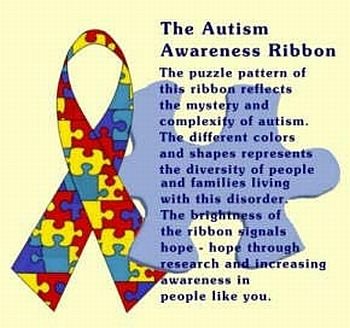
Is naltrexone helpful in treating autism?
In the late 1970s, studies of neonatal animals exposed to high levels of opiates revealed that they exhibited autistic-like withdrawal after they were born. Further, opiate-treated animals exhibited unusual hyperactivity and repetitious (preservative) behaviors much like autistic children. Additionally, researchers have noted similar behavior patterns between autistics and opiate addicts such as social withdrawal, self-stimulation, and high levels of pain tolerance.
Scientists are aware that the body produces its own natural opiates, called endorphins. Endorphins are produced in the body to decrease pain and can be experienced after hard exercise; for example, in the so-called “runner’s high.” Some researchers theorized that autistic individuals have too much beta-endorphin in their central nervous system and that the self stimulatory and self-injurious behavior of typical autistic children is an attempt to increase the production of those endogenous opiates (or endorphins.) This is referred to as the addiction theory of autism. The use of the opiate antagonist, naltrexone, to treat autism followed. This addiction theory goes on to suggest that naltrexone, a drug that blocks the effects of both external and internally produced opiates, should have a beneficial effect on autistic children. Using naltrexone in the treatment of autism appeared reasonable because it is known to antagonize opiate receptor activity in the brain and is an FDA-approved treatment for substance-use disorders such as heroin addiction and alcoholism as well as opiate overdoses. Although primarily a safe drug, naltrexone is not without side effects. When studied in alcoholic populations and in healthy volunteers in clinical pharmacology studies, results have suggested that a small fraction of patients may experience an opioid withdrawal-like symptom complex consisting of tearfulness; mild nausea; abdominal cramps; restlessness; anxiety; and bone,joint, and muscle pain; as well as nasal congestion symptoms. The safety of long-term use of naltrexone in autistic people has not been studied. A large number of uncontrolled reports support the effectiveness of naltrexone in the treatment of autism. However, the five controlled trials that are available are far less encouraging. The value of naltrexone treatment as a routine trial for hyperactive, self-injurious autistic children remains debatable. Despite encouraging anecdotal reports describing behavioral improvement in one or a few patients, when subjected to strict scientific studies, the results were less impressive. At present, eight double-blind placebo-controlled trials exist on this topic. They conclude that naltrexone is at best minimally effective in the treatment of autism. Naltrexone should not be utilized as a first-line drug in the treatment of autism and generally is not employed by specialists in autism.
Terms:
Endorphins – Implicated in the regulation of pain perception, social and emotional behaviors, and motor activity. Once thought to be a cause of autism.
Addiction theory of autism – The belief that an overabundance of naturally produced opioid compounds (called endorphins or encephalins) is the cause of autism.
Naltrexone – This drug blocks brain cell receptors for opioids, natural opium-like substances produced by the body that may be abnormally high in autism.
What is chelation therapy?
Heavy metal toxicity can cause a wide range of problems including severe injury to the body organs and the brain. Chelation therapy is used to treat these toxic exposures.
Chelation therapy involves the use of chemical compounds to bind several types of heavy metals that are present in toxic concentrations in the body. These medications can be injected into the vein, the muscle, or can be taken by mouth. They work by binding to the toxic compound and then are easily excreted from the body in the urine or feces. Chelation therapy was first developed by the U.S. Navy as a way of removing toxic metals from the bodies of military personnel exposed to high concentrations of lead during the 1940s. Since that time, it has been used in the treatment of people exposed to lead paint particles and other environmental exposures. Chelating agents are approved for use by theFDA, but have limited medical indications. Chelation therapy is medically indicated when a patient is exposed to toxic levels of heavy metals such as iron, arsenic, lead, and mercury. It is a recommended treatment by the American Academy of Family Practice and the American Academy of Pediatrics for this purpose. The conditions that chelation therapy is used to treat include:
- Lead toxicity most commonly occurs with young children exposed to old houses with lead paint dust or chips. Occupational exposure (soldering, welders, smelters, battery reclamation) is also a risk. Lead screening for children has now become a standard part of a doctor’s visit for children in most states.
- Mercury toxicity almost always occurs with high-risk occupational exposures including dental workers, manufacturers of batteries and thermometers, tannery work/taxidermy, and contaminated seafood.
- Arsenic poisoning usually occurs from exposure to insecticides, herbicides, rodent poisons, veterinary parasitic medications, or intentional poisoning.
Iron toxicity usually occurs when a child ingests an overdose of iron pills. Iron pills are used as a supplement to dietary iron in treatment of patients with low blood counts (anemia). Although there are other heavy metals (cadmium, manganese, aluminum, cobalt, zinc, nickel, copper, and magnesium) that can cause illness when a patient is exposed to high doses, these exposures are extremely rare. Common chelating agents include:
Desfuroxamine mesylate: used for iron toxicity; intravenous is the preferred route of administration
Dimercaprol (BAL): the preferred agent for treating arsenic and mercury toxicity, given as an intramuscular injection
DMSA: an analogue of dimercaprol that can be given orally for lead and arsenic poisoning
D-penicillamine: an oral chelating agent used for lead, arsenic, or mercury poisoning; much less expensive but not as effective as DMSA
Calcium disodium versante (CaNa2-EDTA): can be used in conjunction with BAL in lead toxicity; never used alone in treating lead toxicity because it chelates only extracellular, not intracellular, lead.
Succimer: an orally active, heavy metal–chelating agent; indicated for the treatment of lead poisoning in pediatric patients.
Diagnosis of heavy metal toxicity is serious and must be made by a physician based on clinical symptoms in conjunction with laboratory testing. Chelating agents can be toxic, causing rashes and liver and kidney injury as well as bone marrow suppression with low white blood cell counts (neutropenia). While these agents have no effect on diseases such as atherosclerosis, Alzheimer’s disease, Parkinson’s disease, or autism, they can remove other essential metals from the blood such as iron, zinc, copper, and magnesium. Deficiencies resulting from chelation agents can cause adverse health effects. Therefore, chelating agents should not be used unless heavy metal toxicity has been diagnosed in a reputable laboratory and therapy is monitored by a qualified physician.
Term:
Chelation – The formation of a complex between a metal ion and two or more polar groupings of a single molecule. For example in heme, the Fe2+ ion is chelated by the porphyrin ring. Chelation can be used to remove an ion from participation in biological reactions, as in the chelation of Ca2+ of blood by EDTA, which thus acts as an anticoagulant. A chelating agent will bind with metals in order to try to release them from the body.