How to look after your feet if you have diabetes
Feet, chiropody and footwear
I have just developed diabetes and have been warned that I am much more likely to get into trouble with my feet and need to take great care of them – what does this mean?
If you keep your diabetes well controlled, have no loss of sensation and good circulation to your feet, and then you are no more at risk than a person without diabetes. In the long term people with diabetes are more likely to develop foot trouble and it pays to get into good habits – inspecting your feet daily, keeping your toenails properly trimmed and avoiding badly fitting shoes from the outset. When you have diabetes you should have access to the local NHS chiropodist (nowadays called a podiatrist), who will check your feet and advise you, free of charge, on any questions that you may have.
I have had diabetes for 10 years and as far as I can see it is quite under control and I am told that I am free from complications, but I cannot help worrying about the possibility of developing gangrene in the feet – can you tell me what it is and what causes it?
Gangrene is the death of tissues in any part of the body. It most commonly occurs in the toes and fingers. Gangrene also occurs in people without diabetes, and people with diabetes develop it only if they have a serious lack of blood supply to their feet or reduced sensation. It can also be caused by smoking, which is the main cause of clogged-up blood vessels. Generally it occurs only in older people and is related to the progressive hardening of the arteries that is part of the ageing process.
The other form of gangrene occurring in people with diabetes is caused by the presence of infection. This usually affects the feet of people who have reduced sensation because of diabetic neuropathy (see the introduction to this chapter). This can occur even in the presence of a good blood supply. Any infected break in the skin of your feet must be treated promptly and seriously. If you are worried about anything to do with your feet, then you should consult your doctor or chiropodist/podiatrist immediately.
As someone with diabetes, do I have to take any special precautions when cutting my toenails?
It is important for everyone to cut their toenails to follow the shape of the end of the toe, and not cut deep into the corners. Your toenails should not be cut too short, and you should not use any sharp instrument to clean down the sides of the nails. All this is to avoid the possibility of ingrowing toenails. If you have problems cutting your toenails consult your NHS chiropodist (podiatrist).
I have a thick callus on the top of one of my toes – can I use a corn plaster on this?
No. Do not use any corn remedies on your feet. They often contain an acid which softens the skin and increases the risk of an infection. Consult a State Registered Chiropodist to have it treated – as you have diabetes you should have access to an NHS chiropodist (podiatrist) who will treat you free of charge.
My son has picked up athlete’s foot. He has diabetes treated with insulin – do I have to take any special precautions about using the powder and cream given to me by my doctor?
No. Athlete’s foot is very common and is due to a fungal infection, which should respond quickly to the treatment with the appropriate antifungal preparation; this can be bought without prescription. Do not forget the usual precautions of making sure he keeps his feet clean, dries them carefully and changes his socks daily.
Will I get bunions because I have diabetes?
No. Bunions are no more common in people who have diabetes than in those who do not.
I have had diabetes for 25 years and I have been warned that the sensation in my feet is not normal. I am troubled with an ingrowing toenail on my big toe, which often gets red but does not hurt – what shall I do about it?
You should seek help and advice urgently in case it is infected. If so, you are at risk of the infection spreading without you being aware of it, because it would hurt less than in someone with normal sensation. This is potentially a serious situation, so see your doctor straight away.
I am 67 and have had diabetes for 15 years. As far as I can tell my feet are quite healthy but, as my vision is not very good, I find it difficult to inspect my feet properly – what can I do about it?
Do you have a friend or relative who could look at your feet regularly and trim your nails?
If this is not possible, then the sensible thing to do would be to attend a State Registered chiropodist regularly. Ask your GP or diabetes clinic about local arrangements for seeing an NHS chiropodist (podiatrist).
Do I have to pay for chiropody?
Most hospital diabetes departments provide a chiropody (podiatry) service free of charge. Outside the hospital service, chiropody under the NHS is limited to pensioners, pregnant women and school children. Although local rules do vary, most districts consider people with diabetes as a priority group and do offer free chiropody. You should check locally before obtaining treatment. If you are seeing a chiropodist or podiatrist privately, make sure that he or she is State Registered (they will have the letters SRCh after their name).
What are the signs that diabetes may be affecting my feet?
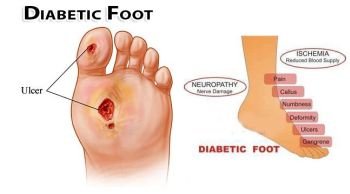
There are two major dangers from diabetes that may affect the feet. The first is due to reduced blood supply from arterial thickening. This leads to poor circulation with cold feet, even in warm weather, and cramps in the calf when you are walking (intermittent claudication). This is not a specific complication of diabetes and often occurs in people who do not have diabetes. The major problem here is arterial sclerosis (hardening of the arteries), and smoking is a more important cause of this than diabetes. In severe cases this can progress to gangrene.
The second way that diabetes can affect the feet is through damage to the nerves (neuropathy), which reduces the feeling of pain and awareness of extremes of temperature. This can be quite difficult to detect unless the feet are examined by an expert.
The danger is that any minor damage to the foot, be it from a cut or abrasion or badly fitting shoe, will not cause the usual painful reaction, so that damage can result from continued injury or infection spreading. It is important that you should know whether the sensation in your feet is normal or reduced. Make sure that you ask your doctor this at your next clinic review.
My daughter has diabetes and often walks barefoot around the house. Should I discourage her from doing this?
It is well known that people with diabetes are prone to problems with their feet which are, for the most part, due to carelessness and can be avoided. The usual reason these problems occur is that, with increasing duration of diabetes, sensation in the feet tends to be reduced. Most people are unaware of this, and so the danger is that damage to the feet may be the first indication of the problem. By then it could be too late!
FOOT CARE RULES
Dos
• Do wash your feet daily with soap and warm water. Do not use hot water – check the temperature of the water with your elbow.
• Do dry your feet well with a soft towel, especially between your toes.
• Do apply a gentle skin cream, such as E45, if your skin is rough and dry.
• Do change your socks or stockings daily.
• Do wear well-fitting shoes. Make sure they are wider, deeper and longer than your foot with a good firm fastening that you have to undo to get your foot in and out. This will prevent your foot from moving inside the shoe.
• Do run your hand around the inside of your shoes each day before putting them on to check that there is nothing that will rub your feet.
• Do wear new shoes for short periods of time and check your feet afterwards.
• Do cut your toenails to follow the shape of the end of your toes, not deep into the corners. This is easier after a bath as your toenails will soften in the warm water.
• Do check your feet daily and see your chiropodist/podiatrist or doctor about any problems.
• Do see a State Registered chiropodist or podiatrist if in any doubt about foot care.
Don’ts
• Do not put your feet on hot-water bottles or sit too close to a fire or radiator, and avoid extremes of cold and heat.
• Do not use corn paints or plasters or attempt to cut your own corns with knives or razors under any circumstances.
• Do not wear tight garters. Wear a suspender belt or tights instead.
• Do not neglect even slight injuries to your feet.
• Do not walk barefoot.
• Do not let your feet get dry and cracked. Use E45 or hand lotion to keep the skin soft.
• Do not cut your toenails too short or dig down the sides of your nails.
• Do not wear socks with holes in them.
• Do not sit with your legs crossed.
• Do not smoke.
Seek advice immediately if you notice any of the following:
• Any colour change in your legs or feet.
• Any discharge from a break or crack in the skin, or from a corn or from beneath a toenail.
• Any swelling, throbbing or signs of inflammation in any part of your foot.
First aid measures
• Minor injuries can be treated at home provided that professional help is sought if the injury does not improve quickly.
• Minor cuts and abrasions should be cleaned gently with cotton wool or gauze and warm salt water. A clean dressing should be lightly bandaged in place.
• If blisters occur, do not prick them. If they burst, dress as for minor cuts.
• Never use strong medicaments such as iodine.
• Never place adhesive strapping directly over a wound: always apply a dressing first.
The dangers to the feet of children with diabetes, however, are really very slight and there is no reason to discourage your daughter from walking about barefoot at an early age.
What special care should I take of my feet during the winter?
In older people with diabetes, the blood supply to the feet may not be as good as in those who do not have diabetes and this will make their feet more vulnerable to damage by severe cold. As winter is cold and wet, we tend to wear warmer thick clothing, and shoes, which are comfortable in the summer, may be unpleasantly tight when worn with thick woolly socks or stockings. This may damage the feet and also make them more sensitive to the cold. It could numb the sensation completely. All these effects will be made worse if your feet become wet. Make sure your shoes are comfortable, fit well, and allow room for you to wear an adequately thick pair of socks, preferably made of wool or other absorbent material. Use weather-proof shoes, overshoes or boots if you are going to be out for any length of time in the rain or snow, and dry your feet carefully if they get wet. Do not put your cold – and slightly numb – feet straight onto a hot-water bottle or near a hot fire because you may find that, when the feeling comes back, the heat is excessive and chilblains may occur. Feet also need protection during the summer as wearing open sandals can cause problems from possible damage by sharp stones, etc.
How can I give continual protection to my feet?
It is extremely difficult. If the sensation in your feet is normal, then generally you have very little need to worry but, if there is even slight numbness of your feet, you should check them daily and seek the advice of someone else to look at the areas that you have difficulty in seeing. If your circulation is poor, try hard to keep your feet warm and well protected.
FEET FACTS
- Minor cuts or abrasions can be covered with sterile gauze after use of a mild antiseptic cream.
- Avoid using corn plasters – they contain acids which can cause problems.
- Don’t prick blisters; instead treat as for a minor abrasion.
- Corns, callouses or ingrowing toenails must always be treated by your chiropodist.
- When your toenails need cutting, always do this after bathing.
- Cut the nail edge following the shape of the end of the toe.
- Don’t cut the corners of your toenails back into the nail grooves.
- Avoid using a sharp instrument to clean the free nail edge or the nail grooves. If your skin is too dry, apply a small amount of emollient cream (e.g. E45).
- Check and bathe your feet every day, then pat dry gently, particularly between the toes.
- If your skin is moist, dab gently with surgical spirit and then dust lightly with talcum powder. Remove hot water bottles before getting into bed, and switch off your electric blanket.
- If thick woollen bed-socks are worn, they must be loose fitting.
- Be careful not to sit too close to radiators or fires.
- Choose shoes which provide good support. They must be broad, long and deep enough. Check that you can wriggle all your toes.
- Shoes should have a fastening.
- Check shoes daily for any small objects, such as hairpins, stones or buttons.
- If socks have ridges or seams, wear them inside out. Loose fitting ones are best. Avoid very hot baths.
- Always dry your feet carefully after bathing.
- Remove hot water bottles before getting into bed, and switch off your electric blanket.
- If thick woollen bed-socks are worn, they must be loose fitting.
- Be careful not to sit too close to radiators or fires.
- Choose shoes which provide good support. They must be broad, long and deep enough.
- Check that you can wriggle all your toes.
- Shoes should have a fastening.
- Check shoes daily for any small objects, such as hairpins, stones or buttons.
- If socks have ridges or seams, wear them inside out. Loose fitting ones are best.
I have suffered from foot ulcers for many years and would be grateful if you could suggest something to help my problem.
You should not attempt treatment of this yourself but you should seek medical advice and expert chiropody. Foot ulcers in people with diabetes are usually caused by reduced sensation in the feet (neuropathy) and you should have your feet examined by your specialist to find out whether this is the case. If so, you need to attend for regular chiropody and to learn all the ways of avoid-ing trouble once sensation is reduced. You may need special shoes made by a shoe fitter (an orthotist), which your consultant or podiatrist can arrange.
I have so many other things to remember – can you give me a simple list of rules for foot care?
The list of foot rules that we have given is aimed specifically for those who have abnormalities of either blood supply (ischaemia) or nerve damage (neuropathy). If you have poor sight then you should get somebody else with good eyesight to help you inspect and care for your feet.