Bipolar woman went on brand bag shopping spree (Video)
Are mood stabilizers prescribed for reasons other than bipolar disorder?
The term mood stabilizer typically refers to a medication with antimanic properties and is actually a misnomer. Most psychoactive medications have multiple effects and the decision to label a particular medication a mood stabilizer, an antidepressant, an anticonvulsant, an antipsychotic, or an anxiolytic is often as much a matter of marketing as it is due to the drug’s clinical effects. The newer class of psychotropic medications known as atypical antipsychotic medications, for example, were developed and designed as antischizophrenic medications. Only later were they tested and marketed as mood stabilizers.
Because of their relatively benign safety profile compared with their earlier counterparts (Haldol) (haloperidol) and chlorpromazine, for example), however, they have been used as both antianxiety medications and sedative/hypnotic medications. More recently they are being studied for use in both unipolar and bipolar depression.
Thus, mood stabilizers have multiple properties that are utilized by different physicians to target specific symptoms with which their patients present. For example, neurologists have long been using mood stabilizers that are anticonvulsants to treat epilepsy, but also to prevent migraine headaches and other pain syndromes. Many patients with panic disorder who do not respond to SSRIs (e.g., Sarafem [fluoxetine]) will respond to the anticonvulsant medication valproic acid. But mood stabilizers have been used in the treatment of other anxiety disorders, including generalized anxiety disorder, obsessive-compulsive disorder, and posttraumatic stress disorder. The atypical antipsychotics have been found to be especially useful in severe obsessive-compulsive disorder in which the obsessions are intractable. Seroquel (quetiapine) has been found to be especially useful in managing insomnia associated with drug and alcohol dependency and psychosis in patients suffering from Parkinson’s disease, and it has been used as an alternative to the benzodiazepines in managing anxiety. .
Conditions for which mood stabilizers are utilized
Mood disorders
Anxiety disorders
Impulse control disorders
Sleep disorders
Seizure disorders
Migraines
I have been diagnosed with bipolar disorder and anxiety.How is the combination of conditions treated?
Anxiety is a condition that commonly occurs with bipolar disorder, particularly in the manic phase of the illness, but can also occur in the depressive phase or co-occur as an independent condition. The easiest way to think about this is that if you only have anxiety in the manic or depressive phase of the illness and it abates when your mood stabilizes, then it is a symptom of the bipolar disorder and not an independent condition.
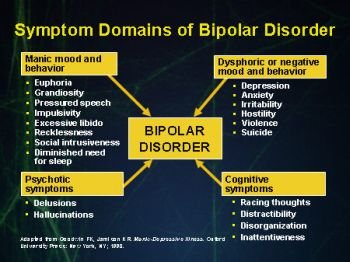
The type of anxiety associated with mania is on a level far more extreme than generalized anxiety. People commonly describe it as a restless energy that will not allow them to sit still. It is often accompanied by irritability and racing or disorganized thoughts. Sometimes the anxiety results because your ambitious grandiose schemes are being thwarted by others who cannot understand the vast rewards completion of such schemes will bring.
Some anxiety conditions, such as social phobia, panic disorder, and generalized anxiety disorder, can cycle with your moods, essentially abating during the hypomanic or manic phase but returning during euthymia and even worsening during the depressive phase. The treatment for anxiety in the context of bipolar disorder is tricky. The SSRIs are a very useful treatment for many anxiety disorders but are less than ideal in persons who suffer from both anxiety and bipolar disorder.
The benzodiazepines, which can be very beneficial in aborting panic attacks, are also tricky because the rate of alcoholism and drug abuse is high among bipolar individuals.
The first task in treatment is to control the bipolar disorder as best as possible. Fortunately, many of the anticonvulsant agents affect GABA, the major neurotransmitter implicated in many anxiety disorders, and therefore they can have anxiolytic and antipanic effects independent of their mood-stabilizing properties.
If the anxiety abates with mood stabilization you are in luck. If not, the problem is a bit trickier. Some anxiety conditions, such as posttraumatic stress disorder and obsessive-compulsive disorder, respond preferentially to SSRIs, and SSRIs are clearly trickier to use in bipolar disorder, as mentioned previously. If the symptoms are generally in check, cognitive-behavioral therapy is the treatment of choice. If an SSRI is warranted, remaining on an antimanic agent is imperative prior to its initiation. A combination of therapy and medication is typically the best treatment approach for a variety of anxiety disorders, such as generalized anxiety disorder, panic disorder, social anxiety disorder, and obsessive-compulsive disorder.
Scott’s comments:
This was my diagnosis exactly. My anxiety is being treated with Klonopin, which I find highly effective. Combined with my bipolar medication, I feel like normal now. The behaviors that I used to exhibit are no longer part of my persona, but memories of days past. The thought of trying to tough it out with both bipolar disorder and anxiety disorder just seems way too hard when modern medicine is available to treat these conditions so specifically. Better living through chemistry, indeed.
My spouse is drinking a lot of alcohol lately. My friend thinks he might be self medicating. What does that mean?
Individuals with a mood disorder may abuse alcohol or drugs in a misguided effort to feel better. In the case of depression, alcohol can initially give the impression of improving one’s mood, but in actuality, alcohol is a depressant. Likewise, use of drugs to get “high” is usually followed by a “crash” during which the mood becomes sad or despondent. During mania, both poor impulse control and recklessness can result in alcohol and/or drug abuse. Such substances, however, serve to further exacerbate the condition and can contribute to a crash into depression.
Depression can sometimes be caused by the alcohol or drug abuse itself and will remit when abstinence is achieved. Often depression precedes the alcohol or drug use, and people turn to these substances in an effort to feel better. Typically though, feeling better really just means being “numb” or deadened to the depressed feelings. Treatment of the depression and/or mania may result in achievement of abstinence. This of course will depend on the stage of substance abuse. If the individual has become dependent on (addicted to) the alcohol or drugs, then concordant substance abuse treatment will likely be necessary as well. As long as the person is addicted to alcohol or drugs, recovery from bipolar disorder will be limited.
In fact, substance abuse is a problem that needs to be considered if someone is refractory to treatments for bipolar disorder. Seeing a person who specializes in treatment of addictions would also be helpful as there are different forms of therapeutic interventions often needed in persons who have addiction. In addition, there are specialized treatment programs for persons with both bipolar disorder and substance abuse