VERY IMPORTANT
VIDEO
Doctors Explain Healthy Way for Bill Clinton’s Dramatic Weight Loss
LOSING WEIGHT
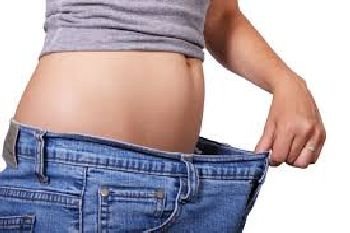
It is easy to start cutting down on calories but keeping to your resolutions is tough. Most people with high blood pressure tend to be overweight. Losing weight should be a gradual process as part of a lifestyle change – avoid dramatic slimming fads.
I know I have to lose some weight. Have you any general tips?
Most people know what is fattening and what isn’t so you can avoid obvious foods but here are a few tips.
• Losing weight is much easier if at the same time you increase your physical exercise. Taking exercise benefits the heart in general. To lose weight you need to take a brisk walk, or an equivalent form of exercise, for 60–90 minutes daily.
• Avoid snacking. If you nibble a lot, drink plenty of water, and use fruit or starchy foods (such as a roll with low fat spread) as your filler rather than peanuts or crisps. See the list above for healthy snacks.
• Plan your meals and plan how to avoid temptation. If you are visiting friends for a meal let them know what you are trying to achieve and why. Good friends will be pleased that you confided in them – they will probably be constructive and helpful. If you go to a restaurant, look for those which have courses that fit in with your healthy eating plan.
• If you develop a craving (a choc attack!), reach for that apple and go for a walk. Remind yourself what you are doing and why.
• If you slip, don’t give up, regroup, and get back on course.
• Avoid too much alcohol – instead of a gin and tonic have a slimline tonic. Have one glass of wine, not two.
• Eat slowly and take your time over the meal.
• Have a salad (with a low-calorie dressing) with the meal.
• Always eat breakfast. Porridge is a good low-calorie filler. Use semi-skimmed milk. Cereals vary a lot as regards calorie content – read the label carefully rather than the marketing message.
• Don’t miss meals or have one big meal a day.
• Don’t shop when you are hungry and always take a shopping list with you rather than go for impulse buying.
• Use a smaller plate when serving.
• Stick a photograph of how you want to be on the fridge. It will help you to avoid temptation as you visualise the new slimmer you!
• Slim with a friend or join a reputable slimming club – group support can be very motivating.
• Eat healthy foods.
• Always cut the fat off food and do not cook in fat. Avoid fried foods.
• If you do use fat for cooking, use healthier oil (such as olive oil) which is high in unsaturated fats. Shallowfry in the minimum of oil to get the maximum benefit. Use a non-stick frying pan and do not overheat. If you deep fry, use‘good’ oil and replace the oil after five uses.
• Keep away from cakes, milk chocolate, biscuits and any pastries or pies (dark chocolate in moderation may be beneficial).
• Choose plainer biscuits, e.g. rich tea or marie types.
• Have a fresh fruit salad, fruit tinned in natural juices, fromage frais, low-fat mousse or frozen yoghurt for dessert.
How quickly should I lose weight?
Aim for no more than 1 kg (2 lb) a week – a gradual change is more likely to be sustained and it is healthier.
My friend has taken so-called diet tablets. Do these works?
Eating healthily and weight loss are about making lifestyle changes, so drugs should be avoided if at all possible. Some drugs are addictive and others may damage the heart valves. Many that are sold for high prices are capsules of nonsense. Xenical (orlistat), however, has research behind it. It may help obese people as part of a lifestyle change. It goes with a properly controlled low-fat diet and works by inhibiting the absorption of 30% of the fat eaten. Side effects include bowel disturbances. Xenical is part of a carefully controlled diet, supervised by a dietitian, and is a course of tablets, not a long-term treatment. It is not a magic slimming bullet, but it does have an important role for a small number of obese people. Rimonabant acts on the brain to reduce the craving for food and has been an effective weight-reducing drug when used in combination with taking dietary advice. It can lead to depression, causing its marketing to be halted. Not everyone benefits from drug therapy but drugs can help a significant number of people.
I have been on a slimming diet and managed to lose some weight. How can I keep the weight off now?
First of all remember why you lost it – you have lowered your blood pressure and reduced the strain on your heart. So praise yourself. You will feel better and that alone will give you the incentive you need to keep slim and fit.
Here are some more tips.
• Maintain regular exercise, walking briskly, cycling, and swimming.
• Keep eating sensibly: plan your meals and follow the plan carefully.
• Eat more starchy foods (such as an extra slice or two of bread a day) to prevent you losing more weight if you have reached your target. Do not be tempted to turn to biscuits and cakes again!
• At parties or business lunches, if there is a buffet, choose carefully and don’t overeat just because it’s free and the size of the spread is tempting (see question below on eating out).
• If hunger strikes drink a glass of water and eat fruit – don’t open the fridge door.
If you start gaining weight, look carefully at what you are eating and how much you exercise – what have you changed? If you lose weight below your target, gradually increase your calorie intake first of all by 200 kcal a day (an apple is 60 kcal, a slice of bread 80 kcal: there are many ‘calorie counting’ booklets on the market, listing various foods both raw and packaged); after a week, check it again and keep exercising.
I have seen two different charts for an ideal weight. What should my target weight be?
Your ideal weight must take into account your height. Doctors work to your Body Mass Index or BMI. This is your weight in kilograms divided by the square of your height in metres:
BMI = kg = 27.2
m2
A normal BMI is 20–25. It works well for people over 1.6 m (5 ft 3 in) up to 1.87 m (6 ft 2 in) but not so well for short or tall people. Ask your doctor or practice nurse to help you work out your BMI and set your own target BMI. Now check it against your bathroom scales which are not as accurate but which will still show any changes. You can work out what you weigh in kilograms which is equally a guide to your BMI. For example, say that your BMI is 27 and that you want to get to 25, work out your kg at each BMI point and then, using your bathroom scales, all you need to do is set your kg target, as you know what BMI it represents. If you are not sure what to do or how to do it, ask the practice nurse to help you. Here is an example to help you: A 1.87 m (6 ft 2 in) man weighs 95 kg. His calculated BMI is:
- = 22.7
1.87 × 1.87
He would like to be healthier with a BMI of 24–25 so the calculation is:
24 = ? Kg = i.e. 84 kg
1.87 × 1.87
He now knows what to aim for on his scales.
Check your weight once a week only and aim to lose 1 kg (2.2 lb) in the first week and then 0.5 kg a week thereafter. If you use bathroom scales, do not put them on a carpet, and check them against a known weight (such as bags of flour) from time to time. Compare them with your doctor’s scales or a large one in a chemist’s shop. Use the chart or do this calculation to find out your BMI: divide your weight in kilograms by the square of your height in metres.
Your BMI score:
Below 20: underweight
20–25: ideal
25–30: overweight
30+: seriously overweight – you need to see your doctor
I find the whole business of BMI confusing – can it be made simpler?
Of course. Simply follow the height and weight chart. Another simple formula is:
• Height in cm minus 110 = optimal weight in kg for men
• Height in cm minus 100 = optimal weight in kg for women.
So, if you are male measuring 5 ft 10 in, convert your height to centimetres (177.8 cm), take away 110 and you reach 67.8 kg. This is your ideal weight.
I have heard the nurse talk about a waist/hip ratio. What is this?
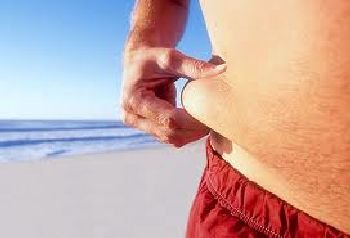
Does it apply to my husband as well as me? If your tummy is fat, the risk of heart problems increases and you can calculate the risk by comparing the waist measurement with that at the hip. You divide your waist measurement by your hip measure ment. So, if your waist measures 26 in and hip 34 in, then you would have a ratio of 0.76 (26 divided by 34); you would not be at risk because the safe ratio for women should be no more than 0.8; this means that your waist should not be more than 80% of your hip measurement. Put another way, being apple-shaped is bad but pearshaped is positively good!
The ratio for your husband, say with a 40 in waist and a 34 in hip, is calculated by dividing 40 by 34 which equals 1.18. He would be at risk because the safe ratio for men should be no more than 1.0. So his waist should not be greater than his hip measurement or the ratio would be over 1.0. Having a belly that’s bigger than your hips increases your risks of getting coronary artery disease.
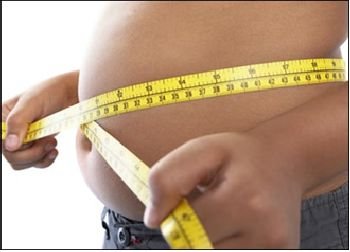
Waist circumference is used more as a sign of obesity and predisposition to diabetes. It is measured breathing out, 2 cm (1 in) above the umbilicus (navel). For men, if your waist is 94–102cm (37–40in) you are overweight; over 102 cm (40 in) and you are fat (politely known as obese). In women, if the waist is 80–88cm (32–35in) you are overweight and over 88 cm (35 in) you are fat. Doctors tend to focus more on abdominal obesity which increases the risk of heart disease.
I’ve tried all sorts of slimming diets and nothing seems to work – what can I do now?
Trying a slimming diet is not the right way of tackling weight reduction – it is a lifestyle change that is needed. If you cannot do it on your own, don’t give up. Join one of the groups such as WeightWatchers and attend regularly. Remember why you need to lose weight: your blood pressure will benefit and you will reduce your chances of a stroke or heart attack.
Is it safe for heart patients to try the Atkins diet?
The Atkins diet is high fat, high protein and low carbohydrate. The theory is that when we eat carbohydrates and sugar the body responds by making insulin to burn them off. Too much intake equals too much insulin and then too much fat is stored and therefore we gain weight. In the short term it works for many people but there is a ten dency towards constipation and bad breath. Heart patients with high cholesterol levels are usually protected by statins but control can be lost. My view is that if there is significant weight loss, this is good in the short term – say 2–3 months – but for long-term protection a switch should be made to the Mediterranean Diet, which is proven to cut the risks of a heart attack.
We have a local WeightWatchers group in our area. Are slimming groups any good?
Any group like this can be helpful because of the supportive role and the sensible advice they offer.
They reinforce the following basic rules.
• Eat less fat and sugar.
• Avoid nibbles.
• Do not miss meals.
• Eat more fruit and vegetables.
• Fill up on low-fat high fibre foods.
• Take regular dynamic exercise, e.g. walking, cycling, swimming, – any strong movement exercise.
You have mentioned before that Asians have a higher incidence of coronary disease and diabetes – what dietary changes can they make?
It is true that Asians in particular are vulnerable to coronary disease and diabetes, and have a tendency to abdominal obesity. Try the following tips.
• Fried foods should be avoided.
• Eat low-fat yoghurt, semi-skimmed or skimmed milk and reduced fat cheeses instead of full-fat versions.
• Try casseroling, boiling, grilling, steaming, poaching, or microwave cooking instead of adding fat or oil. Some vegetables, such as fenugreek (methi), aubergines, and karelas, soak up more oil in during cooking.
• Try to make minced meat dishes and dhals without fat and avoid using oil in the cooking.
• Remove visible fat from meats.
• Do not spread fat on chapattis and do not add oil or ghee to the chapatti dough.
• Reduce deep fried snacks, e.g. chevdon, sev, samosas, puris, pakoras, and chips.
• Switch from creamy salad dressing to low-fat yoghurt based dressing.
We have a full social life and I am often out during the week at business lunches. How can I avoid fatty foods when I am out?
If you are going to family or friends, tell your host that you have been told to lose weight and what you need to do about it. They will understand and because they will now know that you don’t eat fatty foods or sweet desserts, any embarrassment will be avoided.
The following tips apply to eating in restaurants.
• Avoid the cocktails (tomato juice and mineral water are just as fashionable these days).
• Avoid fried appetisers or cream soups – select minestrone or gazpacho soups.
• Choose a fresh fruit starter such as melon.
• Look for the grilled fish or poultry and ask for any sauces to be left off.
• Grilled
• Remove the skin from poultry and don’t eat fatty meat.
• Take a salad with vinegar and oil instead of mayonnaise.
• At a salad bar, avoid cream dressings, cheese, olives, bacon bits, and croûtons.
• Have fresh vegetables such as spinach or carrots. Ask for sauces or butter to be left off vegetables or put ‘on the side’.
• Order baked or boiled new potatoes in their skins.
• At Oriental restaurants have a stir-fry of chicken or fish and vegetables. Steamed rice is better than fried. Resist sweet ’n sour dishes and banana or apple fritters.
• In Italian restaurants, avoid creamy sauces.
• In Indian restaurants, have plain tandoori or tikka with a salad and steamed or boiled rice, rather than those dishes which come in thick sauces. Indian cooking involves a lot of fat and sometimes coconut so; in general, menu options should be very carefully selected. Ask if you are not sure how certain dishes are cooked.
• Dessert can be fresh fruit or sorbet – try to avoid cream.
• Enjoy a glass of wine and perhaps finish with black coffee (decaffeinated if you are prone to palpitations).
Some restaurants now have items marked as being low in fat. Airlines also often offer this when meal options are presented. If you are the host, you can choose the restaurant. If you are a regular at a particular restaurant, tell the owner about your preferences so that you will be able to eat without drawing attention to any question mark over your health.
There are times when I really fancy a steak. Should I never eat this?
An occasional treat is fine. Make sure it is a grilled fillet with the fat removed. If you are not sure what to eat, always go for the healthy option but, if after a while you feel you ‘could murder a steak’, enjoy one, but don’t overdo it. Remember, a 170–225 g (6–8 oz) fillet steak is the best weight to go for.
What should my intake of fats be?
Your saturated fat intake should represent no more than 10% of your total calories; polyunsaturated fats should make up 10% and monounsaturated fats 10–15%. As 1 g of fat equals 9 kcal:
• If your daily calorie intake is 1500 kcal, you need only 50 g of fat at most;
• If it is 2000 kcal you need 65–70 g of fat, and
• If it is 2500 kcal, you need 85–90 g of fat.
Can you give some simple guidelines regarding calories? How many should I need on a daily basis?
To calculate the number of calories to maintain your weight now, multiply the number of pounds you weigh by 13 kcal if you don’t take much exercise and by 15 if you do. The equivalent figures if you calculate in kilograms are 29 and 33 respectively.
To lose 1 lb you need to burn up 3500 kcal (7700 kcal for 1 kg) and this means reducing your daily intake by 500 kcal to lose 1 lb in one week (550 kcal for 0.5 kg). You can cut down 500 kcal by, for example, cutting out a can of coke, a chocolate bar, or 4 teaspoons of sugar.
Weigh yourself once a week and adjust your intake accordingly. Always combine weight loss with a healthy increase in physical activity. For example, if you walk briskly at 4 miles per hour for 2 miles, you will use up 300 kcal. If you fall below your target weight, increase your calorie intake by 200 kcal a day (around a couple of slices of bread and a thin slice of lean ham) but keep up the exercise programme.
I know I should eat more vegetables and fruit in my diet to lose weight. Which ones have the least calories?
Nearly all vegetables and fruits in general are low in calories and high in nutrients and vitamins. However, dried fruits are high in calories. Vegetables are encouraged because they are very nutritious and low in calories, so you can really go to town with them! Some, especially beans and legumes, are packed with protein and great for using instead of meat dishes (as in lentil lasagne) or to pad out meatbased meals (as in chilli con carne).
You do not really need to count the calories but, as a guide, an average portion of the following vegetables is equal to about 20 kcal:
Asparagus -Mushrooms
Aubergine – Onions
Green beans – Parsnips
Broccoli – Peas
Cabbage – Radishes
Carrots Spinach
Cauliflower – Tomatoes
Celery – Turnips
Cucumber/courgette – Vegetable juices
Lettuce
The following fruits are each equal to 60 kcal:
1 apple – 1 nectarine
4 apricots – 1 orange
1 banana – 1 peach
12 cherries – 3 dates
2 plums – 2 figs
3 prunes – ½ grapefruit
2 tangerines – 15 grapes
2 tablespoons of raisins – ½ mangos
1 portion blackberries/melon/ pineapple/strawberries/raspberries
If you buy tinned fruit, make sure that they are in natural juices, not syrup.
What exactly is a ‘portion’?
Aportion is one large fruit (such as an apple, orange, or banana); two small fruits (such as plums or satsumas); 1 cup of raspberries, strawberries or grapes; 1 glass (150 ml) of fruit juice; 1 tbsp of dried fruit; 2 tbsp of raw, cooked, or frozen vegetables or 1 dessert bowl of salad. I know there is a good deal of fibre in breads and cereals.
What about their calorie value?
The following are equal to 80 kcal:
• 1 slice of bread;
• 1 portion of bran cereal (such as All-Bran, one Shredded Wheat) without milk;
• 1 portion of pasta or rice.
Remember that high fibre starchy foods are valuable parts of a healthy lifestyle as we have already discussed.
How many calories are there in alcohol?
Aglass of wine is 100 kcal, a pint of beer 400 and a single measure of spirit 100, whereas slimline tonic is at most 1 calorie and water contains nil. Unsweetened fresh fruit juice and sparkling water are very good alternatives to alcohol when you are trying to watch your weight.
I want to be healthy and not overweight – can you summarise for me the most important ways of achieving this?
It is important to think of any change as a healthy change to your lifestyle. Losing weight must be a part of a change to healthy food and a regular exercise programme. It is really a healthy way of living rather than just losing weight. To achieve this, follow these basic rules.
• Eat lots of fruit and vegetables every day.
• Eat high fibre foods which are filling, healthy and low in fat.
• Try to avoid fatty foods, e.g. bacon, sausages and pies.
• When you have poultry, do not eat the skin.
• Avoid cakes and crisps, which contain a lot of fat.
• Use low-fat yoghurt or fromage frais instead of cream.
• When you cook, steam, grill, bake or microwave food instead of frying.
• When you have canned fish, drain off the oil (your cat would like it) or use those that come in brine.
• When you have pasta, use tomato-based vegetable sauce rather than creamy sauces.
• When you use fats, even polyunsaturated or olive oil, use it sparingly.
• Try not to nibble nuts.
• Eat slowly.
• Use a smaller plate.
• Cut down on alcohol; drink plenty of water.
• Don’t replace meals by snacks – always eat breakfast.
• Don’t shop when you are hungry.
• Don’t be depressed if you slip up – regroup and start again the next day.
• Try to take dynamic exercise three times a week for at least 30 minutes.
If I miss a meal because I am travelling or I am on business, what can you suggest as an alternative?
Cereal bars, fig rolls, nuts, oat biscuits, and rice cakes provide lowfat energy. Fruit is always a good standby – an apple a day may well keep the doctor away after all!