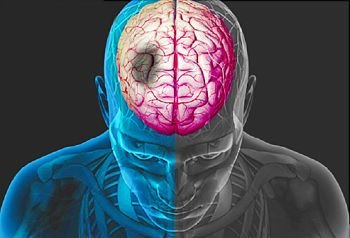
What Is A Stroke? – Narration and Animation
Intracerebral hemorrhage (ICH)
(Doctor only)
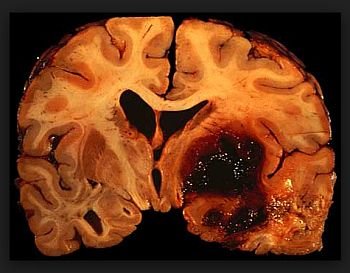
We will consider spontaneous hemorrhage into the brain parenchyma and ventricles (intracerebral hemorrhage, ICH). Non-traumatic bleeding into the subarachnoid space (subarachnoid hemorrhage, SAH) will be covered later.
Traumatic subdural and epidural hemorrhages are not covered in these papers. Intracerebral hemorrhage is associated with very high morbidity and mortality, but it is also very preventable.
Definition
Spontaneous bleeding into the brain parenchyma or ventricles from a ruptured artery, vein, or other vascular structure. It is important to distinguish primary ICH from hemorrhagic transformation of an ischemic infarct. In primary ICH, the initial event is vascular rupture, while in hemorrhagic transformation the initial event is vascular occlusion. This is obviously an important distinction since the etiologies and treatments are completely different. The term ‘‘hemorrhagic stroke’’ is used loosely and imprecisely and is often applied to either of these conditions. We prefer the more precise distinction.
Etiology
Hypertension (most common).
Classic locations for hypertensive intracerebral hemorrhage:
Basal ganglia (putamen most common)
Thalamus
Pons
Cerebellum
Amyloid angiopathy – More often cortical in location than hypertensive hemorrhages.
Drugs:
Iatrogenic, i.e., heparin or coumadin
Drugs of abuse, especially cocaine
Vascular malformation (aneurysm, AVM, cavernous angioma).
Cerebral vein thrombosis – Caused by bleeding from congested vein feeding into an occluded cortical vein or venous sinus thrombosis, this may technically be considered
transformation of a ‘‘venous infarct’’. However, an underlying infarct is not necessarily present or may be very minor, and the clinical presentation of the thrombosis may be dominated by the development of ICH. This is different from arterial occlusion and hemorrhagic transformation, where the initial clinical presentation is almost always the result of the infarct, and the hemorrhage comes hours later.
Tumor.
Trauma
Presentation
You cannot distinguish ICH from ischemic stroke on the basis of the clinical presentation – they may look exactly alike. This is the reason brain imaging is so critical in initial stroke management, since brain bleeding can readily be detected by CT or MRI immediately after it occurs. Clinical features that might suggest ICH rather than anbad sign in an acute stroke patient, usually indicative of increasing ICP), or decreasing level of consciousness