My child was just diagnosed with autism.What do I do first?
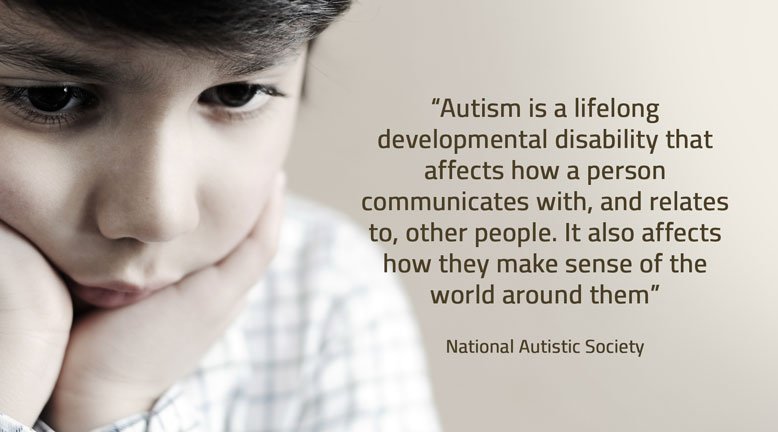
Having a child diagnosed with autism is a devastating blow to parents. Even the most well-informed parent will find themselves shocked and at a loss for what to do. If you feel this way, don’t be alarmed. It is as natural as it is painful. There are things to do, so start making a list.
It will make you feel better and will help your child. Start with this:
Confirm the diagnosis. Autism can be mistaken for other diseases, so before treatment begins, parents should be certain that their child has autism. Parents should ask themselves that following questions:
Did a doctor make the diagnosis?
Was the doctor qualified to make the diagnosis?
Does the doctor have training and experience on the diagnosis of children with developmental diseases?
Has the doctor ruled out other diseases that can be mistaken for autism such as a hearing impairment, ADD/ADHD, genetic disorders, and mental retardation?
If the answer to any of these questions was “no,” the parents may want to have the child evaluated by a multispecialty team with expertise in the diagnosis of developmental disorders.
Seek appropriate care for your child. Find the local early intervention program. Discuss the attributes of the program with experts. For example, you may want to ask about what services and therapies are provided and what the student-teacher ratio is. Enroll your child in an early intervention program as soon as possible. It should provide speech, physical, and occupational therapy.
William’s comment:
Do not procrastinate, get right on it. The earlier the intervention, the better for everyone involved. Educate yourself. Begin reading about the topics of autism, autism behaviors, diseases associated with autism, special education, early intervention programs, federal educational entitlements, and behavioral treatment programs. Many articles, books, and Web sites are available for this purpose. Also helpful is contacting the Autism Society of America. Attend a meeting and subscribe to their newsletter. Find parents in your area who have an autistic child and who have been dealing with this issue longer than you. They can provide you with insights, information, and support.
Develop a support network. Do not keep your child’s diagnosis a secret. Tell your friends and family and solicit their help and support. Keep in mind that caring for an autistic child is more like a marathon than a sprint. Though you may have the time and energy now, you have to consider what you will require in the future or if your current situation changes. Families that cope well with the stress of a newly diagnosed autistic child are able to identify their needs and ask for help. This help can range from babysitting to transportation, from the social to the psychological.
William’s comment:
We don’t have any of our family near where we live and that makes it hard. I have no doubt this road would be easier if we had family members around to support us. Discuss your child’s diagnosis with your lawyer. You may need your attorney’s help if getting educational en-titlements for your child proves difficult. Your attorney may also want to discuss such issues as life insurance, your estate, wills, trusts, and guardianship with you, because they can have an impact on your child. Consider counseling for yourself, your spouse, and your children. The diagnosis of autism can be psychologically devastating for parents and the demands of caring for an autistic child can be exhausting. These pressures can put a strain on many people in the family. If so, discussing the situation with a psychologist, psychiatrist, family counselor, or clergy member may be helpful.
Avoid “snake oil” salespeople. Unfortunately, there is no known cure for autism. Anyone who promises a cure should be avoided. Parents of recently diagnosed children are emotionally vulnerable and have been taken advantage of by unscrupulous practitioners. Parents should be cautious before investing any amount of money in an unknown or unproven treatment. Effective interventions that can improve autistic behavior do exist and are available through a qualified special education program. Using diet and vitamins or other alternative therapies are not helpful in the majority of cases. Spend your time, money, and emotional energy on proven treatments such as intensive behavioral therapy.
Avoid feeling guilty about your child’s autism. Parents cannot cause autism. The cause of autism remains unknown, but what we do know is that some theories about the causes of autism, theories that have been popular in the past, have been disproved. These disproved theories include: autism is caused by bad mothering, autism is caused by food allergies, and autism is caused by vaccinations.
This is easier said than done. A conscious effort has to be made to remind yourself that there is nothing that you did that caused the autism in your child.
What are some tips for parenting kids with autism?
For the parent whose child is newly diagnosed, the following are tips to help you avoid pitfalls in dealing with your child.
Pay attention to your child’s environment and routine.
Keep the environment predictable and familiar.
Have a regular schedule that the household follows and post it on the refrigerator or other obvious place.
Prepare your child for changes.
Use pictures and calendars to help your child predict upcoming events.
Clearly mark on the calendar when a trip to the dentist or pediatrician will occur.
Explain what will happen and promise a reward for good behavior.
There are many children’s books on topics such as trips to the dentist, doctor, or grandma’s house that can be read and explained to a child in anticipation of the first visit.
When moving your child from an activity that they enjoy to another activity, give them a “countdown.”
A countdown lets a child know they will have to change activities in a few minutes. For example, “15 minutes and the TV goes off ” or “30 minutes till bedtime.” Then mention the change in activity every few minutes until the activity changes. Using an egg timer or alarm clock is helpful for reinforcement. The countdown approach significantly decreases tantrums.
Provide structure and routine.
Autistic children require structure and routine and can become quite upset when even small changes occur.
Create a daily list of events with required activities for the child.
This daily list can be photocopied and used every day.
Allow the child to check off accomplished activities.
In addition to such things as playtime and bedtime, the daily list of activities should include required chores, homework, bathing, and grooming activities. In this way, the list of daily activities not only provides a calming reference for the child, but reinforces appropriate behaviors.
Making sure that daily routines are not interrupted unnecessarily will reduce a child’s fear and anxiety as well as unwanted behavior.
Continue the routine as much as possible when traveling with your child.
Make sure babysitters or respite providers are made aware of the list of daily activities and whatever rewards are attendant to good behavior. This will make the babysitter’s job easier and ease the child’s anxiety.
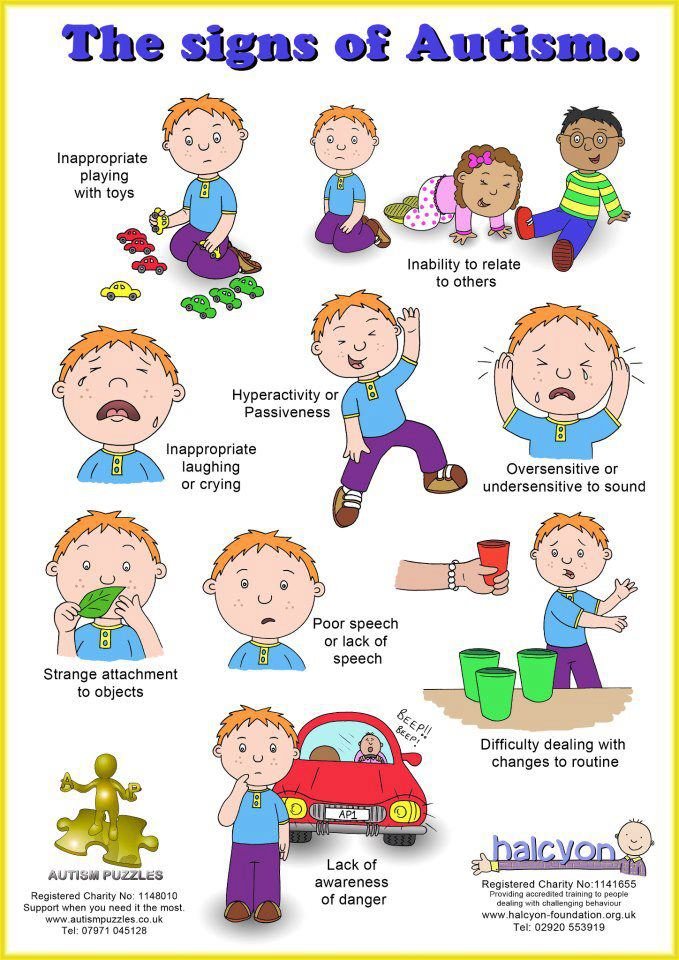
Be aware of sensory stimuli from the environment. It can upset the child and affect behavior. Some examples are:
Noise: This can be as obvious as construction sounds from the street or as subtle as the buzzing from a fluorescent light or rush of air from the air conditioning duct. Be aware of any changes and modify them when appropriate.
Temperature: When possible, control the temperature of the child’s bedroom and play space. Be aware that some medications, such as neuroleptics or sulfa drugs, can make the child more sensitive to excess heat or sun exposure.
Smells: Some smells bother autistic children. Be aware of new smells in the environment. These include cleaning products, paints, solvents, glues, perfumes, and deodorants. When possible, use cleaning products while your child is at school and move the child’s bed to your bedroom or the basement when painting his room.
Strange people: Autistic children can get excited or withdrawn in the presence of new people.
When possible, let autistic children know when a friend or relative will come to visit.
When possible, post a picture of the visitor on the refrigerator for the child to see. Refer to it frequently before the visit.
Prepare them for visits to doctor’s or dentist’s offices or visits to the barber by telling them what will happen, calming their fears, and promising rewards for good behavior.
When you talk to your child:
Speak clearly and in complete sentences.
When giving instructions, be as organized and concise as possible.
Avoid rhetorical questions or sarcastic statements.
They’re not likely to be understood and will increase the tendency of the child to ignore speech.
Avoid discussion of abstract concepts. When possible, speak in concrete terms.
Try to respond consistently to a child’s questions or other attempts at communication.
Ignoring a child’s attempts at communication discourages him or her and reinforces the tendency for withdrawal.
To help your child improve his or her behavior:
Help your child learn to communicate.
Work on communication early and frequently.
Be consistent in your efforts. It will help your child improve.
Better communication will help relieve your child’s frustration and may lead to better behavior.
Model simple phrases for your child, such as “may I have . . .” or “I want. . .” Have your child repeat the phrase before accommodating their request.
Use gestures, sign language, picture boards, and communication devices when speech is not possible.
Teach your child to make choices.
An inability to decide or make choices is a characteristic of autism.
Providing opportunities to make choices every day may help with this. Some choices that you can provide your child with are what clothes to wear, what game to play, what channel to watch, or what snack to eat.
Be consistent in rewarding positive behavior.
Identify positive behavior that you’d like your child to emulate.
Reward the behavior every time and as immediately as possible.
Rewards may consist of verbal praise, a star on their daily list of accomplishments, or a snack or toy.
Unwanted behavior should be identified early and addressed immediately.
Consistently address unwanted behavior; don’t let some bad behavior slide. Not addressing bad behavior will guarantee that it will be repeated.
Autistic children often cannot “read” emotional signals such as an angry tone of voice or angry facial expression. Therefore, gain your child’s attention and let them know what behavior you expect in clear and concise terms.
Replace the unwanted behavior with a favorite activity; that is, use distraction.
While denying a reward in response to unwanted behavior is appropriate, physical punishment is not likely to encourage good behavior and is not recommended.
Choose rewards you know your child will like and that you can provide.
Promising a particular reward for a good behavior and not being able to provide it immediately after your child has accomplished the specific task is a common mistake. Tantrums and a missed opportunity to reinforce good behavior are the unfortunate outcomes.
Before a particular reward is promised:
Purchase any toys or snacks that you will use as a reward before you promise them.
Call the park, pool, arcade, or movie theater to make sure they’re open before promising a trip.
Traveling with my autistic child is difficult.What can I do to make “going out” easier?
Yes, traveling with an autistic child can be difficult. Taking an autistic child out of their rigid social routine is uncomfortable. Going to new places and meeting strangers can be frightening. Boats, bus and train stations, and airports can overwhelm the child with sensory stimuli. Consider the gauntlet of security, identity papers, interrogators, metal detectors, and baggage X-ray machines the average airport puts their customers through.
Dr. Quinn’s comment:
I find this overwhelming at times and know that it frightens our autistic son.
Nevertheless, with preparation, many parents are able to travel with their autistic children comfortably.
Some suggestions to make travel more comfortable are:
Decrease the amount of stimulation when possible.
When possible, travel at times when the public conveyances are least crowded.
Start car trips in the early morning, so that the child can sleep for the first few hours of a long trip.
When eating out or shopping, try to choose nonbusy times or off-peak hours.
Try to avoid delays and unanticipated waiting time.
Book the first appointment when visiting the doctor or dentist so that your child does not have to sit for too long in the waiting room.
Be the first or last patron at the barber or stylist.
At the airport, train, or bus terminal, notify gate personnel that you are traveling with a disabled child and request that you are first on the bus, train, or airplane.
This will prevent a long wait and get you seated quickly.
Many amusement parks will allow disabled children (and accompanying adult) to go to the head of the line. For example, Disney World has a guest assistance card or special guest pass for children with disabilities. This pass allows them access to rides without long waits or to go to the front rows of the theater. Avoid, when possible, visiting places that require the utmost decorum and restrained behavior from children. Choose “family” restaurants or chain restaurants that don’t expect perfect behavior from young patrons.
Visiting a zoo rather than a museum is a better choice till your child becomes comfortable with traveling and visiting new places. Anticipate difficulties and plan ahead.
Call ahead to make sure that site is open for business before telling your child that you are going somewhere. This will prevent disappointment and a classic “parking-lot tantrum.”
Before embarking on long trips, be sure to have an alternate plan or destination to entertain or distract your child in case problems arise. This might include the timing of the arrival, traffic, weather, or an unplanned closing.
In airports and other places where security guards are charged with interrogating and detaining suspicious people, notify them in advance that your child is mentally disabled. Left unexplained, the behaviors and characteristics of an autistic child may delay your trip and cause unnecessary anxiety. Encounters with uninformed security guards are the types of situations that can easily escalate into misinterpretations, verbal and physical confrontations, physical containment, and restraint.
Take books, pens, and toys for your child to play with to occupy idle time.
When possible, have another adult accompany you. This may be invaluable for such minor emergencies as trips to the men’s room if you are a woman, another set of hands to move a reluctant child from a toy display, or freeing one adult to ask directions while the other entertains the child.
When away on vacation or extended trip, try to observe the usual daily routine as much as possible.
Have your child complete the usual activities of work, play, and bedtime.
Try to keep your child’s environment as familiar as possible by taking your child’s favorite toy, video game, bed covers, or bedside lamp. This will make strange environments easier to handle.
William’s comment:
What the refrigerator did for meat products, the portable DVD player did for parents of autistic kids! This small device can keep our boy cool for extended trips (in the car or on the plane).Wow! Moreover, they’re getting lighter, smaller, and much cheaper. Traveling with an autistic child can be stressful to the child and the parent. By preparing well and spending time reinforcing good behavior with plenty of rewards (such as verbal praise and small gifts such as candy or toys), the next trip can be made much easier.
Having a child diagnosed with autism is a devastating blow to parents.
Be aware of sensory stimuli from the environment.
Nevertheless, with preparation, many parents are able to travel with their autistic children comfortably.