IBS, Ulcerative Colitis or Crohn’s Disease?? Which Are You?
More Serious Intestinal Disorders
The more serious small intestine and large intestine problems, such as irritable bowel syndrome, celiac disease, Crohn’s disease, and colon cancer, tend to involve nutrient malabsorption, which can cause severe health consequences.
The symptoms of these diseases vary, but they include abdominal pain, nausea, and vomiting, bloating, loss of appetite, diarrhea, anxiety, weight loss, and fatigue. The medical problems that have to be addressed include various anemias, gastrointestinal blockages, inflammation, mal-nutrition, growth failure, vitamin and mineral deficiencies, and other medically complicated challenges.
Irritable Bowel Syndrome (IBS)
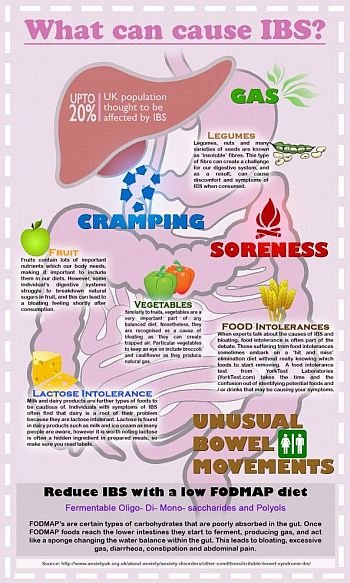
Approximately 20 percent, or one in five, American adults have symptoms of irritable bowel syndrome (IBS). In fact, it is one of the most common disorders diagnosed and treated by doctors. 27 IBS is a functional disorder that involves changes in colon rhythm; it is not an actual disease. People with IBS over respond to colon stimuli. This results in alternating patterns of diarrhea, constipation, and abdominal pain. The exact cause of IBS is unknown, but low-fiber diets, stress, consumption of irritating foods, and intestinal motility disorders are all suspected factors. Medical management includes dietary modification, stress management, and occasional use of prescription drugs.
Celiac Disease
Celiac disease is an autoimmune, genetic disorder that causes a person’s own immune system to damage the small intestine when gluten, a protein in wheat and other grains, is consumed. Rachel, the person you read about in the beginning of this chapter, has celiac disease and needs to make many dietary adjustments.
“Celiac Disease: An Issue of Absorption” explains this intestinal disorder in greater detail. Note that celiac disease is not the same thing as gluten intolerance, which does not involve the immune system or damage the wall of the small intestine. However, individuals with gluten intolerance can experience symptoms such as stomachaches, diarrhea, bloating, and tiredness if gluten is consumed.
Crohn’s Disease
Crohn’s disease, or inflammatory bowel disease, is the general name for diseases that cause swelling in the intestines. Crohn’s disease can affect any area of the GI tract, from the mouth to the anus, but it typically affects the ileum. The swelling can cause pain and diarrhea. Bleeding from the rectum, weight loss, and anemia are just some of the symptoms that can occur. Though there isn’t a cure for Crohn’s disease, medication, nutritional and dietary supplements, and/or surgery are currently used to manage the disease.
Colon Cancer
Colon cancer is one of the leading forms of cancer and the second leading cause of cancer deaths. Fortunately, colon cancer is one of the most curable forms of cancer, if it is detected in the early stages. Colon cancer often begins with polyps on the lining of the colon.They vary in size from that of a small pea to that of a mushroom or plum. The good news is that polyps can be removed surgically, and they are often small and benign. If the polyps are not removed or change to cancerous tumors, colon cancer can be more difficult to cure.
Individuals diagnosed with colon cancer may require radiation therapy, chemotherapy, and surgery to remove part of the colon or the entire colon. After surgery, patients are given dietary advice regarding the foods that would be the most comfortable to eat. Survival rates vary depending on the individual’s age, health, treatment response, and stage of cancer diagnosis.
The Take-Home Message:
Gastrointestinal diseases and digestive disorders include less serious conditions, like heartburn (GERD), indigestion, stomach flu, flatulence, constipation, diarrhea, and hemorrhoids, and more serious conditions, such as esophageal cancer, gastric ulcers, irritable bowel syndrome, celiac disease, Crohn’s disease, and colon cancer. Disorders of the small intestine may result in malnutrition.
Common Digestive Disorders
Site – Disorder Symptoms – Causes – Treatment
Esophagus and stomach – Gastrointestinal reflux disease (GERD) – Sore throat, burning sensation in the chest (heartburn) Poor eating habits; overeating; other lifestyle choices – Eat smaller meals; eat more slowly; decrease fat and/or alcohol intake; quit smoking
Stomach or small intestine – Gastric and duodenal ulcers – Bleeding, pain, vomiting, fatigue, weakness – Multiple causes Prescription drugs and an as-tolerated diet
Gallbladder Gallstones Cramps, bloating, intense abdominal pain, diarrhea – The concentration of high-cholesterol-containing bile that crystallizes and forms stones in the duct – Gallbladder removal, medication, or shock- wave therapy
Small intestine – Celiac disease – Malabsorption – Error of gluten metabolism – Gluten-free diet
Small intestine – Crohn’s disease – Pain, diarrhea, rectal bleeding, weight loss, anemia – Swelling of the intestines – Medication, nutritional or dietary supplements, surgery
Large intestine – Constipation Cramping, bloated uncomfortable feeling in abdomen – Too little water or too little fiber; inactivity – More water, fiber, and exercise
Large intestine – Diarrhea Too-frequent bowel movements – Multiple causes – Water and electrolyte replacement
Large intestine- Irritable bowel syndrome (IBS) – Diarrhea and constipation in alternating sequence; pain – Unknown cause(s); stress worsens the condition – Self-management with fiber therapy, stress relief, and good sleep habits
Large intestine – Colon cancer – Symptoms are often – silent; may include weight loss, internal bleeding, iron-deficiency anemia, fatigue – Multiple causes (genetics, various colon diseases, smoking, exposure to dietary carcinogens) – Radiation therapy, chemotherapy, surgery
Terms:
Irritable bowel syndrome (IBS) – A functional disorder that involves changes in colon rhythm.
Polyp – Polyps, or abnormal growths, on the lining of the large intestine may indicate early stages of colon cancer.
Celiac disease – An illness of the small intestine that involves the inability to digest the protein gluten.
Gluten intolerance – A sensitivity to the protein gluten, which is found in wheat and other grains. Symptoms incude stomachaches, diarrhea, bloating, and tiredness.
Crohn’s disease – An inflammatory bowel disease.