3D Medical Animation – What is Cancer?
PSYCHOLOGICAL (EMOTIONAL) CHALLENGES
Your psychological state in each stage of survivorship will be different. When initially diagnosed, one must deal with fear and, in some cases, shock and disbelief. At this time, efforts are aimed at developing a treatment plan, a plan of action to survive the cancer. During treatment, the focus shifts to surviving the side effects and trying to be positive and hopeful. If treatments continue for a prolonged period, one must adjust one’s body and mind, make the cancer center a second home, and cope with the chronic side effects of therapy. If treatment is finite, then on its completion, the cancer survivor will work to resolve side effects or adjust to the “new me”; the focus will turn to regaining one’s life and trying to reestablish normality.
Perhaps the most dominant psychological issue facing cancer survivors is the fear of recurrence. Not infrequently, oncologists receive worried phone calls from patients who have completed treatment but who feel a new breast lump, lymph node, or symptom reminiscent of when the cancer began. These fears are normal, and it is our job to provide reassurance (and examinations if needed). Anxiety over a recurrence can never be fully alleviated, but it can be contained.
Some ways to manage it are:
1. Try to live more “in the moment” and not excessively preoccupy your mind with thoughts of what was or what may be (practical preparation for the future is of course important). In an inspiring little book called The Precious Present, by Spencer Johnson, MD, we are all reminded to look around and appreciate what life has to offer today, for this is the path to true contentment.
2. Pursue professional counseling with therapists familiar with cancer issues.
3. Counsel another patient who is going through something you may have experienced (peer-to-peer counseling). You may gain a sense of control that is empowering and feel good that you are helping another person through cancer. Peer counselors need to be trained by professionals in order to provide this kind of support to another patient.
4. Gain as much knowledge and understanding of the cancer as possible so that you can focus on the known facts rather than exaggerated fears of recurrence.
5. Use images to practice guided imagery and focus on the cancer being eradicated or staying away.
6. Separate the anxiety of cancer from anxiety caused by other aspects of your life and seek solutions to those.
The emotional or psychosocial issues generated by cancer are numerous.
Distress and anxiety is universal; feelings of isolation and depression are common. How should you best handle these?
Sometimes medications may improve symptoms, so you should not hesitate to take prescribed antidepressant or antianxiety medications, which may only be needed for a limited time.
Always the solution involves people. Family, friends, and loved ones sustain us throughout life and especially when we are dealing with cancer. Yet you should also seek out other patients and experienced professionals who are familiar with the emotional toll of cancer. Seeking guidance from oncology-trained psychiatrists, social workers, and psychologists, family therapists, and spiritual or religious advisers will lessen your burdens. It is also beneficial to seek out others who arecoping with cancer, because they understand what is happening to you in a unique way. There are many committed and caring people whose job and purpose is to help those with cancer cope from day to day. Yet you must reach out for help or accept assistance when it is offered.
Many cancer patients and their loved ones can benefit from individual or family counseling. Counseling may be limited and used as a bridge until life becomes more normal again or for an extended period.
Whether you need simply to talk about your fears or release the stress that may be interfering with a relationship, counseling can start the healing process and avoid letting negative feelings fester and remain unresolved.
Oncology counselors are familiar with both the stress created by cancer and the range of family dynamics. Counselors are available at cancer centers as well as through other organizations.
One of the best places to find cancer survivors at all stages of the journey is in a cancer support group. You may be reluctant to join such a group. Usually, such reluctance stems from a range of concerns, one of which is a misconception of what a group has to offer. According to oncology social worker Joan Hermann, “Many prospective group members worry that they will hear sad stories and become depressed when what they need is to feel positive and upbeat about their future. While they certainly may hear about the challenges people are experiencing in controlling their cancer, members can also be inspired by the courage and tenacity of others.”
Group leaders at our cancer center, LCSW (licensed clinical social worker), and LMFT (licensed marital and family therapist), liken the experience of joining a group to “the story of the person sitting alone in a boat in the middle of a foggy lake only to discover when the fog lifts, that hundreds of other boaters are all around him.” The support group tackles such issues as how to relate to a spouse, child, coworker, or friend; how to summon the energy to work; how to survive when you can’t go to work; how to communicate with your doctors; and whom you can count on during these difficult times. The experience is often educational and very rewarding as special bonds are formed.
Survival Is Spelled LMNOP
I convey an understanding of cancer in order to promote an enhanced sense of control over a disease known for the lack of control it creates. I also indicate how diet, exercise, and lifestyle can influence the chances of developing and surviving the disease. The five major elements of preventing and surviving cancer can be easily remembered by thinking, “Survival is spelled ‘LMNOP.’”
LMNOP
L is for Less fat in one’s diet
M is for More fruits and vegetables
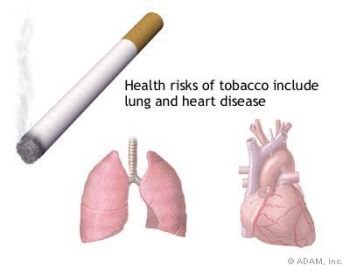
N is for No Smoking
O is for Organize your life
P is for Physical exercise
O IS FOR ORGANIZE YOUR LIFE
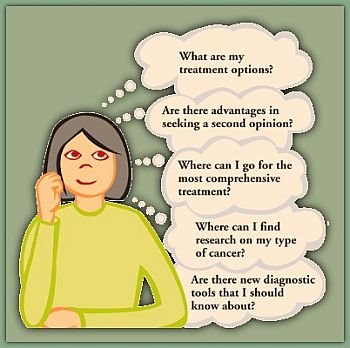
Organize your treatment. Choose caregivers whom you like and trust. Choose a treatment center that fits with your practical needs (such as location) as well as your preferences (for example, a community versus large hospital atmosphere). Get a second opinion when recommended by your primary oncologist or for peace of mind; the more life threatening a cancer, the greater the need to hear more than one opinion.
Choose one oncologist to be your most trusted adviser and ally to help you make the best decisions at every juncture of your cancer journey; you should feel that you have good and open communication with this physician.
Pay attention to new advances reported in the media and on reliable web sites and discuss these with your doctors. But don’t continually second-guess your treatment plan (or let others do so) or bounce from one specialist to another.
If possible, rely on a small group of about three close friends or family members, at least one of whom will be available to accompany you to each treatment.
Organize your loved ones. On hearing the word “cancer,” you will think of yourself and you will think of your loved ones. You will immediately wonder how your spouse or significant other, children, siblings, and parents will handle the news. For the sake of everyone involved, seek the counsel of professionals on how to communicate effectively with your loved ones about your situation. The people in your life may also need the emotional support of a professional counselor at some point. The more united your loved ones are behind you, the stronger you will be throughout your ordeal with cancer.
Address advance health care directives through a living will and a power of attorney document so that your wishes will be respected in the event that you will not be able to direct them (a combination document called Five Wishes is available at www.agingwithdignity.org , but be aware that not all states recognize this document).
Organize your support system. You will need the sturdy support of good friends and loved ones to cope with cancer. Rather than having family and friends give you well-meaning but often overwhelming and distracting advice about what you should and should not do to fight cancer, give them concrete suggestions about how they can show their support. Ask that they help in taking care of household chores, meals, child care, transportation to and from treatment, and anything else you may need to help make your life flow smoothly during and after the grind of cancer therapy. Suggest gift certificates to places that you enjoy (you are entitled!).
Organize your mind. Long-term cancer survivors uniformly state that trying to maintain a positive mental attitude is essential to their survival. But there will be down times, both physical and mental, and it is okay to give into them for limited periods. As my mother used to say to me,
“Only a fool is happy all the time.” Don’t let others badger you to be positive and upbeat around the clock, as this will probably only prevent you from expressing your true feelings, leading to worse depression. So surround yourself with people who truly care about you and know how you like to communicate. Reduce stress in your life as much as possible and minimize interactions with negative people so that you can focus on the critical task at hand. Pursue spiritual and religious tranquility.
Take advantage of hobbies, music, art, yoga, and other activities and techniques to promote relaxation and peace of mind. Celebrate good results. Laugh as much as possible.
Organize your work. You and your employer will want to know how much time you will need to deal with cancer. You may need to work parttime or perhaps sometimes from home, if that is feasible. If arduous treatments are necessary, consider short-term and long-term disability, and know the pros and cons of these. Do not try to maintain a full work schedule and go through rigorous cancer treatments; you will more than likely end up exhausted, compromising both your work and your treatment.
Organize your finances. First, make sure that your medical insurance will cover the prescribed treatments. Your oncologist’s office will be able to verify this. Avoid hospitals that are out of your insurance network unless it is essential that you receive care at such a facility; in these instances, letters from your doctors on the necessity of such treatment usually results in insurance coverage. Second, if you are the breadwinner in your family, make certain that your loved ones will be provided for through clear documentation. Even if you are highly likely to survive your cancer, the diagnosis is a good time to get your financial situation in order.
Organize your time. The ultimate goal is for you to have your life so organized that you can deal with cancer treatment almost on autopilot. This will also enable you to have time for yourself, which is an essential component of the recovery process. Once you have taken control of your life as a cancer patient, you will likely never return to taking each day and the gift of life for granted.
I wish to share with you the inspiring wisdom of two special individuals.
Elizabeth April-Fritz survived a diagnosis of breast cancer in 1998, a recurrence in 2000, and a second recurrence in 2004 that requires continuous treatment. She writes, “I have learned to share my experience with other people, those who have been diagnosed with cancer and those who are caregivers. I am encouraged to share my learning, my philosophy, my appreciation for life. Each day an anniversary . . . each day a gift. It is amazing to realize that as I write these words and date this submission that it is in fact the eight-year anniversary to the day that
I found the original lump in my breast. Eight years later much stronger and wiser and filled with the promise of living life to the fullest.”
And from Patricia Taylor, spouse of a colon cancer survivor:
We all share the need to survive,
To remain alive,
To exist,
To carry on despite hardships,
To persevere.
We want to stay usable,
To cope with what we’re dealt,
To help each other out,
To retain our humanity,
To make some sense of it.
It may not be anything
It won’t replace the life
Broken by cancer,
Like a plate that fell.
And someone hands it back to you,
Saying, “We may be able to put this back together.”
(Or maybe not.)
And once together, never again the same.
But it is something.
Cracks and everything.
Look-In the end,
And through it all,
Much of what we have
Is simply each other.