The Truth About Calories ● BBC Full Documentary ● BBC Documentary Channel
What the New Fat Guidelines Mean for You
How Much Fat Do You Need Each Day?
At first glance, it looks as though Americans’ fat consumption has gone up and down over the last century. In the 1930s, Americans were consuming about 34 percent of their calories from fat; this number climbed to 42 percent in the mid 1960s. By 1984, fat consumption had declined to 36 percent of total calories, and current consumption is about 34 percent of calories. However, while today’s consumption levels are in line with the current recommendations, we can’t break out the hot fudge sundaes just yet. Measuring fat consumption only as a percentage of total calories, and not including the absolute grams of fat, can be misleading.
Looking at the latest patterns of food intake by Americans, we find that the grams of fat we consume daily have not only increased about 12 percent since the early 1990s, but the number of calories has also increased about 15 percent. In other words, Americans are eating more of both fat and calories, and the reason that the percentage of fat in their diets has gone down is because the number of calories has gone up. The main source of this increase in calories is sweetened beverages, such as soft drinks, which are high in refined carbohydrates.
As you can see, the overall consumption of fat (and calories) in the United States is higher than it should be. But dietary fat is still essential for health. So, how much should you eat?
You Need to Consume a Specific Percentage of Your Daily Calories from Fat
The current AMDR (Acceptable Macronutrient Distribution Range) recommendation is that 20 to 35 percent of your daily calories should come from fat. For some individuals, especially sedentary, overweight folks, a very low-fat diet (providing less than 20 percent of daily calories from fat) that is consequently high in carbohydrates may cause an increase in fat in the blood and a lowering of the good HDL cholesterol-not exactly a healthy combination for the heart. For others, consuming more than 35 percent of their total daily calories from fat could perpetuate obesity, which is a risk factor for heart disease.
Although consuming fat won’t increase your weight unless you consistently consume more calories than you need, remember that dietary fat has more than twice the calories per gram of carbohydrates or protein. Therefore, eating too many fatty foods could perpetuate a weight management problem. Numerous research studies have shown that reducing dietary fat can also reduce dietary calories, which can result in weight loss. Consequently, controlling one’s fat intake may help control one’s weight.
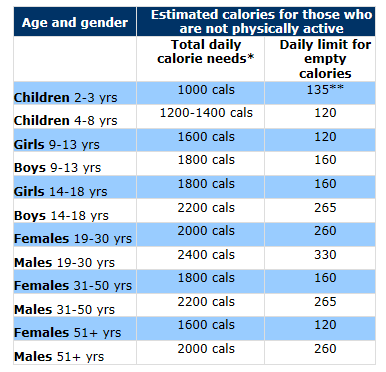
According to the AMDR recommendation, if you need 2,000 calories daily to maintain your weight, you can consume between 44 and 74 grams of fat daily. For your heart health, you should consume less than 10 percent (and ideally less than 7 percent) of your calories, or 16 to 22 grams, from saturated fats.
You Need to Consume a Specific Amount of Essential Fatty Acids Daily
To ensure that you consume enough linoleic acid and alpha-linolenic acid, a recommended amount has been set for each of these important nutrients. A minimum of 5 percent and up to 10 percent of the total calories in your diet should come from linoleic acid, and alpha-linolenic acid should make up 0.6 percent to 1.2 percent of your total calories. These recommended amounts are based on the estimated daily caloric needs according to your gender and age. For example, men aged 19 to 50 need 17 grams of linoleic acid daily, and women aged 19 to 50 who aren’t pregnant or lactating need 12 grams daily. For alpha-linolenic acid, men aged 14 to 70 need 1.6 grams daily, whereas women of the same age need 1.1 grams daily.
Minimize Solid Fats: Saturated and Trans Fats in Your Diet
While your diet should include essential fatty acids, some types of fats should be avoided. Solid fats-like butter, chicken fat, cream, coconut oil, palm kernel and palm oils, and partially hydrogenated oils-are major sources of heart-unhealthy saturated and trans fat in the diet. These solid fats are often found in grain-based desserts, pizza, full-fat cheese, sausages, and franks.8 Research has confirmed that saturated fat plays a role in increased risk of heart disease. Consuming too much saturated fat can lead to higher levels of the “bad” LDL cholesterol carrier.
Trans fats are created by food manufacturers through the process of hydrogenation. Hydrogenation involves heating oil and exposing it to hydrogen gas, which causes some of the double bonds in the unsaturated fatty acid to become saturated with hydrogen. Typically, the hydrogen’s of a double bond are lined up in a cis (cis = same) configuration, that is, they are all on the same side of the carbon chain in the fatty acid. During hydrogenation, some hydrogen’s cross to the opposite side of the carbon chain, resulting in a trans (trans[1]cross) configuration. The newly configured fatty acid is now a trans fatty acid. Trans fats are actually worse for heart health than saturated fat because they not only raise the LDL cholesterol levels, but they also lower HDL cholesterol in the body. Trans fats were initially used in many processed foods because they provide a richer texture, a longer shelf life, and better resistance to rancidity than unsaturated fats. The first partially hydrogenated shortening, Crisco, was made from cottonseed oil, and became available in 1911.After saturated fat fell out of favor in the 1980s, because of research that confirmed its association with heart disease, trans fats came into widespread commercial use. Everything from cookies, cakes, and crackers to fried chips and doughnuts used trans fats to maintain their texture and shelf life. Trans fats were also frequently used for frying at fast-food restaurants.
To make consumers more aware of trans fat, the FDA mandated in 2006 that most foods, and even some dietary supplements such as energy bars, list the grams of trans fats per serving on the Nutrition Facts panel on the food label. The label allows you to quickly add up the saturated and trans fats listed and makes it easier for you to monitor the amount of these fats that you consume.9 Because of this labeling requirement, many food manufacturers reformulated their products to remove or reduce the amount of trans fats made with hydrogenation.However, you may still find them in commercially made cakes, cookies, crackers, margarines, and other foods.
Creating Trans Fatty Acids
Hydrogenating, or adding hydrogen to, an unsaturated fatty acid will create a more saturated fatty acid. This process will also cause some of the double bonds to twist from a cis position to a trans position. This creates a trans fatty acid.
You Should Minimize Cholesterol in Your Diet
As mentioned earlier, your body can make all the cholesterol it needs. Therefore, you do not need to consume it in your diet, and in fact, you should limit the amount of cholesterol you take in for the sake of your heart and arteries. Healthy individuals over the age of 2 are advised to limit their dietary cholesterol to less than 300 milligrams (mg) daily, on average. Adult males in the United States currently consume about 358 milligrams daily, whereas adult females eat slightly more than 237 milligrams of cholesterol daily, on average.10 Table 5.2 lists a variety of foods and their cholesterol content.
Keeping the types of lipids straight, and remembering how much of each to consume or avoid, can be a challenge. The following summary should help you remember what you have learned thus far:
- DO be sure to get enough of the two heart-healthy essential fatty acids, linoleic acid and alpha-linolenic acid, in your diet by consuming plenty of polyunsaturated fats in your daily meals.
- DO choose mono- and polyunsaturated fats over saturated fats when possible, as these unsaturated fats are better for you. Saturated fats should be kept to less than 10 percent of your total calories, because they aren’t good for your heart or your blood cholesterol levels.
- DON’T add trans fats to your diet. These are unhealthy for your heart and blood cholesterol levels and should be consumed as little as possible.
- DON’T worry about eating enough cholesterol, because your body makes all it needs.
When it comes to keeping track of your fat intake, counting grams of fat in your foods is the best strategy. Table 5.1 provided you with a healthy range of recommended fat intake based on your daily caloric needs. Use the following Self-Assessment to estimate how much fat and saturated fat you consume daily.
Vegetable oils are good sources of essential fatty acids. Vegetables are a low-saturated-fat topping for pizza.
Message
You need to consume some fat in your diet, particularly the essential fatty acids, but you should limit other fats, like saturated fats and trans fats. Your fat intake should range from 20 to 35 percent of your total calories. To meet your essential fatty acid needs, 5 to 10 percent of your calories should come from linoleic acid and 0.6 to 1.2 percent of your daily calories should come from alpha-linolenic acid. No more than 10 percent of your fat intake should come from saturated fat and trans fats should be limited in your diet. You do not need to eat cholesterol in foods, as your body makes all the cholesterol it needs.
Terms:
Hydrogenation – Adding hydrogen to an unsaturated fatty acid to make it more saturated and solid at room temperature.
Trans fatty acids – Substances that result from the hydrogenating of an unsaturated fatty acid, causing a reconfiguring of some of its double bonds. A small amount of trans fatty acids occurs naturally in animal foods.
Ttrans fat – Substance that contains mostly trans fatty acids.
Rancidity – The decomposition, or spoiling, of fats through oxidation