Top 10 Foods Highest in Saturated Fat
What Are the Best Food Sources of Fats?
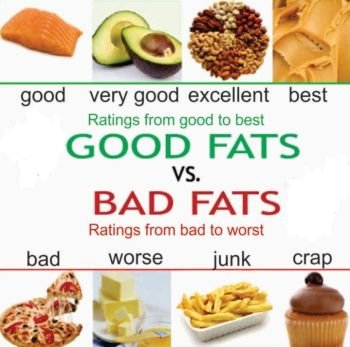
Foods that contain unsaturated fats (both monounsaturated and polyunsaturated fats) are better for your health than foods high in saturated fat, cholesterol, and/or trans fat. So, where can you find the healthier fats in foods? Unsaturated fats are abundant in vegetable oils, such as soybean, corn, and canola oils, as well as soybeans, walnuts, peanut butter, flaxseeds, and wheat germ. Vegetable oils, nuts and flaxseeds are also good sources of the essential fatty acids. Most saturated fat in the diet comes from animal foods, such as fatty cuts of meat, whole-milk dairy products like cheese, butter, and ice cream, and the skin on poultry. Choosing lean meats and dairy foods, skinless poultry, and oil-based spreads will help you minimize the saturated fat in your diet. Certain vegetable oils, such as coconut, palm, and palm kernel oils, are very high in saturated fat. Although food manufacturers now use these highly saturated tropical oils less often, they may still be found in foods such as candies, commercially made baked goods, and gourmet ice cream. Checking the ingredient label on food packages is the best way to find out if these oils are in the foods that you eat.
Because all fats and oils are a combination of fatty acids, however, it’s not only impossible to eliminate saturated fat entirely from your diet, it is unhealthy for you to do so. Extreme trimming of fats and oils could lead to the unnecessary elimination of certain foods, such as soybean and canola oils, lean meats, fish, poultry, and low-fat dairy foods, which could cause you to fall short of important nutrients such as essential fatty acids, protein, and calcium. Just remember to keep your dietary intake of saturated fat to less than 10 percent of your daily total calories.
Americans on average consume about 11 percent of their daily calories from saturated fat, so it’s likely that you need to reduce your intake.
The cheddar cheese on the top of a cheeseburger has more fat and saturated fat per ounce than the burger.
Food Sources of the Essential Fatty Acids – Many oils and nuts contain high amounts of the two essential fatty acids that you need to obtain in your diet.
Where’s the Saturated Fat in Your Foods?
Choosing less-saturated-fat versions of some of your favorite foods at meals and snacks can dramatically lower the amount of “sat” fat you consume in your diet.
Message:
Eating lean meats, skinless poultry, lean dairy products, and vegetable oils while limiting commercially prepared baked goods and snack items is a good strategy for overall good health. These foods will provide you with enough healthy unsaturated fats, with plenty of essential fatty acids, while limiting your intake of unhealthy, saturated fats.
What Are Fat Substitutes and How Can They Be Part of a Healthy Diet?
If you adore the taste and texture of creamy foods but don’t adore the extra fat in your diet, you’re not alone. More than 160 million Americans (79 percent of the adults in the United States) choose lower-fat foods and beverages for health reasons. To meet this demand, food manufacturers introduced more than 1,000 reduced-fat or low-fat products, from margarine to potato chips, each year during the 1990s.Today, with few exceptions you will probably find a lower-fat alternative for almost any high-fat food on the grocery store shelves. The keys to these products’ containing less fat than their counterparts are fat substitutes.
Fat substitutes are designed to provide all the creamy properties of fat for fewer calories and total fat grams. Because fat has more than double the calories per gram of carbohydrates or protein, fat substitutes have the potential to reduce calories from fat by more than 50 percent without sacrificing taste and texture.
Fat Substitutes Can Be Carbohydrate, Protein, or Fat Based
No single substitute works in all foods and with all cooking preparations, so there are several types of fat substitutes.
They fall into three categories depending on their primary ingredient:
(1) carbohydrate-based substitutes,
(2) protein-based substitutes, and
(3) fat-based substitutes.
The majority of fat substitutes are carbohydrate based and use plant polysaccharides such as fiber, starches, gums, and cellulose to help retain moisture and provide a fatlike texture.15 For example, low-fat muffins might have fiber added to them to help retain the moisture that is lost when fat is reduced. Carbohydrate-based fat substitutes have been used for years and work well under heat preparations other than frying.
Protein-based fat substitutes are created from the protein in eggs and milk. The protein is heated and broken down into microscopic balls that tumble over each other when you eat them, providing a creamy mouth feel that’s similar to that of fat. Because these are protein based, they break down under high temperatures and lose their creamy properties. Therefore, they are not suitable for frying and baking.
Fat-based substitutes are fats that have been modified to either provide the physical attributes of fat for fewer calories or interfere with the absorption of fat. Mono and diglycerides are used as emulsifiers in products such as baked goods and icings to provide moistness and mouth feel. Though these remnants of fat have the same number of calories per gram as fat, fewer of them are needed to create the same effect, so the total levels of calories and fat are reduced in the food product. One fat substitute, olestra (also known as Olean), is a mixture of sucrose and long-chain fatty acids. Unlike fat, which contains three fatty acids connected to a glycerol backbone, olestra contains six to eight fatty acids connected to sucrose. The enzymes that normally break apart fatty acids from their glycerol backbones during digestion cannot disconnect the fatty acids in olestra. Instead, olestra moves through your gastrointestinal tract intact and unabsorbed. Thus, it doesn’t provide calories. Olestra is very heat stable, so it can be used in baked and fried foods.
In 1996, the FDA approved olestra for use in salty snacks such as potato and corn chips. An ounce of potato chips made with olestra can trim half the calories and all the fat from regular chips. Because of its inability to be absorbed, there was concern about olestra’s interference with the absorption of fat-soluble vitamins and carotenoids. (Absorption of water-soluble vitamins is not affected by olestra.) Consequently, the FDA has mandated that fat-soluble vitamins be added to olestra to offset these losses. Because olestra travels through your digestive tract untouched, there was also a concern that it may cause stomach cramps and loose stools. Though there have been anecdotal studies of individuals experiencing bouts of diarrhea and cramps after consuming olestra-containing products, controlled research studies don’t seem to support this phenomenon.
Reduced-Fat Products Aren’t Calorie Free
The use of fat substitutes doesn’t seem to be helping Americans curb their calories or weight, and one reason for this may be people’s overeating of low-fat and fat-free foods. Another reason may be that many reduced-fat products have close to the same number of calories as their regular counterparts. Also, research indicates that people who snack on fat-reduced products may be reducing their overall fat intake, but not their overall intake of calories. As with sugar substitutes, consumers need to recognize that using reduced-fat or fat-free products is not a blank check for eating unlimited amounts of those foods. The foods still contain calories, and over consuming calories leads to weight gain.
Also, some fat-free foods, especially baked goods, may have reduced fat content but added carbohydrates, which will add back some calories. The fat-free version may actually be a smaller serving size compared to the original food item. Consequently, the savings in fat calories isn’t always much of a savings in total calories. Consumers should be careful not to assume that fat-free foods are healthy, because they often aren’t. Jelly beans are fat free, but they don’t provide the vitamins and minerals found in, for example, naturally fat-free green beans. Similarly, while choosing 4 ounces of fat-free chips will spare you half of the 600 calories found in the same amount of regular chips, those fat-free chips are also displacing 300 calories of more nutritious foods, such as fruits, vegetables, and whole grains, elsewhere in your diet. If you want chips, enjoy a handful rather than a large bag full, alongside your wholegrain sandwich and large salad at lunch.
Fats affect more than your weight and waistline. They also affect the health of your heart. Let’s take a closer look at how lipids in your diet can affect your risk for heart disease.
Commercially made peanut butter doesn’t have any detectable levels of trans fatty acids. Even though partially hydrogenated oil is used as a stabilizer in many peanut butter brands, the amount is so small that it is insignificant.
Message:
Fat substitutes are used in foods to provide the properties of fat for fewer calories and grams of fat. Fat substitutes can be carbohydrate-based, protein-based, or fat-based. Though some fat substitutes provide fewer calories and fat grams than regular fat, others, such as olestra, aren’t absorbed, so they are fat and calorie free. Reduced fat or fat-free foods may help reduce the calories and fat in some foods, but shouldn’t displace naturally low-fat and healthy foods such as fruits and vegetables.
Term:
Fat substitutes – Substances that replace added fat in foods by providing the creamy properties of fat for fewer calories and fewer total fat grams.