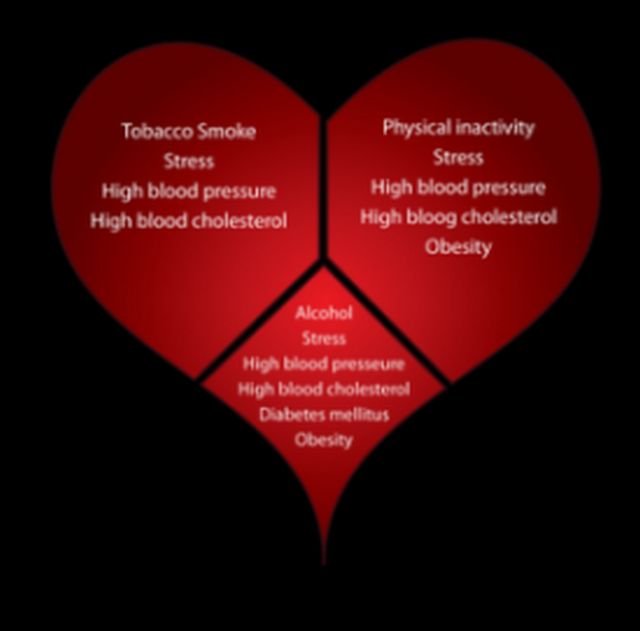
Cardiovascular disease risk factors
What Are the Risk Factors for Heart Disease?
What Is Heart Disease and What Increases Your Risk?
Cardiovascular disease is a name that encompasses several disorders affecting the heart, including problems with heart valves, heartbeat irregularities, infections, and other problems. But the most common type of heart disease is coronary heart disease, which affects the blood vessels that serve the heart muscle, and can lead to a heart attack.
Heart disease has been the number-one killer of adults in the United States since 1918. Currently, one of every five deaths among Americans is caused by heart disease. More than 213,500 American women and 232,000 men lose their lives to heart disease annually. Let’s look at how heart disease develops, and the types of lipids that can accelerate it.
Heart Disease Begins with a Buildup in the Arteries
Heart disease develops when the coronary arteries, the large blood vessels that supply oxygen and other nutrients to the heart, accumulate a buildup of substances such as fat and cholesterol along their walls. As the artery gets narrower, blood flow is impeded, and less oxygen and nutrients are delivered to the heart. If the heart doesn’t receive enough oxygen, chest pains can result. A narrowed artery also increases the likelihood that a blood clot can block the vessel, leading to a heart attack. If the artery leads to the brain, a stroke can occur. Approximately 8 million Americans suffer a heart attack every year.
The exact cause of the narrowed arteries, also known as atherosclerosis (athero = paste, sclera = hardness, sis = condition), is unknown, but researchers think it begins with an injury to the lining of the arteries. High blood levels of cholesterol and fat, high blood pressure, diabetes, and smoking likely contribute to this damage.
Over time, LDLs and other substances are deposited along an injured artery wall. The LDLs that accumulate become oxidized and attract macrophages (white blood cells), which become enlarged with cholesterol-laden LDL and develop into foam cells. The foam cells stick to the walls of the artery and build up, along with platelets (fragments of cells in the blood) and other substances, into plaque. The plaque narrows the passageway of the artery.
Risk Factors for Heart Disease
While the primary risk factor for heart disease is an elevated LDL cholesterol level, other risk factors also exist. Some of these you can control, others you cannot.
Risk Factors You Can’t Control
As your blood cholesterol increases, so does your risk of developing heart disease and experiencing a heart attack. Your blood cholesterol level tends to rise with age until it stabilizes around the age of 65.Your gender will also play a role. Up until menopause, which is around the age of 50,women tend to have a lower blood cholesterol level than men and a reduced risk of heart disease. After menopause, the blood cholesterol level in women tends to catch up and even surpass that of a man of the same age. About one in eight American women between 45 and 64 years of age has heart disease, but this jumps to one out of every four women over the age of 65. The decrease in the level of the hormone estrogen in postmenopausal women plays a part in the increased risk of heart disease that occurs in older women.
Because high blood cholesterol levels can be partly determined by your genes, such levels can sometimes run in families. If your father or brother had early signs of heart disease before age 55, or your mother or sister had them before the age of 65, then you are at a greater risk of getting heart disease. Having diabetes increases the risk of heart disease. Though the less common form of diabetes, type 1, is not preventable, the more prevalent form, type 2 diabetes, can be controlled.
Risk Factors You Can Control
Controlling diabetes can help dramatically lower the risk of heart disease for those with this condition. Type 2 diabetes can be managed possibly even prevented, through diet and lifestyle changes. Sometimes, the use of doctor-prescribed medication is also needed to control type 2 diabetes. Diseases of the heart and blood vessels are the cause of death of an estimated 65 percent of adults with diabetes.
Because chronic high blood pressure can damage your arteries, maintaining a healthy blood pressure is another factor you can control. Blood pressure is the force of your blood against the walls of your arteries. A blood pressure reading consists of two numbers. The top number, called the systolic pressure, is the pressure within your arteries when your heart contracts. The bottom number, called the diastolic pressure, is the pressure in your arteries a moment later, when your heart is relaxed. A normal blood pressure is considered less than 120 millimeters of mercury (Hg) for the systolic pressure and less than 80 millimeters Hg for the diastolic pressure. You might hear this referred to as “120 over 80.”A blood pressure reading of 140/90 or higher is considered hypertension, or high blood pressure. People with hypertension constantly have a higher than normal force pushing against the walls of their arteries. This is thought to damage the artery lining and accelerate the buildup of plaque. Chronic high blood pressure also causes the heart to work harder than normal and can lead to an enlarged heart.
Smoking damages the walls of the arteries and accelerates atherosclerosis and heart disease. In fact, individuals who smoke are up to three times more likely to have heart disease and, compared to nonsmokers, their likelihood of experiencing a heart attack doubles.
Because regular exercise can help lower your LDL cholesterol and raise your good HDL cholesterol, being inactive is a risk factor for heart disease. Since a high HDL cholesterol level can help protect you from heart disease, having an HDL level of less than 40 milligrams per deciliter (mg/dl) increases your risk of heart disease, as you don’t have enough of this “good” cholesterol carrier in your body. In contrast, having a high level of HDL cholesterol, 60 mg/dl or higher, is considered a “negative” risk factor. In other words, there is so much of this “good “cholesterol in your body helping to protect against heart disease that it allows you to “erase” a risk factor from your list. In addition to exercising regularly, losing excess weight and quitting smoking can help increase your HDL cholesterol. Exercise can also help you better manage your weight. Being overweight can raise your LDL cholesterol and increase your risk of heart disease. Whereas drinking modest amounts of alcohol has also been shown to raise HDL cholesterol, other problems can outweigh this benefit. In fact, for some individuals, drinking alcohol is not advised.
Other Potential Risk Factors
There are some individuals who don’t have an elevated level of LDL cholesterol in their blood, yet still experience a heart attack and heart disease, which points to other factors that must be affecting their heart health. These other potential risk factors are referred to as emerging risk factors.
Researchers are continually searching for clues or “markers” in the blood, other than cholesterol levels, that are signs of the presence of heart disease. Here are some:
- A high level of the amino acid homocysteine may injure arteries and promote the development of atherosclerosis.
- A high level of a protein called C-reactive protein can indicate that there is inflammation in the walls of the arteries, which can lead to plaque formation.
- A lipid-protein compound called Lp(a) is being investigated for its role in promoting heart disease.
- Apolipoprotein B (ApoB) is a measure of the amount of “bad” LDL cholesterol in the blood.
- A high ApoB level indicates a higher risk for heart disease.
Though the name sounds mysterious, syndrome X, also called metabolic syndrome, refers to a cluster of many factors that increase the risk for heart disease.
These include abdominal obesity (too much weight around the middle), insulin resistance, high blood pressure, elevated blood levels of triglycerides and the slower clearance of this fat from the blood, a low level of HDL cholesterol, smaller and more dense LDL cholesterol particles, the higher likelihood of forming and maintaining blood clots, too much insulin, and, possibly, too much glucose in the blood. Being overweight and inactive increases the risk for insulin resistance. Exercise and weight reduction can help reduce all of the risk factors associated with this syndrome.
Message:
Heart disease, the leading cause of death in the United States, develops when atherosclerosis causes a narrowing of the coronary arteries and a decreased flow of nutrient-rich blood to the heart. An elevated blood LDL cholesterol level is the major risk factor for heart disease. Risk factors that you can’t control are your age, gender, family history of heart disease, and having type1 diabetes. Risk factors that you can control include preventing and controlling type 2 diabetes, high blood pressure, smoking, physical inactivity, excess weight, a low HDL cholesterol level, and an elevated LDL cholesterol level. A low HDL cholesterol level may be raised by losing excess weight, getting regular exercise, and quitting smoking. Syndrome X is a group of risk factors that collectively increase the risk of heart disease.
Every pack of cigarettes smoked in the United States costs the nation about $7.18 in medical care and lost job productivity. Whereas the average pack of cigarettes may cost $5, it costs 11⁄2 times that to keep the smoker healthy and productive. One in every 30 American women dies each year of breast cancer, but one in every two female adult deaths is from either heart disease or stroke.
Terms:
Heart attack – Permanent damage to the heart muscle that results from a sudden lack of oxygen-rich blood.
Stroke – A condition caused by a lack of oxygen to the brain that could result in paralysis and possibly death.
Atherosclerosis – Narrowing of the coronary arteries due to buildup of debris along the artery walls.
Plaque – The hardened buildup of cholesterol-laden foam cells, platelets, cellular waste products, and calcium in the arteries that results in atherosclerosis.
Normal blood pressure – Less than 120 mm Hg (systolic-the top number) and less than 80 mm Hg (diastolic-the bottom number). Referred to as 120/80.
Hypertension – High blood pressure.
Atherosclerosis – When plaque builds up in the coronary arteries, it narrows the passageway and causes a decreased flow of oxygen-rich blood to the heart. A blood clot, traveling in the blood, can partially or totally block the arteries to the heart, leading to a heart attack.