Mercury and Fish
Although the health benefits of eating fish are well established, not everyone should be eating unlimited amounts of all types of fish. In fact, pregnant and nursing women, women of childbearing age who may become pregnant and young children should avoid certain types of seafood that may contain high amounts of methyl mercury. This form of mercury can be harmful to the nervous systems of unborn children, especially during the first trimester of pregnancy, a time when women may not even realize that they are pregnant.
Though mercury occurs naturally in nature, it is also a by-product of industrial processes and pollution. The airborne form of mercury accumulates on the surface of streams and oceans and is transformed by the bacteria in the water into the toxic form of methylmercury.11 The fish absorb the methyl mercury from the water, or get it by eating the organisms that live in the water. Because the ingested methyl mercury accumulates over time, larger fish, such as swordfish, shark, king mackerel, and tilefish (golden bass or golden snapper), will have the highest concentration of methyl mercury, as they have a longer life span and feed on other, smaller fish.
The Food and Drug Administration (FDA) recommends that women of childbearing age and young children avoid eating these four types of fish. Pregnant women and women of childbearing age can eat up to 12 ounces weekly of other types of cooked fish, including shellfish, and should choose from a variety of fish.
Luckily, the ten most popular types of seafood (canned light tuna, shrimp, Pollock salmon, cod, catfish, clams, flatfish, crabs, and scallops) contain only low amounts of methyl mercury. Canned albacore (white) tuna has more mercury than the light variety, so should be limited to no more than 6 ounces weekly.
While the FDA regulates all commercial fish, the Environmental Protection Agency (EPA) oversees all freshwater fish caught recreationally, such as by family members and friends. This agency recommends that all women who are or may become pregnant, nursing mothers, and young children should limit their consumption of freshwater fish to six ounces of cooked fish weekly for adults and two ounces of cooked fish weekly for children.
If you eat noncommercial fish from local waters, you should always check with your state or local health department for specific advice, as there could be additional fish consumption advisories based on your local waters. The EPA recommends that if you want to eat coastal and ocean fish that is caught recreationally, you should check with your local or state health department and follow the FDA advice referenced earlier.
Large fish such as swordfish, shark, king mackerel, and tilefish are likely to contain high levels of methyl mercury.
Made Over, Made Better!
Many Americans’ diets are too high in fat and heart-unhealthy saturated fat. A few tweaks in your diet selections can help you keep your fat intake within a healthy range of 20 to 35 percent of your daily calories and your saturated fat intake to no more than 7 to 10 percent of your calories every day. Here are some typical fat-rich foods made over and made nutritionally better!
LIPIDS
What Are Lipids?
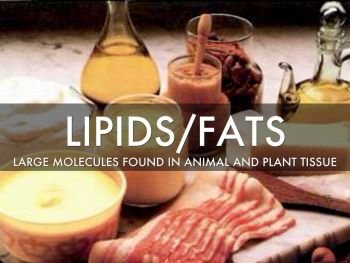
The term lipids refers to a category of carbon, oxygen, and hydrogen compounds that are all hydrophobic (hydro = water, phobic = fearing). In other words, they don’t dissolve in water. There are three types of lipids: triglycerides (fats), phospholipids, and sterols. Two of these, triglycerides and phospholipids, are built from a basic unit called a fatty acid.
Fatty Acids Vary in Length and Structure
All fatty acids consist of a chain of carbon and hydrogen atoms, with an acid group (OH) at one end. There are more than 20 different fatty acids. They can vary by (1) the length of the chain, (2) whether the carbons have a single or double bond between them (C¬C or C“C), and (3) the total number of double bonds.
If all the carbons have single bonds between each other in a fatty acid, they are also all bonded to hydrogen. When all of the carbons on a fatty acid are bound with hydrogen, it is called a saturated fatty acid. In contrast, if a fatty acid has carbons that are not bound to hydrogen, but rather to each other, which creates a double bond, it is called an unsaturated fatty acid. Saturated fats are made up of primarily saturated fatty acids, whereas unsaturated fats contain mostly unsaturated fatty acids, such as MUFAs and PUFAs. Two particular fatty acids, linoleic acid (an omega-6 fatty acid) and alphalinolenic acid (an omega-3 fatty acid), are essential for health and must be consumed in the diet.
Triglycerides Are More Commonly Known as Fat
Three fatty acids connected to a glycerol backbone create a triglyceride, more commonly known as fat, which is the most common lipid found in foods and in your body. Glycerol is a three-carbon compound that contains three alcohol (OH) groups. The fatty acids join to each of the alcohol groups.
Phospholipids and Sterols Are More Complex
Like fats, phospholipids contain a glycerol backbone, but instead of being made up of three fatty acids, they contain two fatty acids and a phosphate group. The phosphate-containing head is polar, which attracts charged particles, such as water, and the fatty acid–containing tail is nonpolar, so it mingles with other nonpolar molecules such as fats. Unlike phospholipids, sterols do not contain glycerol or fatty acids. Sterols are comprised mainly of four connecting rings of carbon and hydrogen. The best known sterol is cholesterol.
Functions of Lipids
Fat provides essential fatty acids and allows you to absorb the fat-soluble vitamins, A, D, E, and K. Fat is also an important source of energy, helps insulate you, keeps you at a constant body temperature, and cushions your major organs.
Phospholipids make up the phospholipid bilayer in cell membranes. Lipoproteins, made of protein and phospholipids, are transport carriers that shuttle insoluble fat and cholesterol through your bloodstream and lymph to be used throughout the body.
Cholesterol is also an important part of your cell membranes. It is a precursor for vitamin D, bile acids, and sex hormones, such as estrogen and testosterone.
Daily Needs
The current AMDR recommendation is for 20 to 35 percent of your daily calories to come from fat. For some individuals, especially sedentary, overweight folks, a very low-fat diet (providing less than 20 percent of daily calories from fat) that’s high in carbohydrates may cause an increase in fat in the blood and a lowering of the good HDL cholesterol. For others, consuming more than 35 percent of their total daily calories from fat could perpetuate obesity, which is a risk factor for heart disease.
You Need to Consume at Least the Minimum Amounts of the Essential Fatty Acids
A minimum of 5 percent and up to 10 percent of the total calories in your diet should come from linoleic acid, and alpha-linolenic acid should make up 0.6 percent to 1.2 percent of your total calories.
Men aged 19 to 50 need 17 grams and women aged 19 to 50 who aren’t pregnant or lactating need 12 grams of linoleic acid daily. For alpha-linolenic acid, men aged 14 to 70 need 1.6 grams daily, and women of the same age need 1.1 grams daily.
Linoleic and alpha-linolenic acids must also be consumed in the proper ratio. Too much linoleic acid in relationship to alpha-linolenic acid can inhibit the conversion of alphalinolenic acid to DHA, while the inverse (too much alphalinolenic acid and not enough linoleic acid) can inhibit the conversion of linoleic acid to arachidonic acid.
You Do Not Need to Consume Cholesterol or Trans Fat
Your body can make all the cholesterol it needs, so you do not need to consume it in your diet, and you should limit your cholesterol intake for the sake of your heart and arteries. Healthy individuals over the age of 2 are advised to limit their dietary cholesterol to less than 300 milligrams daily, on average.
Trans fats are worse for heart health than saturated fat because they not only raise the LDL cholesterol levels, but also lower HDL cholesterol in the blood. Therefore, trans fats should be avoided or limited in foods.
Food Sources
Unsaturated fats are abundant in vegetable oils, such as soybean, corn, and canola oils, as well as soybeans, walnuts, flaxseeds, and wheat germ, and these are also all good sources of essential fatty acids.
Foods high in cholesterol and saturated fat should be limited. Dietary cholesterol is found only in foods from animal sources, with egg yolks being a significant contributor. Because cholesterol is not found in foods from plant sources, you won’t find it in vegetables, fruits, pasta, nuts, peanut butter, or vegetable oils. Most dietary saturated fat comes from animal foods such as fatty cuts of meat, whole-milk dairy products like cheese, butter, and ice cream, and the skin on poultry. Certain vegetable oils, such as coconut, palm, and palm kernel oils, are very high in saturated fat. Although food manufacturers now use these oils less often, they may still be found in foods such as candies, commercially made baked goods, and gourmet ice cream.
The best way to minimize both dietary cholesterol and saturated fat intake is to keep your portions of lean meat, skinless poultry, and fish to about 6 ounces daily; use only low-fat or nonfat dairy foods; use vegetable oils more often than butter; keep consumption of baked goods to a minimum; and fill up on fruits, vegetables, and whole grains.
Too Much or Too Little Overweight and Obesity
Your body has an unlimited ability to store excess energy (calories) as fat. In fact, your fat reserves have the capacity to enlarge as much as 1,000 times their original size, as more fat is added. If your cells fill to capacity, you can add more fat cells.
Heart Disease
Blood cholesterol levels are one of several factors that can affect your risk of heart disease. Eating foods low in saturated fat, dietary cholesterol, and trans fat, exercising regularly, and maintaining a healthy weight can help control your blood cholesterol levels and reduce your risk of heart disease. Quitting smoking, lowering high blood pressure, and controlling diabetes (if you have it) can also reduce your risk of heart disease.
In general, you want to lower your “bad” LDL cholesterol levels and raise your “good” HDL cholesterol levels. Having an LDL level of less than 100 milligrams per deciliter (mg/dl) is optimal. An HDL level of less than 40 mg/dl increases your risk of heart disease, whereas a high level of HDL cholesterol, 60 mg/dl or higher, is considered a “negative” risk factor.
Too Little of the Essential Fatty Acids Can Result in These Symptoms A deficiency of the essential fatty acids can interfere with normal cell membranes and growth and result in scaly skin.
Terms to Know
Hydrophobic • fatty acids • saturated fatty acid • unsaturated fatty acid • linoleic acid • alpha-linolenic acid • glycerol • triglyceride • fat • phospholipids • sterols
Two Points of View
Is Wild Salmon a Better Choice Than Farmed Salmon?
Salmon has long been touted as an excellent source of omega-3 fatty acids. Both farmed and wild-caught salmon contain this essential nutrient; however, farmed salmon may also contain toxins such as methyl mercury and Polychlorinated biphenyls (PCBs).
Is the nutritional benefit of consuming high amounts of omega-3 fatty acids worth the risk of ingesting toxins? Should you avoid farmed salmon and eat only wild-caught salmon? After you’ve read the arguments for and against, answer the critical thinking questions and decide for yourself.
YES
• Farmed salmon have much higher levels of toxic chemicals such as PCBs, dioxins, and certain pesticides than their wild caught counterparts. The contamination source in farmed fish is fish oil and fishmeal in their feed. However, PCB levels vary greatly from farm to farm.
• There are some environmental concerns associated with farm-raised salmon. For instance, most salmon are farmed in open pens and cages in coastal waters. Waste from these farms is released directly into the ocean and can harm wild fish populations.
• Salmon farms can be incubators of disease. One study found that reoccurring sea lice outbreaks killed up to 80 percent of young wild pink salmon whose migration paths crossed salmon farms.
• Farmed salmon feed can contain high amounts of antibiotics and other chemicals, some of which are outlawed in the U.S. for threats to human and marine health.
NO
• Farmed and wild salmon are both low in saturated fat and calories. Both are high in protein, and both are excellent sources of omega-3 fatty acids.
• A study in 2004 found that farmed salmon had PCB levels 10 times as high as wild salmon, but those levels were still very low-well below those the Food and Drug Administration says are safe. And since then, PCB levels in farmed salmon have come down quite a bit.
• The Institute of Medicine found that the benefits of eating oily fish outweighed the risk, even for the most sensitive parts of the population.
• Most farm-raised salmon are Atlantic salmon and are readily available year-round. Wild populations of Atlantic salmon are generally at very low levels and their commercial harvest is limited.
• Wild-caught salmon is often higher priced than farmed salmon.
The Top Ten Points to Remember
1. A fatty acid is a carbon and hydrogen chain with an acid group at one end. A triglyceride, also known as a fat, contains three fatty acids joined to a glycerol backbone and is the most abundant type of lipid in your body and in foods. A fatty acid without any double bonds is called a saturated fatty acid. If one or more double bonds is present, it is called an unsaturated fatty acid. A saturated fat contains mostly saturated fatty acids and tends to be solid at room temperature. An unsaturated fat has mostly unsaturated fatty acids, is liquid at room temperature, and is also known as oil.
2. Phospholipids contain two fatty acids at their tail end and have a phosphate-containing head. Their polar heads and nonpolar tails cause them to be attracted to both water and fat. Lecithin is the major phospholipid in your cell membranes. Lecithin is often used as an emulsifier in foods. Cholesterol is the major sterol in your body and in foods. Cholesterol is the precursor of vitamin D, bile acids, and sex hormones. Your body makes all the cholesterol it needs.
3. The majority of fat in your diet is digested and absorbed in your small intestine with the help of bile acids and pancreatic lipase. The digested fat is predominantly packaged in protein- and phosphorus-containing lipoproteins called chylomicrons, which travel in your lymph to your bloodstream
4. Other lipoproteins include the “bad” LDL cholesterol carrier and the “good” HDL cholesterol carrier. LDL deposits cholesterol along your artery walls and contributes to atherosclerosis. HDL removes cholesterol from arteries and brings it to the liver to be used or excreted from your body.
5. In your body, fat is used as a protective cushion for your bones, organs, and nerves and as insulation to maintain your body temperature. In food, fat provides texture and flavor, and contributes to satiety. Fat in food also aids in the absorption of fat-soluble vitamins.
6. Fat provides the essential fatty acids, linoleic acid and alpha-linolenic acid. A minimum of 5 percent and up to 10 percent of your total calories should be from linoleic acid, and 0.6 percent to 1.2 percent of total calories should be from alpha-linolenic acid. Soybean oil, walnuts, flaxseeds, and flaxseed oil are good sources of these essential fatty acids. A limited amount of alpha-linolenic acid can be converted to the omega-3 fatty acids, eicosapentaenoic acid (EPA) and docosahexaenoic acid (DHA), which have been shown to reduce the risk of heart disease and stroke. Because fish, especially fatty fish, are good sources of EPA and DHA, you should consume at least two servings of fish weekly.
7. Approximately 20 to 35 percent of your total calories should come from fat. Saturated fat, which raises LDL cholesterol, and trans fatty acids, which are created by hydrogenating unsaturated fatty acids, should be limited in your diet. Your intake of saturated fat should be no more than 10 percent of your total calories.
8. Eating a well-balanced plant-based diet that contains lean meats and dairy foods with moderate amounts of heart-healthy unsaturated fat is the best strategy to lower your LDL cholesterol level and your risk of heart disease. Commercially prepared baked goods, snack items, and fried foods should be limited to decrease trans fats. Your diet should contain no more than 300 milligrams of cholesterol daily, on average. Soluble fiber-containing foods such as oats, legumes, and psyllium-containing cereal, soy protein, and plant sterols can also help lower your LDL cholesterol level. Exercising and losing excess weight can help lower your LDL cholesterol level and increase your HDL cholesterol level.
9. Heart disease occurs when atherosclerosis causes narrowing of the passageways of the coronary arteries. A high level of LDL cholesterol is the major risk factor for heart disease. A high level of HDL cholesterol is protective against heart disease. A family history of heart disease, being a man or a postmenopausal woman, having diabetes, smoking, being physically inactive, having high blood pressure, being overweight, and having a low HDL cholesterol level can all increase the risk of heart disease.
10. Fat substitutes are designed to provide all the properties of fat but for fewer calories. Fat substitutes can reduce calories from fat in a food by more than 50 percent. Some fat-free foods, especially baked goods, may have reduced fat content but not necessarily a reduction in calories, as carbohydrates have been added to these foods. Consequently, fat-free foods may not be lower in calories
Web Resources:
To learn more about heart disease and how to lower your risk, visit the
– National Cholesterol Education Program at www.nhlbi.nih.gov/chd
– American Heart Association at www.heart.org/HEARTORG/
– Centers for Disease Control and Prevention, at www.cdc.gov/physicalactivity