What is a Protein? Learn about the 3D shape and function of macromolecules
What are proteins and what do they do?
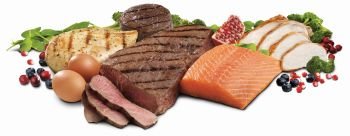
What Happens to the Protein You Eat?
When you enjoy a tasty peanut butter sandwich, what happens to the protein from the peanut butter once it’s in your body? How is the protein in the peanuts broken down so that the valuable amino acids can be efficiently digested, absorbed, and used to synthesize other proteins?
You Digest and Absorb Dietary Proteins in Your Stomach and Small Intestine
Protein digestion begins after chewed food enters your stomach. Stomach acids denature the protein strands, untangling their bonds. This allows the digestive enzyme pepsin, which is produced in your stomach lining and activated by its acidic environment, to begin breaking the proteins down and preparing them for absorption.
Pepsin splits the protein into shorter polypeptide strands, and these strands are propelled into the small intestine.
In the small intestine, other enzymes further break down the strands into tripeptides and dipeptides, as well as some amino acids. The protein remnants are then absorbed into the cells of the small intestine lining,where the remaining tripeptides and dipeptides are broken down into single amino acids, which enter the blood and travel to the liver.
How the liver uses these amino acids depends on the needs of your body. For example, they might be used to make new proteins or, if necessary, as an energy source. They can also be converted to glucose if you are not getting enough carbohydrate in your diet. Some of these amino acids also travel back out to the blood to be picked up and used by your cells.
Your Body Degrades and Synthesizes Proteins
Your diet provides essential and nonessential amino acids.Your body stockpiles a limited amount of all these in amino acid pools in your blood and inside your cells. Because your body can’t make the essential amino acids, the pools need to be constantly restocked.
Your body is also constantly degrading its proteins, that is, breaking them down into their component parts, to synthesize other needed proteins. Hence, amino acids are continually being removed from your amino acid pools to create proteins on demand. This process of continually degrading and synthesizing protein is called protein turnover. In fact, more than 200 grams of protein are turned over daily. The proteins in your intestines and liver-two active areas in your body- account for as much as 50 percent of this turnover. The cells that make up the lining of your intestines are continually being sloughed off and replaced. The proteins in these sloughed-off cells are degraded, and most of the resulting amino acids are absorbed and recycled in your body, although some are lost in your stool and urine. Proteins and amino acids are also lost daily through sloughed-off skin, hair, and nails. Replacements for these proteins must be synthesized, and the amino acid pools provide the building materials to do this. Some of the amino acids in the pools are used to synthesize nonprotein substances, including thyroid hormones and melanin, the pigment that gives color to dark skin and hair.
Amino acids are also broken down into their component parts for other uses or stored in another form. To begin the breakdown process, the amino acids lose their amine groups. The nitrogen in the amine groups forms ammonia (NH2), which can be toxic to your cells in high amounts. Your liver converts the ammonia to urea, a waste product that is excreted in your urine via the kidneys.
The carbon-containing remnants of the amino acids are then converted to glucose, used as energy, or stored as fat, depending on the needs of your body. When your diet is too low in carbohydrates, the amino acids will be used to make glucose. When calories are inadequate, the amino acids can be sacrificed for energy. Surplus amino acids (beyond what is needed in the amino acid pools) from excess dietary protein can’t be stored as protein in your body and so must be stored predominantly as fat. Hence, as you know from the last two chapters, all excess calories-whether from carbohydrates, proteins, or fats-will be stored as fat in your body.
Proteins don’t have a mind of their own. How does your body know when to create or synthesize more proteins? Let’s look at how proteins are synthesized in your body.
DNA Directs the Synthesis of New Proteins
Protein synthesis is directed by a molecule in the nucleus of your cells called DNA (deoxyribonucleic acid). DNA is the blueprint for every cell in your body. Each DNA molecule carries the code to synthesize every protein that you need. However, your cells’ protein-producing capabilities are specialized. For example, only cells in the pancreas make the hormone insulin, because no other cell in the body expresses the gene (a DNA segment that codes for a specific protein) to make insulin. Several hormones prompt DNA to synthesize proteins as needed. As with any blueprint, DNA doesn’t do the actual building or synthesizing; it only provides the instructions. DNA can’t leave the nucleus of the cell, so it directs another important molecule within the cell, called RNA (ribonucleic acid), to carry out its instructions for building a protein. There are two specialized RNAs, called messenger RNA (mRNA) and transfer RNA (tRNA), which performs very specific roles during protein synthesis. See Figure 6.6 to view how protein synthesis takes place in a cell.
When abnormalities occur during protein synthesis, serious medical conditions may result. One such condition is sickle-cell anemia. The most common inherited blood disorder in the United States, sickle-cell anemia is caused by the abnormal formation of the protein hemoglobin. According to the National Institutes of Health (NIH), approximately one in 12 African-Americans and one in 100 Hispanics are carriers of the mutated gene that causes the disease.
The mutation in the gene causes a change in the amino acid sequence in the hemoglobin molecule. In sickle-cell anemia, there is a displacement of just one amino acid, glutamine, with another amino acid, valine, in the polypeptide chains of hemoglobin. This causes the chains to stick to one another and form crescent-shaped structures rather than the normal globular ones. Whereas red blood cells with normal hemoglobin are smooth and round, those with this mutation are stiff and form a sickle or half-moon shape under certain conditions, such as after vigorous exercise, when oxygen levels in the blood are low. These abnormal sickle cells are easily destroyed, which can lead to anemia, and they can build up in blood vessels, causing painful blockages and damage to tissues and organs.
Another rare genetic disorder, phenylketonuria (PKU), is caused by the body’s inability to properly degrade phenylalanine, causing a buildup of this amino acid in the blood. If not identified and treated early in life, PKU can cause mental retardation. To prevent this, infants are screened for PKU at birth.
Message:
With the help of gastric juices and enzymes in your stomach and small intestine, proteins are broken down into amino acids and absorbed into your blood to be used by your cells. A limited supply of amino acids exists in pools in your body, which act as a reservoir for the synthesis of proteins as needed. Surplus amino acids are broken down, and the carbon-containing remains can be used for glucose or energy, or can be stored as fat, depending on your body’s needs. The nitrogen in the amine groups is eventually converted to the waste product urea and excreted in your urine. Amino acids can be used to create nonprotein substances, including certain hormones. The synthesis of proteins is directed in the cell nucleus by DNA, which carries the code for the amino acid sequences necessary to build the proteins that you need.
Digesting and Absorbing Proteins
1. In the stomach, acidic juices denature the protein and activate the enzyme pepsin, which breaks the protein into shorter strands.
2. These strands enter the small intestine. Pepsin is inactivated. Other enzymes further break down the polypeptide strands into tripeptides and dipeptides and single amino acids.
3. These protein remnants are absorbed through the small intestine lining. They are further broken down to single amino acids, which enter the blood and travel directly to the liver.
4. The liver uses some of the amino acids to make new proteins, or glucose, or for other purposes. Other amino acids will pass through the liver and return to the blood to be picked up and used by the cells.
Terms:
Amino acid pools – A limited supply of amino acids stored in your blood and cells and used to build new proteins.
Protein turnover – The continual process of degrading and synthesizing protein. When the daily amount of degraded protein is equivalent to the amount that is synthesized, you are in protein balance.
Urea – A nitrogen-containing waste product that is excreted in urine.
DNA – The blueprint in cells that stores all genetic information. DNA remains in the nucleus of the cell and directs the synthesis of proteins.
Gene – A DNA segment that codes for a specific protein
RNA – A molecule that carries out the orders of DNA.
Messenger RNA (mRNA) – A type of RNA that copies the genetic information encoded in DNA and carries it out of the nucleus of the cell to synthesize the protein.
Transfer RNA (tRNA) – A type of RNA that collects the amino acids within the cell that are needed to make a specific protein
Sickle-cell anemia – A blood disorder caused by a genetic defect in the development of hemoglobin. Sickle-cell anemia causes the red blood cells to distort into a sickle shape and can damage organs and tissues.
The Fate of Amino Acids in Your Body
1.The foods that you eat contain both essential and nonessential amino acids.
2.A limited supply of all the amino acids exists in amino acid pools in your blood and inside your cells; this supply is used to create proteins.
3. Some amino acids in the pools are used to make nonprotein products, such as some hormones.
4. Protein turnover involves the degradation (breaking down) of protein and synthesis of its amino acids into new proteins.
5. Amino acids are degraded and their nitrogen-containing amine groups are removed. The nitrogen generates ammonia (NH3), which is converted to urea and excreted in urine.
6. The carbon-containing remains are either used to make glucose or energy, or are stored as fat.
Protein Synthesis
1. Each strand of DNA holds the code to create specific proteins. because the DNA can’t leave the nucleus of the cell, a copy of the code, called messenger RNA (mRNA), is made.
2. The mRNA takes this information outside the nucleus and brings it to the ribosome. The ribosome moves along the mRNA, reading the code.
3. Another type of RNA, called transfer RNA (tRNA), collects the specific amino acids that are needed to make the protein. There are 20 different tRNAs, one for each amino acid.
4. The tRNA brings the amino acid to the ribosome. The ribosome then builds a chain of amino acids (the protein) in the proper sequence, based on the code in the mRNA.
5. The ribosome continues to move down the mRNA strand until all the appropriate amino acids are added and the protein is complete.
Red blood cells with normal hemoglobin, like the three similar ones, are smooth and round. A person with sickle-cell anemia has red blood cells like the one on the right; these cells are stiff and form a sickle (half-moon) shape when blood oxygen levels are low.