VIDEO
Embarrassing Bodies – Child Obesity – Adipocytes
Adipocytes
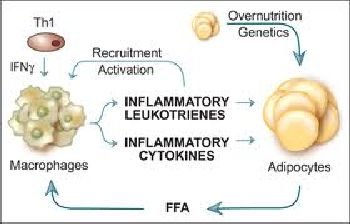
Adipocytes are the cells that constitute the adipose tissue, more commonly known as fat cells. Adipocytes have many functions in the body.
Their primary function is as the storage site for triglycerides, the primary form in which the body stores fatty acids. Adipocytes can either use these stored fatty acids when energy is needed (during starvation), or they can release fatty acids into the body so that other organs, such as the heart and muscle, can use fatty acids when they need energy.
Adipocytes have many other functions. For example, fat tissue plays an important role in insulating the body and providing cushioning around many organs. Another newly discovered role is that adipocytes have endocrine-like properties, meaning the adiopocytes can produce hormones (sometimes referred to adipokines) that affect the actions of other parts of the body.
Leptin, the first adipokine isolated, was discovered 15 years ago. Leptin is believed to play a role in regulating a person’s food intake and energy use. Other adipokines include adiponectin, resistin, TNF alpha, and many interleukins. Many of their functions are still being clarified and there are likely many yet-to-be-discovered adipokines.
There are two diferent types of adipocytes in mammals: brown and white, a reference to the appearance of these cells under a microscope. Brown adipocytes have a greater number of mitochondria, more blood vessels, and uncoupling proteins (UCP) surrounding them than do white adipocytes. Brown adipocytes can generate heat while white adipocytes cannot.
Adult humans have very few brown adipocytes, while infant humans have relatively many brown adipocytes. It is hypothesized that the brown adipocytes help regulate body temperature and provide energy for a developing child. Once development has ceased, brown adipocytes function diminishes and white adipocytes become the primary type of adipocytes in the body.
Mammals that hibernate, such as bears, have many brown adipocytes, as these cells help normalize bottom temperature at the end of hibernation.
When a person loses weight, his or her adipocytes become smaller. This is because he or she is using up the stored fat within the cell. However, these adipocytes will still remain present in the body. This means once a person consumes extra calories, the adipocytes will be ready to store the excess fatty acids again. This may be one reason why it is so difficult for dieters to maintain their weight loss.
See also: Adiponectin; Fatty Acid Transport Proteins.
Bibliography
K. Frayn, Metabolic Regulation: A Human Perspective, 2nd ed. (Blackwell, 2003); S. Gropper, J. Smith, and J. Grof, Advanced Nutrition and Human Metabolism, 4th ed. (homson
M. Stipanuk, BiochemicalBiochemical, Physiological, Molecular Aspects of Human Nutrition, 2nd ed. (Saunders Elsevier, 2006).