“Put your heart, mind, and soul into even your smallest acts. This is the secret of success.”
Swami Sivananda
VIDEO
Salt Health Risk – American Medical Association Says Reduce
Salt
I have raised blood pressure and my doctor tells me that I must cut down on my salt. Why is this?
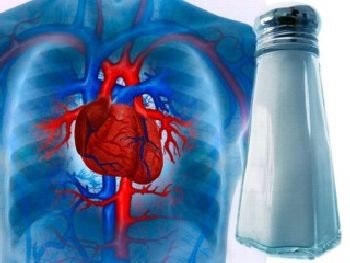
Excess salt can raise the blood pressure. Salt (sodium chloride is the chemical name) in excess causes your body to retain water, upsetting the hormone balance, and the blood pressure goes up.
It is best to avoid extra salt at the table and any salty foods, e.g. crisps and salted nuts.
How much salt do we actually need in our diet?
Your body needs 500 mg of sodium a day, the same as one-third of a teaspoon of salt. We eat on average one to three teaspoons of salt a day, equivalent to 6–18 g salt. In the
Levels of sodium in various foods
Foods – Typical portion size (g) – Sodium (mg)
Processed foods
Bacon (grilled) – 45 – 900
Baked beans – 200 -1060
Bread (2 slices) – 75 – 390
Butter (salted, spread on large slice of bread) – 7 – 61
Cereals
All-Bran + milk – 25 + 115 – 468
Cornflakes + milk – 30 + 115 – 340
Cheddar cheese – 30 – 183
Corned beef (2 slices) – 60 – 570
Cream cracker + processed cheese – 21 + 20 – 392
Ice-cream – 75 – 54
Mars Bar – 65 – 98
Pork pie (medium) – 140 – 1104
Sausages (2 grilled) – 90 – 900
Sausage roll – 332
Spaghetti hoops – 125 – 525
Tomato sauce (1 tbsp) – 17 – 58
Tomato soup (canned) – 240 – 1108
Unprocessed foods
Apples (1 medium dessert, peeled) – 120 – 2
Bananas (1 medium peeled) – 100 – 1
Beef (roast topside, 3 slices) – 90 – 43
Cabbage (boiled, white) – 100 – 4
Carrots (boiled, old) – 70 – 35
(Tinned) – 65 – 240
Chicken (meat only) – 100 – 81
Cod in batter (fried) – 85 – 85
Eggs (2, scrambled with milk/butter/salt) – 140 – 1442
Potatoes (boiled, old) – 150 – 5
(Mashed with butter) – 170 – 83
Drinks
Beer (1 pint draught bitter) – 568ml – 68
Bovril (heaped tsp) – 5 – 240
Coffee (instant) – 195 – 1
Horlicks + semi-skimmed milk – 20 + 195 – 199
Marmite (heaped tsp) – 5 – 225
Milk (2 tbsp) – 30 – 15
Tea (1 cup) – 195 – Trace
I know that I eat too much salt and my blood pressure is on the high side. What foods should I try to limit?
When you read a food label, look at the sodium level not just the phrase ‘low in salt’.
The difference in processed foods which are high in sodium because salt is added during their manufacture. Salt gives us sodium – 1 g table salt contains 390 mg sodium. Now compare these with unprocessed foods which are low in sodium but high in potassium. Potassium is helpful in lowering blood pressure. Restriction of both sodium and potassium intake may be advised if you have kidney disease but healthy people usually get rid of any excess. However, if you eat a lot of sodium, this can lead to high blood pressure and fluid retention, which puts a strain on your heart. Remember, there may be unexpected sources of salt – monosodium glutamate is often overlooked. Try herbs and spices rather than salt with your cooking.
Watch out for salt in:
• Snacks, especially salted nuts or crisps;
• Frozen or canned fish (even tuna in brine);
• Meat, especially ham or bacon, sausages, corned beef;
• Canned foods and packet soups;
• Commercial pies;
• Some cheeses;
• Salad dressings.
I have heard that bananas are very good for you. Why is this?
It is true to say that most people are not deficient in either sodium or potassium and a good healthy diet contains more potassium than most of us need. However, potassium-rich foods can help to lower blood pressure and may reduce the need for tablets in some people with high blood pressure. Many fruits like apples, pineapple, grapefruit and raw tomatoes contain potassium; dried raisins and bananas are particularly good sources. Leaf vegetables (spinach, broccoli, Brussels sprouts, cabbage, celery and lettuce) are also good sources as are potatoes, parsnips, broad and baked beans. A high intake of potassium is not usually harmful because your kidneys get rid of any excess but, if you have kidney disease or are taking potassiumcontaining tablets, potassium levels can build up and cause irregular heartbeats. Check with your doctor if you are unsure.
How do I read food labels and what do the figures mean for me?
It is important to know about salt, fat and calories. Most of the salt that you eat is that added in food manufacturing, so simply watching the salt you add is not enough. Some food labels may specify the sodium content, but it would be impracticable (and difficult) for you to have to add up the sodium content of all manufactured foods that you buy. As a general guide, cut down on salt added in cooking, avoid it at the table, and avoid the very salty foods listed above. Try to keep your daily cholesterol below 300 mg and sodium below 3000 mg (3g). This is a higher sodium intake than we need but the body copes with this and it is a more practical approach to food. Sodium in grams × 2.5 equals salt in grams; so, 3 g of sodium = 7.5 g of salt and 2.4 g of sodium=6 g salt. We need 500 mg of sodium a day (500 mg = 0.5 g) and that equals 1.25 g salt or one-third of a teaspoon.
As a reminder, your fat intake varies with calorie advice but for a typical female, who needs 2000 kcal a day; this will be about 70 g of fat, and for a male needing 2500 kcal a day, 95 g of fat. Of these figures, saturated fat should be no more than a third. Table is adapted from the American Heart Association Guidelines.
Here are some guidelines for reading labels.
• Compare figures per 100 g and per serving if you eat the whole pack. You can usually compare product to product per 100 g.
• For each 100 g portion, a simple guide to content is shown in table bellow.
• Energy is measured in calories (kilocalories shortened to kcal) and joules (kilojoules shortened to kJ): 1 kcal equals 4.2 kJ.
Guidelines for food intake for average-sized men and women per day
Intake – Men – Women
Energy – 2500kcal – 2000kcal
Total fat* – 95g – 70g
Saturated fat† – 30g – 20g
Fibre – 20g – 16g
Salt‡ – 6.0g – 5.5g
* Total fat is 35% of energy.
† Total saturated fat is 11% of energy.
‡ 6.0g salt equals 2 level teaspoons and 2.4g sodium.
If you take in more calories than you burn up, you will gain weight. See above for your daily needs.
• Proteins are important for your body’s building bricks. We all have more than we need except vegetarians, who need to pay more attention to increasing the protein content of their diet to adequate levels.
• Sugar content should be no more than 70 g daily for men and 50 g for women.
An example of a good food label, giving us all the essential information.
Garlic
I have read that garlic is very good for high blood pressure. Is this true?
There is unfortunately no evidence that garlic reduces cholesterol but it may slightly reduce blood pressure – more research is needed. The best advice is to make garlic part of your diet, providing, of course, that you like it and it doesn’t limit your social life!