VIDEO
How to test your blood glucose (sugar) levels
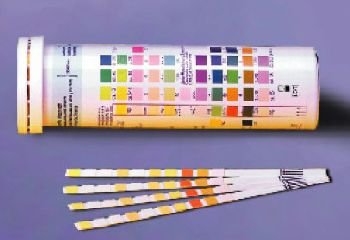
Blood glucose testing
What is the normal range of blood glucose in a person who does not have diabetes?
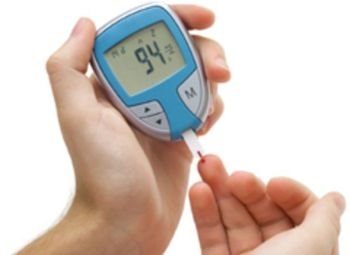
Before meals the range is from 3.5 to 5.5 mmol/litre. After meals it may rise as high as 10 mmol/litre depending on the carbohydrate content of the meal. However long a person without diabetes goes without food, the blood glucose concentration never drops below 3 mmol/litre, and however much they eat, it never goes above 10 mmol/litre.
My blood glucose monitor is calculated in millimoles. Can you tell me what a millimole is?
In the 1960s, international agreement led to scientists in most parts of the world using a standard system of metric measurements. The units are called SI units, an abbreviation of their full name – the ‘Système International d’Unites’. There are several units, many of which you probably use without thinking about them, such as the metre. The unit for an amount of a substance is called a mole; the prefix milli- means one thousandth, so a millimole is one thousandth of a mole. Blood glucose is measured in millimoles of glucose per litre of blood, and this is abbreviated to mmol/litre.
Before SI units were introduced, blood glucose was measured in milligrams per 100 millilitres of blood (abbreviated to mg% or to mg per dl) and this measurement is still used in the
1 mmol/litre = 18 mg%
2 mmol/litre = 36 mg%
3 mmol/litre = 54 mg%
4 mmol/litre = 72 mg%
5 mmol/litre = 90 mg%
6 mmol/litre = 108 mg%
7 mmol/litre = 126 mg%
8 mmol/litre = 144 mg%
19 mmol/litre = 162 mg%
10 mmol/litre = 180 mg%
12 mmol/litre = 216 mg%
15 mmol/litre = 270 mg%
20 mmol/litre = 360 mg%
22 mmol/litre = 396 mg%
25 mmol/litre = 450 mg%
30 mmol/litre = 540 mg%
Is blood glucose monitoring suitable for people whose diabetes is controlled by tablets?
Yes, it is. Everyone with diabetes, whether controlled by diet, diet and tablets, or insulin, should strive for perfect control. Traditionally this has been achieved by regular urine tests at home. Since 1977 there has been a move towards encouraging people to do their own blood glucose measurements. This form of monitoring was first thought to be most suitable for insulin-treated people. However, further experience has shown that it is equally suited to those treated with diet and tablets. The disadvantage of having to prick your finger to obtain a drop of blood is more than compensated for by the increased accuracy and reliability of the readings so obtained.
Should I keep my sticks for blood glucose monitoring in the fridge with my insulin?
No. It is important to keep them dry as any moisture will impair their activity. You must put the lid back on the container immediately after removing a strip (unless the strips are individually foil-wrapped). Many of the strips contain enzymes, which are biological substances that do not last forever, and the sticks should never be used beyond their expiry date. The bottle of sticks should be kept in a cool, dry place, and should not be exposed to extremely high temperatures. If you have any reason to suspect the result of a blood test, the best thing is to repeat the test using a new bottle of strips.
I had a glucose tolerance test and my highest blood glucose was 17 mmol/litre. However, my urine analysis was negative for glucose. Is there a way I could test my blood for glucose without going to the laboratory?
You appear to have a ‘high renal threshold’ to glucose, which means that it is only at very high concentrations of glucose in the blood that any glucose escapes Monitoring and control into your urine. In your case urine tests are unhelpful and blood tests essential. Nowadays most people monitor their blood glucose using the compact and convenient meters that are widely available.
There are several different blood testing techniques. Although a few can be read by eye, it is possible to make this reading more effective by use of a specially designed meter. Most strips can be used only with a specific meter.
Most hospital diabetes clinics will be able to show you the various strips and meters that are available, and your choice should be made after discussion with your diabetes specialist nurse or doctor in the clinic. All the different methods give good results provided that they are used sensibly and after proper instruction.
The blood glucose meters are not available on prescription, but the strips are.
I feel hypo when my blood glucose is normal and only well when it is high. I feel very ill when my doctor tries to keep my blood glucose normal. Am I hooked on a high blood glucose?
In someone who has had poor control for several years, the brain and other tissues in the body can adjust themselves to a high concentration of glucose in the blood. As a result they may feel hypo at a time when their blood glucose is normal or even high. The long-term outlook for such people is not good unless they can re-educate themselves to tolerate normal blood glucose levels without feeling unwell. This is possible but requires determination and an understanding of the long-term dangers of a high blood glucose.
Your problem can be overcome by regular measurement of blood glucose, but you must accept that, however unwell you feel, no harm will be done if your blood glucose remains above 4 mmol/litre. It may take up to 6 months of good control for this feeling to wear off, but it will be worth it.
Is there a way of knowing how much extra Actrapid insulin to give depending on my blood glucose level so I can maintain a better blood glucose?
The answer is yes, but it will require some experimenting on your part. The particular type and dose of insulin most suited to you can best be judged by repeated measurements of your body’s response to the insulin you are taking. If you find, for example, that your blood glucose always goes very high after breakfast, then you may be able to prevent this by taking more Actrapid before breakfast but, before making any adjustment in insulin dosage, it is important to see that the blood glucose changes that you see are part of a regular pattern. This is part of the process of balancing insulin, diet and exercise, and we would caution against taking an extra dose of insulin if you come across a rather high blood glucose reading as an isolated finding. It is usually far better to try to work out a routine whereby you can prevent your blood glucose from rising too high rather than to take an extra injection of insulin after it has happened.
There are exceptions to this rule, of course. If you suddenly become unwell and your blood glucose goes very high, repeated extra injections of a short-acting insulin such as Actrapid or Novorapid are the most effective way of preventing the development of ketoacidosis (see the Glossary for an explanation of this serious condition).
Are there any general guidelines for insulin adjustment?
This will really depend on the type of insulin you are taking, and the number of injections you have each day.
The general rule is to increase your insulin by 2 units at a time and to leave the dose as it is for a few days to see if the results improve. The exception to this is at times of illness and infection, when the dose may need to be increased by 4–10 units, some-times with additional doses of short-acting insulin given between the usual injection times until the blood glucose levels start to improve.
Monitoring and control
The dose of insulin will need to be reduced if hypos occur regularly.
I find that my control is only good for 1 week a month and that is the week before my period. Why is this and what should I do about it?
In some women the dose of insulin required to control diabetes varies in relation to the menstrual cycle. Your question implies that you become more sensitive to insulin in the week before you menstruate and you probably require more insulin at the other times in your cycle. There is no reason why you should not try to work out a pattern where you reduce your insulin dose in the week before your period and increase it at other times. The variation is due to different hormones coming from the ovaries during the menstrual cycle. Some of these hormones have an anti-insulin effect.
The same sort of effects may occur when a woman is taking oral contraceptive tablets (the pill) or is pregnant. The correct thing to do is to make adjustments in the insulin dose in order to compensate for these hormonal changes and to keep the balance of the blood glucose where it should be.
I have noticed that there are much greater fluctuations in my blood glucose level when I am having a period. I have great difficulty in keeping my blood glucose balanced then.
I have read many books on diabetes but I have never seen this mentioned – is it normal?
It is quite normal for the blood glucose control to fluctuate during the monthly cycle. Most women find their blood glucose is highest in the premenstrual phase and returns to normal during or after their period. Some women need to adjust their dose of insulin during the cycle but rarely by more than a few units.
Every woman has to discover for herself the extent of this effect and how much extra insulin, if any, is needed.
Your diabetes clinic doctor or diabetes specialist nurse is the best person to turn to for exact advice on how to make these adjustments. Where is the best place to obtain blood for measuring blood glucose levels?
It is usually easiest to obtain blood from the fingertips. You can use either the pulp, which is the fleshy part of the fingertip, or the sides of the fingertips. Some people like to use the area just below the nail bed. Most people find it easier to use the tip but the sides of the fingertips are less sensitive than the pulp. It may be necessary for some people such as guitarists, pianists or typists to avoid the finger pulp.
The fleshy ear lobes are also suitable areas for obtaining blood and are less sensitive than the fingers but they can be difficult to use as the blood has to be applied to the reagent stick with the use of a mirror. Parents may find that it is easiest to obtain blood from the earlobes of their child with diabetes. There are a couple of meters that allow blood to be taken from the arm.
Which is the best finger pricker?
All the currently available blood lancets are very similar and there is very little to choose between any of them. The lancets may be used either on their own or in conjunction with an automatic device. They are obtainable on prescription from your own GP. Alternatively they can be bought from a chemist. If you have trouble pricking your fingers without an automatic finger pricker, there are now a wealth of devices that make the task much easier. These are all very similar and work on the principle of hiding the lancet from view whilst piercing the skin very quickly and at a controlled depth.
They are not available on prescription, but can be purchased from chemists, or by post from companies such as Owen Mumford (Medical Shop). Before buying any automatic finger pricker, check that you are using the correct lancets with the appropriate finger pricker, as some are not interchangeable. Your health professional will be able to advise you. Some manufacturers offer finger prickers as part of the package when you buy a meter.
Should I clean my fingers with spirit or antiseptic before pricking them?
We do not recommend the use of spirit for cleaning your fingers as its constant use will lead to hardening of the skin of your fingertips. It can also interfere with the reagent strips. We suggest that you wash your hands with soap and warm water and dry them thoroughly before pricking your finger.
Will constant finger pricking make my fingers sore?
You may find that your fingers feel sore for the first week or two after starting blood glucose monitoring but this soon disappears. We have seen many people who have been measuring their blood glucose levels regularly 3 or 4 times a day for more than 15 years and who have no problems with sore fingers. Don’t always use the same finger – instead try to use different fingers in rotation.
Will my fingers take a long time to heal after finger pricking and am I more likely to pick up an infection there?
Your fingertips should heal as quickly as someone without diabetes but make sure that you are using suitable blood lancets. We have seen only one infected finger among many hundreds of thousands of finger pricks. We suggest that you keep your hands socially clean and wash them before collecting your blood sample.
There are a bewildering number of blood glucose sticks and meters on the market. Which are the best to use?
This is purely a matter of preference and may depend on the type of strips or meters used in your local clinic. Some strips require wiping or blotting and are then compared with a colour chart after careful timing, whilst others do not need Monitoring and control wiping or blotting, and can only be used with a meter. The magazine Balance, produced by Diabetes United Kingdom, usually carries advertise ments for the latest strips and meters, and their use should be discussed with your diabetes specialist nurse or diabetes physician. Blood glucose testing strips are obtainable on prescription from your GP but the meters have to be purchased, although many are now quite inexpensive.
I have recently started using BM-Test strips but have been told that my results do not compare well with the hospital results. What is the reason for this?
The first thing to do is to make sure that your technique is absolutely correct. Inaccurate results will be obtained if the correct procedures are not followed completely. If your technique is not at fault, then it could be that you are not able to interpret the colour chart correctly. If this is so, you would be advised to use a meter, which reads the blood glucose result for you.
My blood glucose meter appears to give slightly different results compared with the hospital laboratory. Are the meters accurate enough for daily use?
Most results obtained when you are using a meter will be slightly different from the hospital laboratory results because different chemical methods are used. These slight differences do not matter and the strips and meters are quite accurate enough for home use.
If your results are very different from the laboratory, it could be that your technique is incorrect. The most common fault is not applying a large enough drop of blood to the strip. Other faults are smearing the blood on the strip, or taking too long to apply the blood to the strip. The reaction must also be timed accurately. The insert or carrier of the meter must be kept clean, and you should follow the maker’s instructions for cleaning the carrier. Also check that the reagent strips are not used past their expiry date. If all else fails, read the instructions!
I have trouble obtaining enough blood to cover the whole test pad on the strip. Is there anything that I can do to make this easier?
If you are having trouble obtaining enough blood, you might find the use of an automatic finger pricker makes it easier. Also try to warm your hands by washing them in warm water before you start, and drying them thoroughly before pricking your finger.
Finally, when squeezing the blood out of your finger, try ‘milking’ the blood out gently, allowing the finger to recover in between each squeeze. Do not squeeze so hard that you end up ‘blanching’ the finger. Many of the strips that are used with modern meters require very little blood, and your diabetes team should be able to advise you on these.
I understand that there is a combined blood glucose meter and lancet. Can you tell me more about it?
You are probably referring to the Soft-Sense from MediSense. This is a blood glucose meter that has the facility for also pricking the skin. A lancet is inserted into the meter, the meter is placed on the arm, the skin is pricked, and a vacuum draws up the blood onto the sample area of the test strip. After 20 seconds the vacuum is released, the Soft-Sense is removed from the skin, and the result is then shown on the screen and stored in the meter’s memory. One of its advantages is that different areas of the arm can be used for testing, but it has the disadvantage of being expensive.
I am about to buy a meter that allows blood to be taken from the arm. Are there any problems with arm testing?
At the time of writing there are three meters that allow blood testing to be taken from the arm. One is the Soft-Sense (see question above), the others are the OneTouch Ultra from LifeScan and the FreeStyle from TheraSense. The OneTouch Ultra and FreeStyle use strips that allow a tiny blood sample to be taken, which makes arm testing feasible. Under certain
Monitoring and control conditions, samples taken from the arm may differ significantly from fingertip samples, such as when blood glucose is changing rapidly following a meal, after an insulin dose or when taking physical exercise. Arm samples should only be used for testing prior to, or more than 2 hours after meals, insulin dose or physical exercise. Fingertip testing should be used whenever there is a concern about hypoglycaemia (such as when you drive a car), as arm testing may fail to detect an insulin reaction. The elderly can have problems obtaining sufficient blood from the arm. Your health professional should be consulted before you begin arm testing.
I have heard that there is a way of obtaining blood from a finger using a laser. Is this true?
The Lasette is a single shot laser that makes a small hole in the finger to obtain a drop of blood, but it is not a blood glucose monitoring device. The use of laser light, as opposed to a steel lancet, reduces tissue damage, and many users of the device report feeling less pain than when using a traditional lancet. It weighs just less than 260 g (9 oz). However, it is very expensive. It is slightly smaller than a videocassette. The Lasette is manufactured by Cell Robotics, and can be obtained from Nutech International.
I would like to measure my own blood glucose levels, but as I am now blind I do not know if this is possible. Can it be done?
Unfortunately, this is no longer possible as manufacturers have stopped making ‘talking’ meters. Maybe you could get a friend to help you.