VIDEO

It seems like there are many reasons why a person might lose appetite and not eat for a period of time. How can one know if anorexia is the cause?
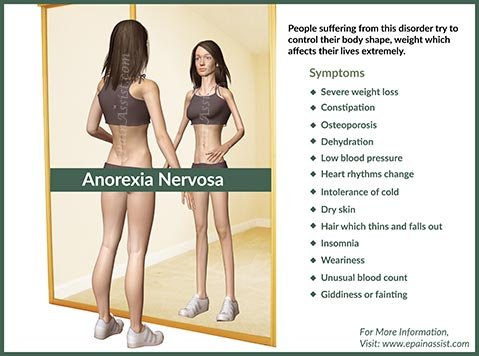
Anorexia nervosa can both mimic and co-occur with physical illnesses that have similar symptoms, so it is important to have a thorough evaluation when an eating disorder is suspected to rule out the presence of other conditions.
A first step would be to have a family physician, particularly one who is familiar with eating disorders, conduct a complete physical exam to determine if any of these conditions exist. Physical disorders that may display similar symptoms to anorexia include diabetes mellitus, colitis, thyroid disease, inflammatory bowel disease, Addison’s disease, and certain types of tumors. Patients with these illnesses may present with weight loss, loss of appetite, nausea, vomiting, and growth failure. Malnutrition can result from complications of these conditions. In some patients, these conditions can also precipitate the onset of an eating disorder. Medical conditions that have been associated with an increased risk for developing an eating disorder include diabetes and cystic fibrosis, both of which may be associated with concerns about body image and can require certain dietary restrictions, making it more difficult to manage a co-occurring eating disorder.
Anorexia nervosa can also either mimic or co-occur with psychiatric illnesses. Symptoms such as irritability, worry, social anxiety, social withdrawal, and insomnia are common in eating disorders, just as they are in depression, anxiety, and other mental illnesses. A healthcare professional can help to determine which, if any, coexisting condition(s) may be present and will establish the priorities for treatment.
The following are brief descriptions of psychiatric conditions found to coexist with anorexia nervosa:
• Depression: a significant disturbance in mood characterized by such symptoms as tearfulness, social withdrawal, irritability, lack of pleasure, sleeping and eating changes, and low energy levels. As many as 40-70% of eating disorder patients have co-occurring symptoms of depression.
• Anxiety: a state of worry, fear, apprehension, uneasiness, or distress. Physical symptoms such as dizziness, lightheadedness, or shortness of breath may or may not also occur. Social phobia is a form of anxiety where a person avoids certain types of social situations or has increased symptoms of anxiety in those situations.
• Obsessive-compulsive disorder (OCD): a form of anxiety consisting of intense, persistent, recurrent, and disturbing thoughts, impulses, and repetitive behaviors.
The thoughts (obsessions) are experienced as uncontrollable and cause distress. The repetitive behaviors (compulsions) are often performed with the intent of reducing the distress caused by obsessive thoughts.
Note: obsessive-compulsive personality disorder (OCPD), a diagnosis that is distinct from OCD, yet shares a similar name.
• Body dysmorphic disorder (BDD): a severe form of body image disturbance characterized by an excessive concern or preoccupation with a perceived defect in one’s appearance. This perceived defect may be an exaggerated concern, or it may even be imaginary. Individuals experience intense distress over their appearance and may find their preoccupations difficult to control.
• Attention deficit hyperactivity disorder (ADHD): a persistent pattern of inattention and hyperactivity or impulsivity. The inattention may be present in school, work, or social situations. Feelings of restlessness are common. Recent findings suggest girls with ADHD are 2.7 times more likely to develop anorexia than girls without ADHD.
• Post-traumatic stress disorder (PTSD): a severe form of anxiety that may develop after experiencing a traumatic, life-threatening, or other very distressing situation. Symptoms can also develop after witnessing an event that involves a threat to another person.
Feelings of hopelessness, guilt, despair, shame, or horror may be experienced. Avoidance, mood swings, impulsive behavior, somatic complaints, and interpersonal difficulties may be present. In severe cases, a person may experience psychotic symptoms such as hallucinations or paranoia.
• Personality disorders: enduring, pervasive, and inflexible patterns of behavior, thought, and interaction with others that cause significant functional impairment or distress. An evaluation of a person’s long-term social, interpersonal, cognitive, and personality functioning is essential for an accurate diagnosis. Avoidant personality disorder and obsessive-compulsive personality disorder are examples of personality disorders that may co-occur with anorexia.
• Substance use disorders: alcohol use, drug use, and/or abuse may also coexist with anorexia.
Terms:
Colitis – An inflammation of the large intestine (colon). Symptoms may include abdominal pain, fever, and severe diarrhea.
Addison’s disease – A disease caused by a deficiency of hormones that are produced by the adrenal gland. Symptoms may include weight loss, fatigue, and vomiting.
Social phobia – An anxiety disorder that is characterized by a persistent, intense fear of being evaluated, judged, criticized, or humiliated in social situations. These fears can be triggered by the real or imagined scrutiny by others. Social phobia can cause extreme distress and may be accompanied by severe blushing, sweating, tearfulness, trembling, nausea, or feelings of panic.
Somatic – Pertaining to the Body
Anorexia nervosa can both mimic and co-occur with physical illnesses that have similar symptoms.