VIDEO
Discovering China – Concept of “Shen” in Traditional Chinese Medicine
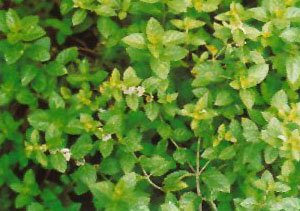
BO HE
Bo He (Menthae herba), Ju Hua (Chrysanthemi indici flos), Sang Ye (Mori folium), and Chai Hu (Bupleuri radix) have similar functions of expelling and dispersing Wind-Heat in the Upper Jiao. What are the differences between them?
All of these four herbs possess light, ascending, and dispersing properties. They are used to expel Wind, disperse Heat, and treat Exterior Wind-Heat syndrome.
Of these herbs, Bo He is the coldest. It primarily enters the Lung meridian and secondarily enters the Liver meridian. Pungency may disperse Heat; coolness may reduce Heat; lightness in weight and nature can disperse Heat in the Upper Jiao and the aromatic smell can open the orifices. Thus Bo He is excellent for Exterior Wind-Heat syndrome when the head is affected-for instance in patients suffering from headache, sore and red eyes and a sore throat. These complaints are often seen in cold infections, bronchitis, sinusitis, and influenza and pruritic rash in infectious childhood diseases. Apart from this, because Bo He enters the Liver meridian it is effective for spreading the Liver-Qi and clearing
Heat and so is used for Liver-Qi stagnation with flaring up of Liver-Heat. The manifestations of this condition include headache, dizziness, poor concentration, a bitter taste in the mouth and a feeling offullness in the chest and hypochondrium. These symptoms can be seen in hypertension, hepatitis, premenstrual syndrome, depression and other mental disorders.
Ju Hua is sweet, bitter, and slightly cold, and enters the Lung, Liver, Kidney and Gall Bladder meridians. Sweetness and Cold can generate Yin; bitterness and Cold can reduce Heat. As it particularly enters the Liver meridian, can calm the Liver and benefit the eyes, it is used for treating acute inflammation of the eyes. It can also be used for dizziness, blurred vision, dryness of the eyes due to deficiency of Liver-Yin and Kidney-Yin, stagnation of Liver-Qi and uprising of Liver-Yang, and in conditions such as eye strain, hypertension, glaucoma, and retinal bleeding.
Sang Ye is bitter, sweet and cold and it enters the Lung meridian. It is gentle and light, and possesses both dispersing and ascending properties. It can disperse Wind and Heat as it is collected in late autumn (the season of the Lung according to the Five Elements theory) and after frost, so it receives its cool property from nature. Sweetness and coolness may generate Body Fluids and clear Heat which lasts from summer. It is used for cough without production, and dryness of the throat that is caused by Dry-Heat injuring the Lung-Yin. This herb is also good for treating those symptoms that are present after febrile disease when the Heat has disappeared but the Yin has been consumed-for instance after pneumonia or acute bronchitis.
Because Sang Ye also enters the Liver meridian, it can be used for treating cough caused by Liver-Fire attacking the Lung. It is good at clearing Lung-Fire and pacifying the Liver. It is particularly suitable for treating paroxysmal cough without production, thirst, and a dry mouth and throat, and concomitant depression, hypochondriac distension and irritability, such as seen in chronic bronchitis, pulmonary tuberculosis, and diabetes.
Chai Hu is pungent, bitter, and neutral; it enters the Liver and Gall Bladder meridians. Pungency and lightness lead to ascending and spreading actions, so it is particularly effective for spreading the Liver-Qi and lifting the clear Qi at the Lesser Yang level. Bitterness may lead the Qi or Heat downwards, which is why it is very often used for venting Wind-Heat in the Upper Jiao and at the Lesser Yang level, although it is not cold. It can treat conditions with alternating chills and fever, a dry throat, a bitter taste in the mouth, dizziness, and irritability. Since theLiver is an important organ in the Qi movement of the whole body, stagnation of the Liver-Qi may lead to disturbance of Qi in the whole body and bring about emotional and physical disorders such as tightness in the chest and hypochondria, irritability, depression, irregular menstruation, heartburn, nausea, vomiting and reduced appetite.
Chai Hu is the most important and commonly used herb for spreading the Liver-Qi. In clinical practice, it is used for treating hepatitis, cholecystitis, cholelithiasis, gastritis, gastric ulcer, gastroneurosis, asthma, depression, neurosis, premenstrual syndrome, and other mental disorders.