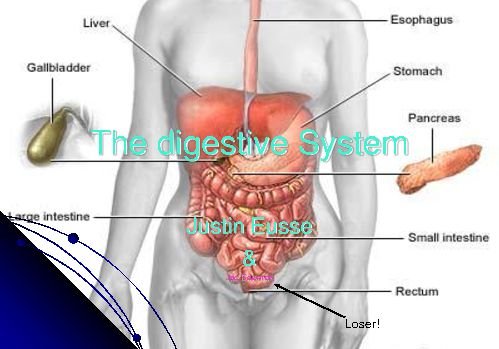
What are the organs of the GI Tract and why are they important?
The organs of the GI tract each play a unique and crucial role in digestion. Before we examine the individual roles of the organs, take a look to any figure of the human body and refresh your memory of how organs are built from cells and tissues and how they work together in various body systems. Understanding how cells build tissues will help you understand how digestion and absorption happen in the body.
You produce 1 to 1.5 liters of saliva every day.
Digestion Begins in the Mouth
The process of digestion begins when you first see, smell, or think about a food that you want to eat. Glands in your mouth release saliva, a watery fluid that will help soften the food you are about to eat. Once you take a bite and begin to chew, your teeth, powered by your jaw muscles, cut and grind the food into smaller pieces and with your tongue mix it with saliva. Saliva helps dissolve small food particles and allows us to comfortably swallow dry food. In addition to water, saliva contains electrolytes, a few enzymes (including amylase, which begins to break down carbohydrate), and mucus. The mucus helps lubricate the food, helps it stick together, and protects the inside of the mouth. Once food has been adequately chewed, it’s pushed to the back of the mouth and into the pharynx by the tongue.
Swallowing seems simple because we do it hundreds of times a day, but it is actually a complicated process. Pushing chewed food to the pharynx is a voluntary act-that is, you control it. Once the food mass (now called a bolus) enters the pharynx, the swallowing reflex kicks in, and you no longer control the action.
You have probably experienced an episode of “swallowing gone wrong” in which you’ve accidentally propelled food down the wrong pipe. When this happens (and you find yourself in a coughing fit trying to expel the item), it is because the normal mechanism that protects your trachea (or windpipe) didn’t engage properly. Usually, a small flap called the epiglottis closes off your trachea during swallowing. The epiglottis ensures that food and drink go down the correct pipe-the esophagus-rather than down the windpipe. When the epiglottis doesn’t work properly, food can get lodged in the trachea, which can potentially result in choking.
Once swallowed, a bolus of food is pushed down your esophagus by peristalsis. When the bolus of food reaches the stomach, the lower part of the esophagus relaxes, allowing the bolus to enter the stomach. Solid or partially chewed food passes through the esophagus in about 8 seconds. Soft food and liquids pass through in about 1 to 2 seconds.
The esophagus narrows at the bottom (just above the stomach) and ends at a sphincter, called the lower esophageal sphincter (LES). Under normal conditions, when we swallow food, the LES relaxes and allows food to pass into the stomach. The stomach also relaxes to comfortably receive the food. After food enters the stomach, the LES should close. If it doesn’t, hydrochloric acid from the stomach may flow back into the esophagus and irritate its lining. This is called heartburn because it causes a burning sensation in the middle of the chest heartburn and the reflux of stomach acids are symptoms of gastro esophageal reflux disease (GERD). The condition, GERD, and the treatment for it will be discussed later.
Terms:
Absorption – The process by which digested nutrients move into the tissues where they can be transported and used by the body’s cells.
Chemical digestion – Breaking down food with enzymes or digestive juices.
Mucus – Viscous, slippery secretions found in saliva and other digestive juices.
Saliva – Watery fluid secreted by the salivary glands in the mouth. Saliva moistens food and makes it easier to swallow.
Esophagus – Tube that extends from the throat to the stomach.
Epiglottis – Flap of tissue that protects the trachea while swallowing.
Lower – esophageal sphincter
(LES) – A circular band of muscle between the esophagus and the stomach that opens and closes to allow food to enter the stomach.
Bolus – Chewed mass of food.
Pharynx – The throat. Passageway for the respiratory (air) and digestive tracts (food and beverages).
The Stomach Stores, Mixes, and Prepares Food for Digestion
The stomach is a muscular organ that continues mechanical digestion by churning and contracting to mix food with digestive juices. The food is continuously mixed for several hours. The stomach also has a role in chemical digestion in that it produces powerful digestive secretions. These secretions include hydrochloric acid (HCl), various enzymes, mucus, intrinsic factor (needed for vitamin B 12 absorption), and the stomach hormone, gastrin. The swallowed bolus of food soon becomes chyme, a semiliquid substance that contains digestive secretions plus the original food. The stomach can expand to hold 2 to 4 liters of chyme.
Hydrochloric acid has important digestive functions. These include activation of the protein-digesting enzyme pepsin, enhanced absorption of minerals, breakdown of connective tissue in meat, and the destruction of some ingested microorganisms. You might think that such a strong chemical would “digest” the stomach itself, but mucus produced in the stomach acts as a barrier between the HCl and the stomach lining, protecting the lining from irritation or damage.
Enzymes in the stomach, including pepsin and gastric lipase, begin breaking down protein into polypeptides and a few triglycerides into shorter-chain fatty acids. (The majority of triglycerides are broken down in the small intestine with the help of another enzyme.) The hormone gastrin stimulates the secretion of HCl, among other functions.
Have you ever noticed that some foods keep you feeling full longer than others?
Foods high in carbohydrate exit the stomach faster, and therefore make you feel less full, than foods high in protein, fat, or fiber. Most liquids, carbohydrates, and low-fiber foods require minimal digestive activity, are easier to absorb, and have less surface area due to low fiber content. Similarly, low-calorie foods exit the stomach faster than concentrated, high-calorie foods. This is because low-calorie foods frequently require minimal digestion. For example, a lightly sweetened cup of tea, a lower calorie beverage, requires less digestion than a higher-calorie, nutrient-dense milkshake. Digesting the tea involves only the breakdown of the sugar, sucrose, into fructose and glucose (you’ll learn more about all of these sugars). In contrast, digesting the milkshake involves breaking down fat, protein, and carbohydrates.
As digestion continues, peristaltic contractions push the chyme toward the lower part of the stomach. As the chyme accumulates near the pyloric sphincter, the muscular sphincter relaxes and the chyme gradually enters the small intestine. Approximately 1 to 5 milliliters (1 teaspoon) of chyme are released into the small intestine every 30 seconds during digestion. 11 The pyloric sphincter prevents chyme from exiting the stomach too soon, and it prevents intestinal contents from returning to the stomach.
Terms:
Pepsin – A digestive enzyme produced in the stomach that breaks down protein.
Chyme – A liquid combination of partially digested food, water, HCl, and digestive enzymes.
Gastrin – A digestive hormone produced in the stomach that stimulates digestive activities and increases motility and emptying.
Hydrochloric acid (HCl) – A powerful acid made in the stomach that has digestive functions. It also helps to kill microorganisms and lowers the pH in the stomach.
Stomach Digestive – organ that holds food after it’s moved down the esophagus and before it is propelled into the small intestine.