(Doctors only)
Patent foramen ovale
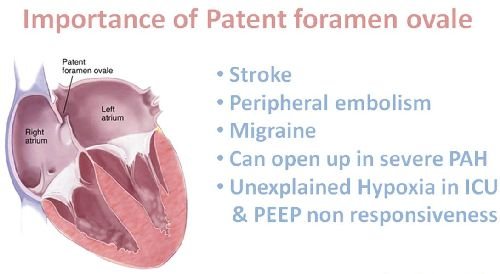
The role of PFO in pathophysiology and prevention of stroke remains controversial.
RELATION TO
. PFO is detected in 20–30% of the general population.
. PFO is more prevalent (30–50%) among stroke patients who are young and do not have other causes of stroke (cryptogenic, age <50).
Patent foramen ovale
. PFO is most likely causally related to the stroke when the PFO is large and associated with an atrial septal aneurysm.
. PFO is probably not a causal factor for stroke when it is found in a person who has known atherosclerosis, other known stroke mechanism, or is elderly (>60).
. The proposed mechanism relating PFO to ischemic stroke is ‘‘paradoxical embolism.’’
Venous thrombus in systemic venous circulation bypasses the pulmonary circulation and embolizes to the brain. Finding deep venous thrombosis in the lower extremities (by ultrasound) or in the pelvic veins (by MRI), or detecting hypercoagulability (factor V Leiden, prothrombin gene mutation, anticardiolipin antibodies etc.) would support this mechanism.
. However, the bottom line is that in the patient you are seeing it is difficult to know whether the PFO is an incidental finding or causally related to stroke.
TREATMENT
. In most patients with stroke and PFO, antiplatelet drugs are sufficient.
. So far the data suggest that anticoagulation does not offer additional benefit over aspirin, unless hypercoagulability or venous thrombosis is found.
. Endovascular closure devices have improved over the past decade and are considered to carry a ‘‘low risk.’’ There are randomized trials ongoing which aim to answer the question whether endovascular PFO closure is better than medical therapy in stroke prevention (RESPECT, CLOSURE-I, and PC-Trial).