Adipose tissue, adiponectin, leptin and ASP
Adiponectin
Describes the adipose tissue hormone, adiponectin, its physical characteristics, and the variations with body fatness, gender, insulin sensitivity, and cardiovascular disease, highlighting possible links between its circulating size and form and metabolic and anti-inflammatory actions.
Adiponectin, also known as Acrp30 or AdipoQ, is a hormone almost exclusively produced by adipose tissue.
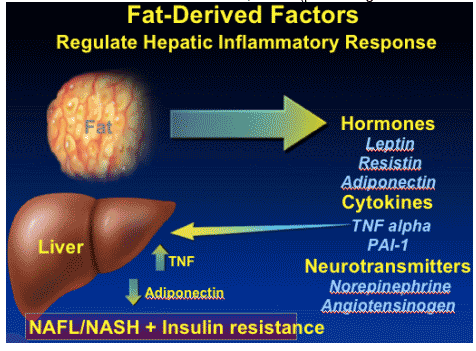
It is the most abundant adipose-derived circulating protein, being measured at high concentration (2–20 ug/ml), with typically higher levels in females than males. Obese people have lower levels of adiponectin. These levels increase after weight loss and correlate (negatively) better with the amount of visceral (rather than subcutaneous) fat. Lower levels are also found in insulin resistance, Type 2 diabetes, and cardiovascular disease.
The protein may bind directly to molecules that cause inflammation, reducing their harmful potential, or may act to improve glucose tolerance and insulin sensitivity. It does this by binding to two distinct receptors widely present in the body, especially in skeletal muscle and the liver. Receptor binding leads to activation (by phosphorylation) of an enzyme called AMP-activated protein kinase, which in turn causes metabolic changes in cells, restoring energy balance.
These changes include the increased uptake and use of glucose and the oxidation of fatty acids, which reduces fat content in the tissue. Insulin-sensitizing drugs such as thiazolidinediones increase circulating levels of adiponectin. This improves insulin sensitivity and may lessen atherosclerosis through anti-inflammatory actions on macrophages and foam cells.
The basic subunit is a single protein chain (a monomer), but the circulating forms are a trimer formed by the self-association of three monomers, a hexamer, and higher molecular weight (HMW) species. These are stable in circulation, and each has different metabolic activities. High levels of HMW species are repeatedly associated positively with insulin sensitivity.
Post-translational modification to the protein, including addition of sugar groups to amino acids in a collagen-like tail region, are crucial to the formation of HMW species, and to their insulin-sensitizing activity.
However, the exact mechanisms controlling how adiponectin activates its receptors are unclear.
Mutant forms of the molecule which are unable to form HMW species have been found in some patients with diabetes, while mice in which the gene producing adiponectin has been destroyed tend to show insulin resistance, glucose intolerance, and blood vessels susceptible to damage. his is consistent with the postulated effect of adiponectin as a protective factor from atherosclerosis. Polymorphisms (inherited variations) of the genes for adiponectin and its receptors have also been associated with insulin resistance in humans.
See also: Adipocytes; Inlammation; Insulin; Type 2 Diabetes.
Bibliography
T. Kadowaki, et al., “Adiponectin and Adiponectin Receptors in Insulin Resistance, Diabetes, and the Metabolic Syndrome,” Journal of Clinical Investigation (v.116, 2006); Tobias Pischon, et al., “Plasma Adiponectin Levels and Risk of Myocardial Infarction in Men,” Journal of the American Medical Association (v.291/14, 2004).